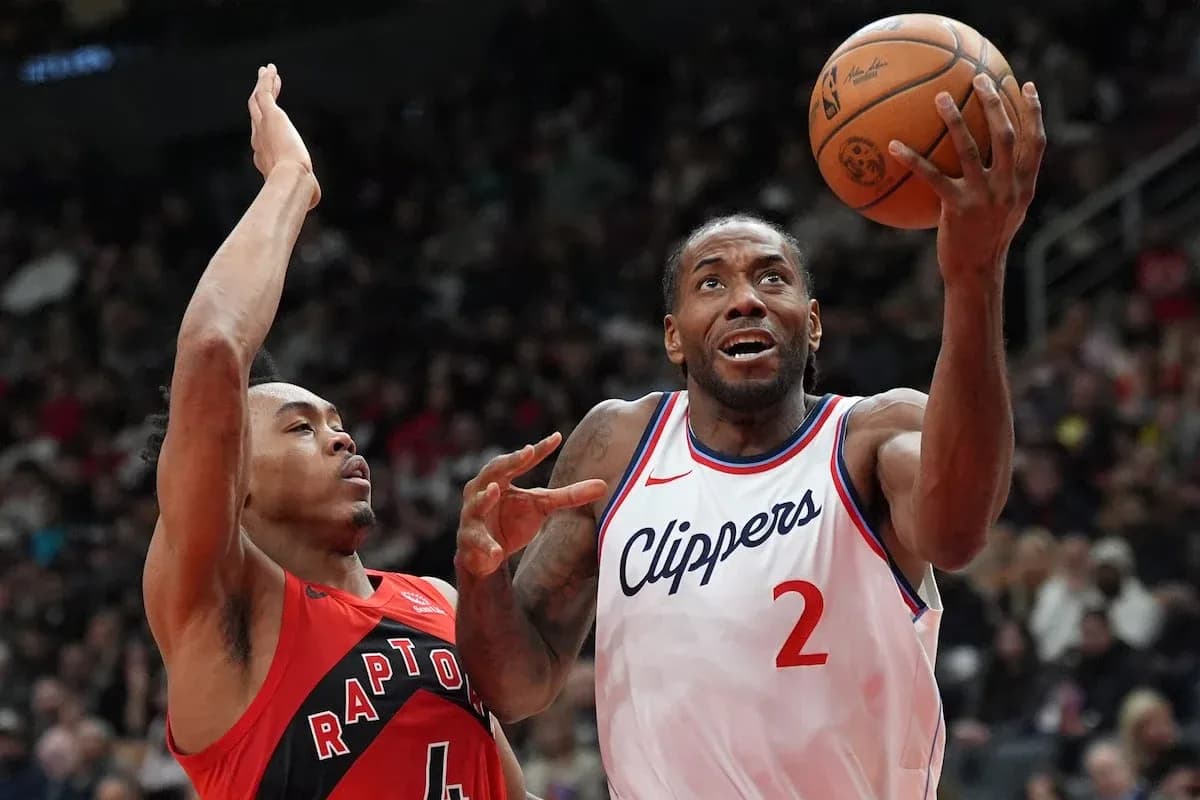
Kawhi Leonard's Return to Toronto Amid Uncle Dennis Scandal
Uncle Dennis finally ran out of road.
For years, Dennis Robertson moved through NBA circles with the kind of swagger that made front offices nervous and rivals envious. He was Kawhi Leonard’s uncle, his mentor, his business manager – and, as it turns out, the man at the centre of one of the most serious salary-cap scandals the league has ever dragged into the light.
On Wednesday, the NBA dropped the hammer. As part of sweeping sanctions against the L.A. Clippers, the league banned Robertson from engaging with any team, player or employee for five years, citing his role in a scheme that shredded the rules designed to keep the league’s financial playing field level.
This wasn’t a shock to people who have worked around him. Long before the penalties became public, executives whispered about the “Uncle Dennis” experience: the outrageous asks, the off-book demands, the sense that the business around Kawhi Leonard had become a marketplace of favours rather than a negotiation over a contract.
Those whispers trace back to the summer of 2019.
Fresh off a Finals MVP and a championship run with the Toronto Raptors, Leonard hit free agency as the most coveted player in basketball. He was the kind of transcendent talent who can tilt an entire franchise’s future. That power, combined with Robertson’s ambitions, created a combustible mix.
The law firm Wachtell, Lipton, Rosen & Katz, hired by the NBA to investigate, laid it out plainly in its report: the Raptors, L.A. Lakers and Clippers all faced “numerous requests for benefits that were prohibited under the Collective Bargaining Agreement.” Equity in teams. Housing. Access to private transportation. Off-court income and endorsement deals tied directly to club relationships.
The Raptors had a choice to make. At the very top of the organization.
This wasn’t a mid-level cap guy pushing back on a clause. The decision went all the way to Larry Tanenbaum, chair emeritus at Raptors parent Maple Leaf Sports & Entertainment, and to Rogers Communications Inc. executive chair Edward Rogers, whose company co-owns the franchise.
They said no.
Toronto would pay Leonard what the rules allowed and then some. They would not hand over ownership slices or bake in side deals to secure his signature. In a league where shortcuts are always tempting, the Raptors opted for the long view: protect the culture, protect the integrity, even if it meant losing the superstar who had just delivered a title.
On the other coast, Steve Ballmer chose differently.
The Clippers owner is the richest man in the NBA, a former Microsoft CEO with a bottomless enthusiasm and, evidently, a willingness to push boundaries. According to the league, Ballmer said yes to much of what Robertson was hunting.
Robertson had a number in mind: US$10-million in endorsement income on top of Leonard’s on-court money. Kawhi’s basketball contract will pay him US$50.3-million next season. The Clippers found a way to layer more on top through four companies that did business with the franchise.
The investigation detailed how Leonard made tens of millions from those firms. Three of them paid out US$18-million while getting almost nothing in return. The report was blunt: Leonard’s “only confirmed activity” under any of the agreements was a single visit to a military base tied to one deal, and signing some memorabilia tied to another. That was it.
The pressure finally told.
On Wednesday, commissioner Adam Silver announced one of the stiffest punishment packages the league has ever imposed on a contender. The Clippers will forfeit five first-round draft picks, the lifeblood of any franchise hoping to stay relevant after a star’s decline or departure. They were also hit with a US$30-million fine.
Ballmer himself was not spared. The league suspended him from all NBA activities for one year, saying the billionaire knowingly sought to help Leonard “obtain off-court income opportunities.” For a man who lives on the baseline and prides himself on being the hyper-involved, hyper-visible owner, the exile cuts deeper than the cheque.
While the Clippers absorb the blow, Leonard is heading back to the city that refused to play this game.
Toronto, once seen as a free-agent outpost, has done what once felt almost impossible: it has landed an NBA superstar in his prime for a second stint. Leonard will return to the Raptors for the final year of a US$149.5-million, three-year deal, a move that says as much about the organization’s reputation as it does about its ambitions.
The irony is hard to miss. The franchise that walked away from Uncle Dennis’s demands is now welcoming Kawhi back as the league punishes the team that indulged them.
Leonard, for his part, isn’t pretending this all happened at arm’s length. Robertson stepped into a father-figure role after Leonard’s dad was murdered at the car wash he owned when Kawhi was 16. That bond shaped Leonard’s life and career. It also complicated his business.
As part of the sanctions, Leonard will pay the NBA US$700,000 to cover travel, tickets and gifts he received and never paid for. It’s a fraction of the money that moved around him, but symbolically, it matters. So do his words.
Through a statement issued by his new agent, Leonard accepted “full responsibility for lapses in judgment by people within my inner circle and regret the distraction this situation has caused the fans and my family.” It was a rare, public glimpse of contrition from a star who usually prefers silence to spin.
His presence in Toronto has already felt different. During the off-season, Leonard stepped into the spotlight more than he ever did during his first run with the Raptors. He stood shoulder-to-shoulder with Tanenbaum, both grinning, at a news conference that brought Kyle Lowry back to retire as a Raptor for a day. It was a snapshot of continuity and reconciliation: the old core honoured, the returning hero smiling, the chairman soaking it all in.
“As I return to Toronto, I am focused on what I can control, closing this chapter, and moving forward with a clean slate,” Leonard said in Wednesday’s statement.
That line resonates on multiple levels.
For Tanenbaum, expected to sell his stake in MLSE to Rogers for $4.35-billion this fall, Leonard’s homecoming is a parting gift with bite. It validates a career built on trying to win within the lines, even as rivals blurred them. It leaves him stepping away from ownership with the franchise back in the global conversation, not drifting in the middle of the standings.
For Rogers, the timing could hardly be better. The telecom giant is trying to raise money and chip away at its debt by selling institutional investors on a minority stake in its pro sports assets, which it values at $25-billion. Having Kawhi Leonard – the face of the most iconic shot in Raptors history, that four-bounce dagger against the Philadelphia 76ers – back in the fold is marketing gold.
His image, his highlights, that shot: they will all be weaponized in pitch decks and presentations to the world’s largest fund managers. The message writes itself. This is a franchise that can attract, and keep, the game’s biggest names without cutting corners.
The contrast with the Clippers could not be sharper.
One organization refused to bend the rules for Uncle Dennis and now stands as the beneficiary of the fallout. The other embraced the side deals and will spend years paying for it, stripped of draft capital and led by an owner barred from his own team’s inner workings.
The NBA has sent a message here, not just to agents and executives, but to every star who travels with an entourage of family and friends turned business partners. There is a line. Cross it, and even the richest owner in the sport can’t buy his way out.
The question now isn’t whether Kawhi Leonard can still dominate games. He can. It’s whether his second act in Toronto, under a brighter spotlight and with a scandal in the rear-view mirror, can redefine not just his legacy, but what it means to win “the right way” in a league that just watched Uncle Dennis get shown the door.