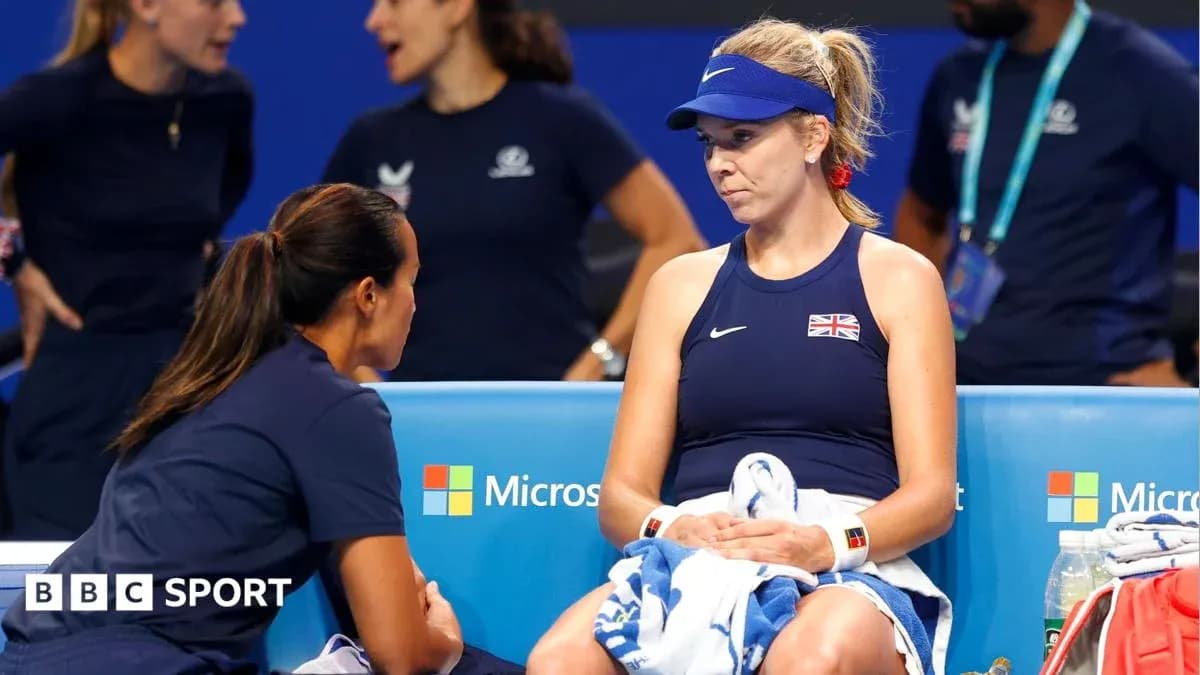
Emma Raducanu’s route back to the sport’s summit has not been drawn up in a lab or on a whiteboard. It has been sketched in the margins of a book written by a man who once hated the game that made him a legend.
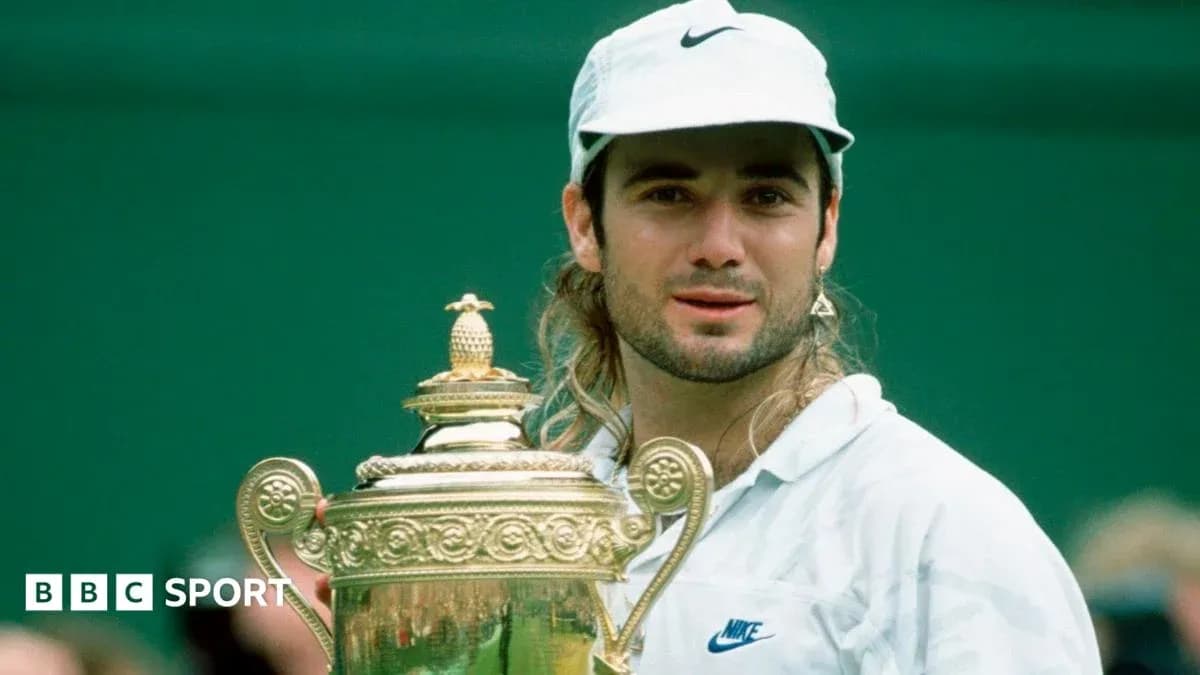
On her way back from injury and uncertainty, the 23-year-old Briton has been leaning on Andre Agassi’s 2009 autobiography, a raw account of brilliance, burnout and the long climb back.
“I was especially intrigued by the passage where he got out of his slump in the late 1990s by creating his own training regimen and finding his way back to the top,” Raducanu told Uniqlo. “It speaks in depth about his early successes and the lows he reached, perhaps as a result of them. A lot of it was so relatable.”
For anyone who watched her tear through the 2021 US Open as an 18-year-old qualifier and win the title without dropping a set, the word “slump” barely seemed applicable back then. She was the future, arriving early and at full speed. Five years on, the picture is more complicated.
From New York’s roar to the grind of recovery
Raducanu’s ranking once soared as high as 10 in the world, in July 2022. Today she sits at 98, a number that says less about her talent than it does about the stop-start nature of her last two seasons.
Physical setbacks have bitten hard. A foot injury disrupted her pre-season. A post-viral illness then forced her off the court for two and a half months earlier this year. Most recently, a stress fracture in her lower right leg ruled her out of the US Open, the scene of that career-defining fortnight.
The calendar has been littered with absences and aborted comebacks. Yet in between, there have been flashes that cut through the gloom.
At Queen’s Club in June, Raducanu pieced together one of the strongest weeks of her career since New York, reaching her biggest final in five years. It was a reminder that the game is still there, the timing still sharp, the competitive fire still close to the surface.
That is where Agassi’s story starts to feel less like history and more like a roadmap.
Agassi’s shadow and a shared struggle
Agassi was once tennis’s ultimate prodigy and rebel, a teenage sensation who later collected eight major singles titles and completed the career Grand Slam, adding Olympic gold in Atlanta in 1996. At his peak, he was world number one and a cultural force.
Between those heights, though, came a fall that still startles. He went four years without a major, tumbled to 141 in the world rankings and found himself estranged from the sport that had dominated his life.
For Raducanu, reading that descent – and the way he clawed his way back – has struck a chord.
Agassi’s hope, when he wrote the book, was modest. “It was literally the hope that if one person read it and it gave them hope, some tools to understand that they're not alone, they can figure it out and get to a healthier place without having to direct their frustrations at the game of tennis, then it was a success for me,” he told BBC Breakfast.
“So, hearing that 17 years later it can still impact somebody, especially in this game, it does make me feel good.”
The connection is not in the numbers, but in the emotional terrain. Agassi’s early years were shaped by a father who introduced him as a future number one, a child pushed towards greatness before he could choose it. That pressure, he says, left him playing with “fear”.
Only when he crashed from the top spot down to 141 did he begin to reconnect with tennis on his own terms, helped by the work he did away from the court, including his foundation for under-served children.
“I had more success from that point forward than I did playing out of fear,” he said. His message to parents is blunt: “The first thing I would advise a parent to think about is that it's not their life, it's their child. You raise a child in their way and they'll never depart from it. You just have to find out what their way is.”
Learning to live with expectation
Raducanu has not spoken of fear in those terms, but she has lived under a similar magnifying glass. Every result since New York has been judged against perfection. Every injury has been dissected. Every coaching change has been a headline.
Agassi’s advice to her now is not technical. It is about survival in a sport that never stops and a world that never looks away.
“I would encourage her to focus on being the best of herself on a daily basis, but don't judge that by results or thinking that somehow you have to be 100%,” he said.
“You have to learn to be 100% of whatever percent you're at [and] be comfortable in your own identity inside of that – not what people say. Back in my day, I could just put down the paper and not read it. Now it seems like it's harder for these youngsters to avoid.”
That last line lands heavily in the social media age. Raducanu’s rise was accelerated by global attention; her setbacks have been amplified by the same machine. Agassi is effectively telling her to shrink the noise and expand the inner game.
A different kind of race
For Agassi, tennis was never a childhood love affair. It was an obligation that he gradually reshaped into something he could own. For Raducanu, the challenge is slightly different but just as demanding: to rediscover the joy of competition under the weight of expectation and her own body’s resistance.
The encouraging sign is that she is looking outward as well as inward. Drawing on Agassi’s experience, she is not only chasing ranking points but also a more sustainable way of being a professional athlete.
Meanwhile, Agassi himself steps back into the spotlight this week in a different role, captaining Team USA at the Laver Cup at The O2 in London from 25-27 September.
“Tennis is a hamster wheel of sorts – the fact that these guys make room in their schedule to play this incredible event tells you how great this event is,” he said. “We're obviously playing Team Europe, in Europe, so I don't know where the crowd is going to have their heart. But I know one thing – they're going to see some spectacular tennis.”
Spectacular tennis is what first thrust Raducanu into the global conversation. Now the task is subtler and harder: to build a career, not just a memory. With Agassi’s words in her ear and a body of hard lessons behind her, the next chapter will not be written in a straight line – but it might just be the making of her.