NBA Punishes Clippers for Salary Cap Violations
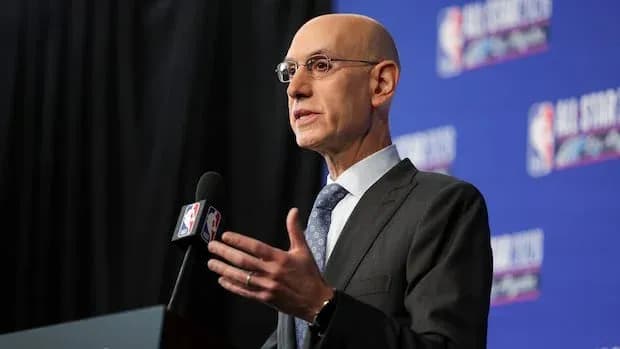
Adam Silver doesn’t often sound conflicted at a podium. On Tuesday, he did.
The NBA commissioner, wrapping up a two-day Board of Governors meeting, laid out why the league came down so hard on the Los Angeles Clippers for circumventing salary cap rules in connection with Kawhi Leonard — and why that decision still sat uneasily with him.
Heavy punishment, familiar precedent
Five first-round draft picks. A $30 million fine. A one-year suspension for owner Steve Ballmer. A slate of additional sanctions. For a franchise that has spent the past decade trying to shed its old skin, the punishment landed like a sledgehammer.
Silver stressed that the league did not reach for that number out of thin air. It reached back into its own history.
He cited the Minnesota Timberwolves case as the guiding precedent, when that franchise once lost five first-round picks for cap circumvention. That, he indicated, framed the Clippers’ fate.
“I think that's, in some ways, the most difficult part of adjudicating these disputes,” Silver said. “While there have to be competitive consequences, in our view, if these rules are violated, we still want to be a 30-team league and we recognize that in some ways we're unfortunately punishing the fans of that team as well.”
The message was blunt: the rules matter, and when they’re bent around a star, the bill eventually comes due.
No “permanent damage,” but a major blow
The league’s yearlong investigation concluded the Clippers had circumvented salary cap rules on Leonard’s behalf, a charge the organization vehemently denied throughout the process. The NBA didn’t waver.
Silver acknowledged the severity of stripping away that much draft capital, but stopped short of calling it franchise-altering in the long term. He said he does not believe the penalties will cause “permanent damage” to the Clippers, even as he conceded the scale of the setback.
The cost isn’t just financial or strategic. It’s emotional. It hits the fan base that had bought into the Ballmer era, into the new arena, into the idea that the Clippers had finally moved into the league’s top tier.
Yet the league’s position was clear: competitive integrity trumps comfort.
Leonard back to Toronto, Ballmer steps back
While the punishment dominated the headlines, the basketball story kept moving. The trade sending Leonard back to Toronto, long in the works, finally crossed the finish line on Monday after receiving the standard league approval.
So the Clippers lose the player at the center of the investigation and, at the same time, absorb one of the heaviest sanctions in recent memory. The timing underlined just how dramatically their landscape has shifted.
Ballmer, for his part, has chosen not to fight City Hall. Earlier this week, he said he would accept the penalties. The fine, he confirmed, has already been paid. The one-year suspension now begins for one of the league’s most visible and energetic owners, leaving a vacuum at the top of the organization.
That absence was already evident in New York.
An empty chair at the Board of Governors
Silver confirmed the Clippers were not represented at the Board of Governors meeting. The franchise is still searching for an interim governor to stand in while Ballmer serves his suspension.
In a room where every team usually has a voice, the silence from one of the league’s most high-profile organizations stood out. It underscored just how far-reaching the punishment is: from the draft room to the ownership suite, from the league office to the fan in the upper deck.
The NBA drew a hard line on cap circumvention and backed it with the harshest tool it has — draft picks. The Clippers now have to live with the consequences and find a way to rebuild their future without the currency that so often defines it.