NBA Punishes Los Angeles Clippers for Salary Cap Violations
LOS ANGELES — The NBA dropped the hammer on the Los Angeles Clippers on Wednesday, delivering one of the harshest punishments for salary cap circumvention in league history and shaking the foundations of a franchise that has spent the last decade trying to shed its old reputation.
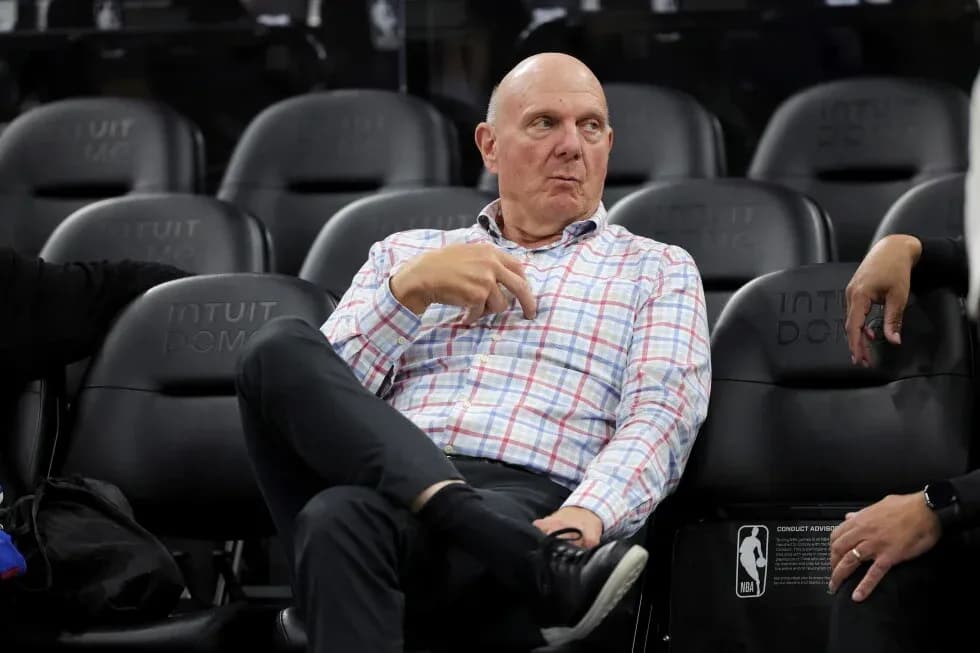
Owner Steve Ballmer has been suspended for one year. The team must forfeit five draft picks. Kawhi Leonard, the two-time Finals MVP and face of the franchise, has been fined $700,000. President of basketball operations Lawrence Frank is banned for six months. Team president of business operations Gillian Zucker is out for a year.
This wasn’t a slap on the wrist. It was a public reckoning.
A Franchise Under Fire
The sanctions follow a nearly yearlong investigation, led by an outside law firm, into whether the Clippers and Leonard violated the league’s salary cap rules through off-court business arrangements. The league concluded they did — flagrantly.
NBA Commissioner Adam Silver did not mince words.
“I am deeply disappointed by the flagrant violations of our rules and by the Clippers’ institutional and leadership failures that led to this misconduct,” he said in a statement. “The severity of the penalties reflects the seriousness of the violations.”
The Clippers, who had repeatedly insisted they had done nothing wrong and expected to be cleared, came out swinging after the decision.
“We vehemently reject the NBA’s findings, which are the result of a heavily biased investigation seeking to justify a predetermined narrative rather than facts and evidence,” the organization said. “What the league told us privately differs from what it announced today publicly, and they have not held themselves close to the standard Commissioner (Adam) Silver set at the start of this investigation to ensure its fairness and accuracy.”
The team vowed to fight on, saying it intends to “vigorously challenge these findings and penalties through every avenue available” and is looking ahead to what it called an “ethical and impartial arbitration process.”
The NBA, for its part, said it worked with the players’ union to confirm the penalties as final and binding on all parties. The league added that the outside firm is still receiving information tied to the case and that “further action” remains on the table.
The Aspiration Deal and a Fallout Years in the Making
The investigation, launched in September 2025, centered on a $28 million endorsement contract between Leonard and Aspiration Fund Adviser LLC, a financial firm that has since filed for bankruptcy. The deal came under scrutiny after a report by journalist Pablo Torre. The picture darkened further when Aspiration co-founder Joseph Sanberg was sentenced earlier this year to 14 years in federal prison for defrauding investors and lenders of at least $248 million.
From there, the league followed the money — and the influence.
According to the NBA, Ballmer “knowingly sought to help Leonard obtain off-court income deals” and approved a business arrangement he knew was a precondition for Aspiration to sign Leonard to the endorsement contract. The league also faulted him for failing to create an environment in which the Clippers complied with league rules.
That failure now costs him a year away from the franchise he bought in 2014 for $2 billion and has aggressively reshaped ever since.
Leonard, speaking through a statement issued by his new agent, Harrison Gaines, accepted responsibility for the chaos around him, if not the league’s interpretation of intent.
“I accept full responsibility for lapses in judgment by people within my inner circle and regret the distraction this situation has caused the fans and my family,” Leonard said.
The NBA said Leonard, acting through his former business manager and uncle Dennis Robertson, violated circumvention rules “by pressuring the Clippers to assist him in obtaining off-court income opportunities, successfully obtaining those opportunities, and failing to reimburse payments by the Clippers for personal expenses.”
Leonard pushed back on the notion that he knowingly crossed the line.
“I entered into my contract with the Clippers as well as the agreements in question in good faith, fully committed to fulfilling my obligations and with no knowledge of any intent on anyone’s part to circumvent the salary cap,” he said.
Power Figures Sidelined
The fallout inside the Clippers’ hierarchy is sweeping.
Frank, one of the league’s more respected front-office operators, was penalized for his involvement in the “impermissible endorsement arrangements” and for approving improper expenses tied to Leonard and his family. He will lose his salary during his six-month ban.
Zucker, the team’s business chief, received one of the stiffest rebukes. The league deemed her “primarily and directly culpable” for the illegal endorsement structures and said she lied to investigators. She, too, will forfeit her pay during her one-year suspension.
Robertson, Leonard’s uncle and former business manager, has been banned from doing business with any NBA team for five years.
The Clippers as an organization will operate under a league-imposed compliance and monitoring program for the next five years, a clear signal that the NBA does not trust the franchise to police itself in the short term.
A Trade in Limbo, a Star in Transition
The timing of the decision lands in the middle of Leonard’s own career pivot.
His trade to the Toronto Raptors has been on hold pending the outcome of the investigation. Toronto never backed away. The Raptors made it clear they still wanted the player who delivered them a championship and a Finals MVP in 2019.
Leonard, in his statement, made it equally clear the feeling is mutual.
“As I return to Toronto, I am focused on what I can control, closing this chapter, and moving forward with a clean slate,” he said.
The punishment does not erase Leonard’s achievements, but it does shadow his legacy with a complex off-court chapter involving money, influence, and the modern star’s leverage over franchises desperate to keep them happy.
A Pattern the League Wouldn’t Ignore
This is not the first time the Clippers have tested the boundaries of NBA rules under Ballmer’s ownership.
In 2015, just a year after he bought the team, the league fined the Clippers $250,000 for violating rules against offering unauthorized business or investment opportunities to players. That case involved a free-agent pitch to DeAndre Jordan that improperly featured a proposed $200,000-per-year arrangement with luxury automaker Lexus.
Back then, the fine looked like a costly warning. This time, the league went much further.
Ballmer, 70, who ran Microsoft as CEO from 2000 to 2014 before turning his full attention to the Clippers, now faces a year away from the franchise during a critical period for its competitive and commercial future.
The organization he rebuilt into a big-market contender, with a new arena and star power to match, now finds itself under league surveillance, stripped of draft capital, and publicly branded as a rule-breaker.
The question now is not how quickly the Clippers can move past this, but how deeply this will shape what they become.