Protect College Sports Act Advances: A New Era for NCAA Regulations
The balance of power in college sports moved a step closer to Capitol Hill on Tuesday.
The Senate voted 74-24 to advance the Protect College Sports Act, a sweeping, NCAA-backed bill that would redraw the rules for the multibillion-dollar industry at the federal level. It needed 60 votes to move forward. It cleared that mark comfortably.
What comes next is less clear. The timing for a final Senate vote remains unsettled, and even if it passes there, the bill still faces a separate battle in the House. But for the NCAA, which has been pleading for years for Congress to step in, this was a significant win.
A national rulebook for a fractured system
The Protect College Sports Act is designed to impose a single national standard on a landscape that has splintered under the weight of court rulings and state laws.
For decades, the NCAA controlled eligibility, transfers, and amateurism with little serious challenge. That era has been blown apart. Judges and state legislatures have opened the door for athletes to move freely from school to school and to be paid directly by their universities, upending the old model and leaving the NCAA scrambling to keep pace.
This bill aims to pull those threads back together.
It would set federal rules on core questions: how many years athletes can compete, how often they can transfer, how they can be compensated, and where the lines are drawn on benefits and payments. In short, it tries to do in one stroke what the NCAA has struggled to do piecemeal.
The most controversial piece sits at the heart of the proposal: an antitrust exemption for the NCAA.
With that protection, the association could write and enforce national rules on eligibility, transfers, and compensation without facing the barrage of antitrust lawsuits that have reshaped college sports in recent years. Professional leagues such as the NFL and NBA operate with antitrust protections, but their players have something college athletes do not—collective bargaining agreements negotiated through unions.
Here, the power would tilt decisively toward the NCAA and its member schools.
Cruz, Cantwell and the NCAA’s big play
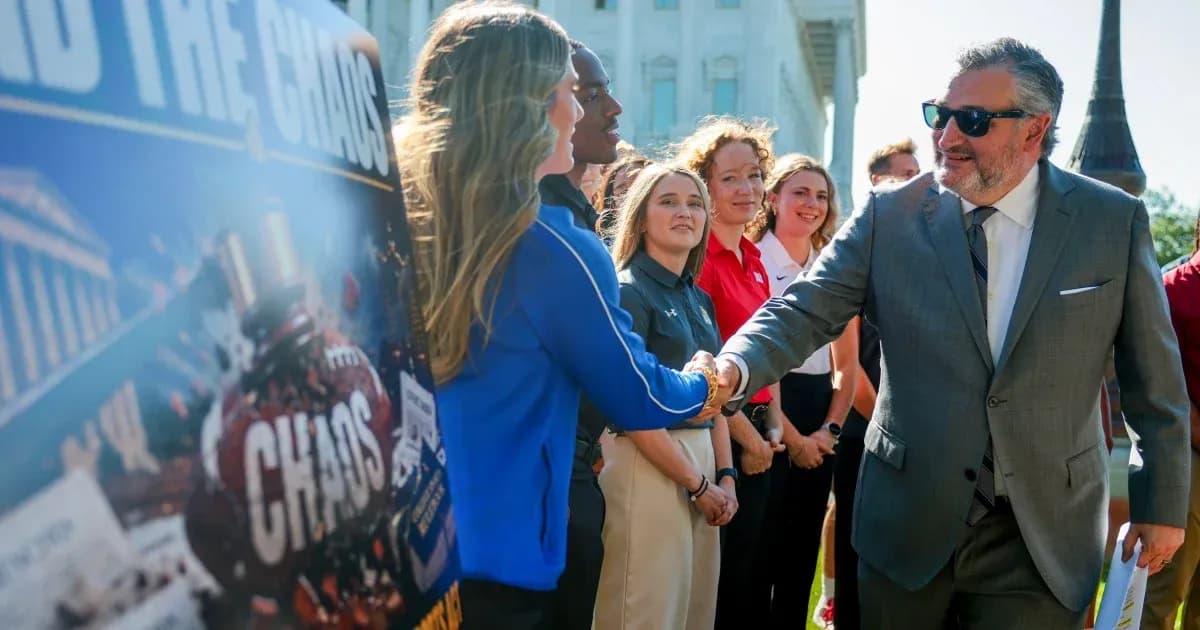
The legislation arrived this year with bipartisan sponsorship from Sen. Ted Cruz, R-Texas, and Sen. Maria Cantwell, D-Wash. That pairing, and Tuesday’s lopsided procedural vote, underlined just how broad the appetite is in Washington to impose order on college sports.
The NCAA has worked hard to get to this point. Years of lobbying, countless visits to Capitol Hill, and a steady drumbeat of warnings about chaos and competitive imbalance have set the stage for this bill. Football and men’s and women’s basketball, the revenue engines of college athletics, sit at the center of those conversations.
Coaches have joined the push. Gonzaga men’s basketball coach Mark Few, standing alongside Cruz and Cantwell on Monday, gave the kind of endorsement the NCAA craves.
“This bill might not be perfect, but it’s far, far away the best thing we got out there right now,” Few said.
For supporters, the message is simple: without federal intervention, college sports will continue to fracture under the pressure of lawsuits, state-by-state rules, and escalating financial demands.
Fierce opposition and a fight over money
The backlash is just as fierce.
The Congressional Black Caucus and the NAACP have lined up against the Protect College Sports Act, warning that it locks in a system that already generates billions for schools, coaches, and media partners while limiting what athletes—many of them Black, especially in football and basketball—can earn.
One of the bill’s loudest critics, Sen. Chris Murphy, D-Conn., did not mince words.
“This bill protects the billions of dollars that coaches and sports industry executives are making over the suppression of compensation for some of the most highly valued athletes in the world,” Murphy told reporters Monday. “What we’re being asked to do is to basically allow colleges and conferences and the NCAA to illegally collude.”
That word—collude—cuts to the heart of the antitrust fight. Opponents argue that granting the NCAA an exemption would give the association legal cover to coordinate restrictions on athlete pay and movement, even as revenues soar and coaching salaries spike.
To them, this isn’t about saving college sports. It’s about preserving control.
The battle for public opinion
The political fight has spilled well beyond the Senate floor.
Cruz recently took the case for the Protect College Sports Act to ESPN’s “College GameDay,” stepping into one of college football’s most visible stages to pitch the bill directly to fans. That appearance signaled how central public perception has become in this debate. Lawmakers aren’t just arguing with each other; they’re campaigning to the sport’s national audience.
Murphy answered on a different platform, laying out his objections on Stephen A. Smith’s “Straight Shooter” podcast. If Cruz framed the bill as a necessary rescue mission for a system on the brink, Murphy cast it as a shield for entrenched power and profit.
Both sides know what’s at stake. The bill doesn’t just tweak a rulebook. It would help decide who controls the future of college sports: the courts and the marketplace, or a federally backed NCAA with renewed authority.
The Senate has taken its first big step. The real collision—between tradition, money, and athlete power—still lies ahead.