2026 FIBA World Cup Preview: A New Challenge for USA
In Berlin, the hunters have finally closed in on the queens.
The 2026 FIBA World Cup tips off on Friday, Sept. 4, with the U.S. women’s national team arriving as the sport’s long‑running superpower and, for the first time in a generation, looking genuinely surrounded.
Nine titles in the last 12 World Cups. Four straight trophies. Not a single World Cup loss since 2006. That’s the weight of history the Americans carry into Germany. It’s also the target on their backs.
Kara Lawson, stepping into the storm as head coach, didn’t bother pretending this is business as usual.
“It’s going to be the most difficult World Cup to win,” she said on Tuesday, Sept. 1. “There’s no question that the world is improving at a rapid rate. It’s so exciting to see ... now when you look at rosters, there’s a number of just high quality players. I think the depth of these rosters is really strong.”
She’s not exaggerating. The numbers tell the story.
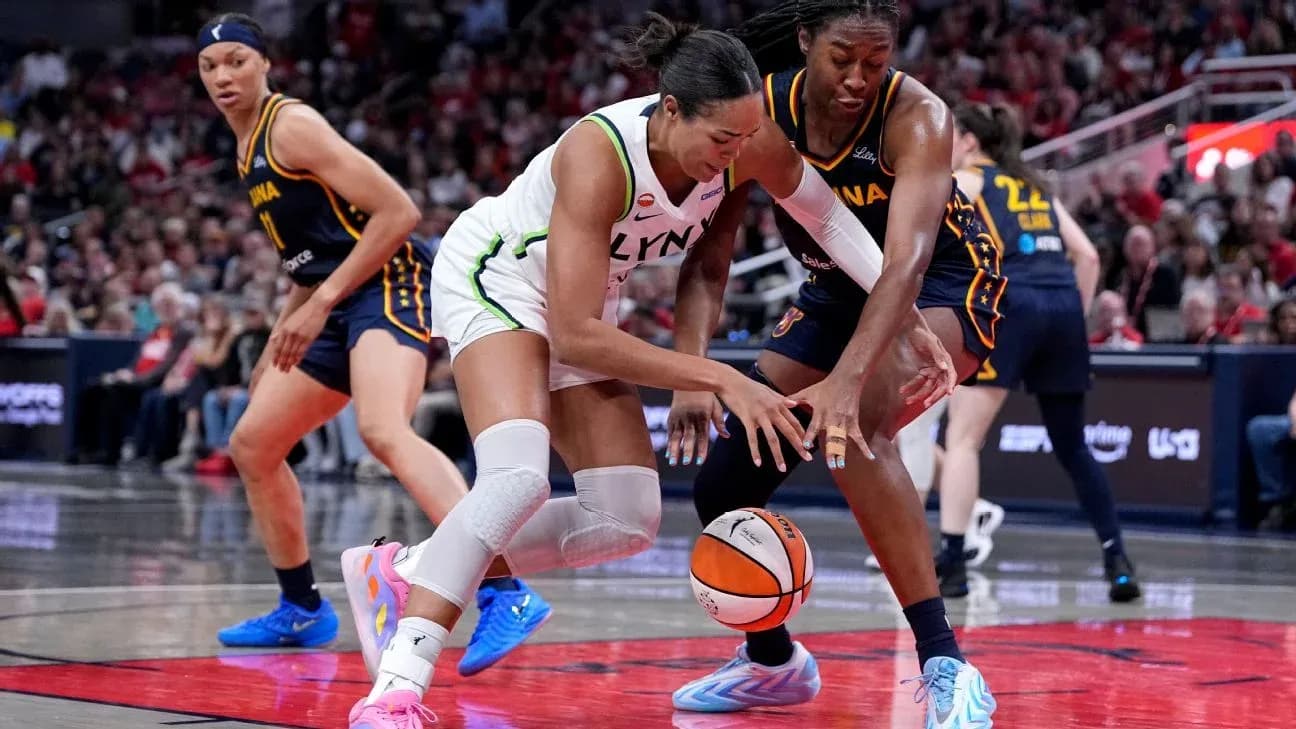
Every player on Team USA’s roster comes from the WNBA. France and Australia are almost as loaded, each arriving with eight WNBA players. Spain brings five. Germany and Belgium have four apiece. What used to be a talent chasm now looks more like a crowded freeway.
Berlin won’t just stage a tournament. It will stage a reckoning.
A new world order in four groups
Sixteen nations, four groups, one unmistakable theme: the gap has closed.
Group A
Group A lands in a fascinating balance of styles and ambition.
Japan, under Corey Gaines, will lean on its trademark pace and precision. Gaines is joined by assistant Tomoki Miyata, tasked with sharpening a team that has grown increasingly fearless on the world stage.
Spain, guided by Miguel Méndez, arrives with the kind of depth Lawson was talking about. Méndez’s staff — Cristina Cantero, Raquel Romo, Anna Montañana — gives Spain a brain trust steeped in European club and international experience. With five WNBA players in the fold, Spain looks less like a dark horse and more like a genuine threat to the throne.
Host nation Germany will not be there to make up the numbers. Olaf Lange leads a staff of Stefan Möller, Parker Lovett and Constanze Wegner, and he has four WNBA players to call on. A home World Cup, a rising domestic program, and a deepening talent pool: Germany suddenly finds itself in the conversation.
Mali, coached by Mali Oumarou Sidiya, rounds out the group. Their staff remains to be announced, but Mali’s presence continues the trend of African nations forcing their way into the global picture, not just appearing, but competing.
Group B
Group B carries a different kind of intrigue — less star‑studded, but full of teams that have learned to punch above their weight.
Hungary, under Péter Völgyi, has quietly built a reputation for discipline and structure. Korea, coached by Park Soo-ho, brings its familiar blend of speed and outside shooting, a style that can unsettle anyone on the wrong night.
Nigeria, with Rena Wakama at the helm, has become a symbol of African basketball’s surge. The rest of the coaching staff is still to be announced, but the program’s trajectory is clear: Nigeria no longer sees itself as an outsider.
Then comes France.
Jean-Aimé Toupane leads a group stacked with eight WNBA players, backed by assistants David Gautier, Christophe Léonard and Grégory Halin. France has hovered near the summit for years; in Berlin, they arrive with the kind of depth and experience that makes them one of the few teams who can stare the U.S. in the eye without blinking.
If any group is built to spring an upset that reshapes the bracket, it might be this one.
Group C
Group C feels like a collision course.
Australia, coached by Sandy Brondello, has long been one of the few nations unafraid of the American aura. Brondello’s staff — Renae Garlepp, Paul Goriss, Kennedy Kereama — oversees a roster with eight WNBA players and a tradition of physical, intelligent basketball. The Opals don’t come to World Cups to participate. They come to win.
Belgium, under Mike Thibault, brings four WNBA players and a style that has evolved from plucky to polished. With Pascal Angillis, Fred Dussart and Dena Evans on the bench, Belgium has the coaching acumen to match its talent. They’ve already proved in recent years that they belong in the upper tier.
Puerto Rico, led by Gerardo Batista, adds a different rhythm to the group — aggressive, emotional, and dangerous when the game opens up.
Türkiye, coached by Andrea Mazzon with assistants Murat Alkaş and Fatih Emre Gezer, waits for its final roster announcements. But Turkish basketball has never lacked for toughness, and in a group this unforgiving, that edge will matter.
One thing is certain: there will be no easy minutes in Group C.
Group D
Group D brings together power, tradition, and a sense of possibility.
China, with Gong Luming on the sideline and Pierre Vincent as assistant, stands as one of the most organized and physically imposing teams in the field. Parts of the staff and roster remain to be announced, but the program’s recent performances suggest a team ready to challenge deep into the knockout rounds.
Czechia, coached by Romana Ptáčková, carries the memory of past highs and the hunger to return to them. Italy, under Andrea Capobianco and assistants Vincenzo Di Meglio, Alessandro Fontana and Angela Gianolla, continues its push to translate strong European performances into global consistency.
Then there is USA.
Kara Lawson leads a staff of Natalie Nakase, Nate Tibbetts and Stephanie White, and a roster drawn entirely from the WNBA. The talent is undeniable. The standard is unforgiving. Anything less than gold will be framed as failure.
But this time, the story feels different. The rest of the world is not just chasing; it’s arriving.
The stage is set: a dominant champion, a deep field, and a World Cup where reputations might not be enough.
Berlin will decide whether the U.S. dynasty bends, breaks, or simply raises the bar again for everyone else.