You sit on the grid and the world goes quiet.
Forty years of posters, late nights, broken parts and borrowed money condense into the few inches between your gloved hands and the steering wheel of a Formula 1 car. You’re not watching it on television any more. You’re in it.
Most drivers never get close. A tiny group make it, then stay. An even smaller band slip in through a side door, taste the air at motorsport’s top table once, and are gone.
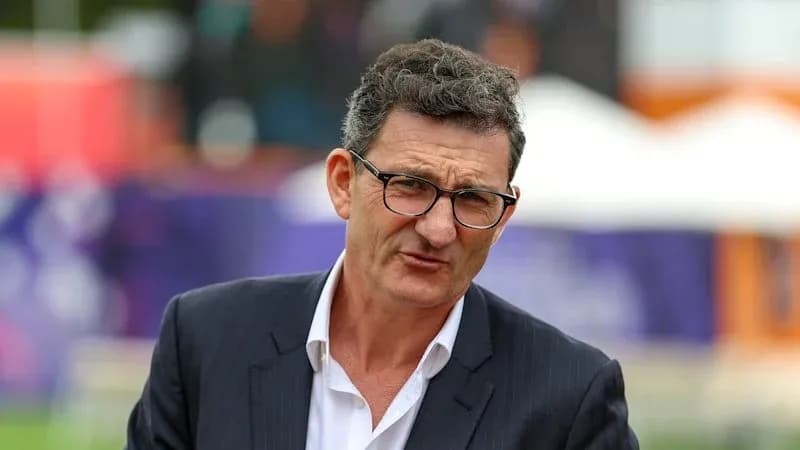
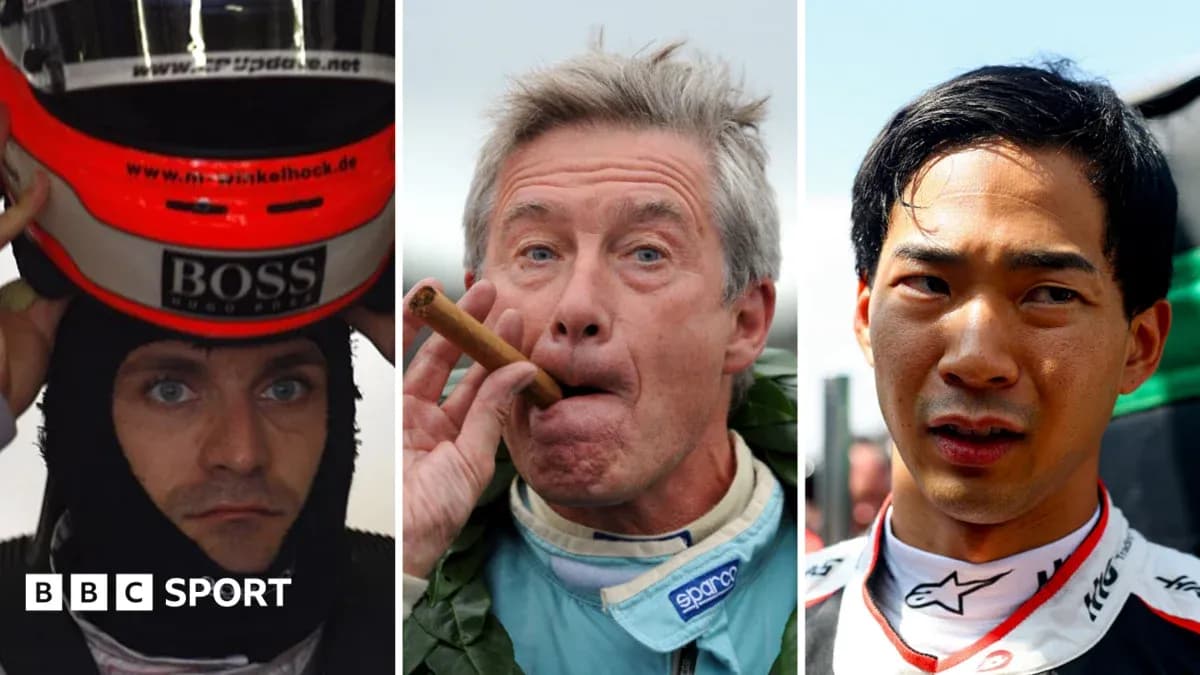
Tiff Needell is one of them.
“I sang the Grand Prix theme tune while I was sat on the grid. I thought I was watching it on telly,” he says now, laughing at the absurdity of it all. One of just 166 drivers to start a single F1 race and never another, he belongs to the sport’s strangest fraternity: the one-hit wonders.
In the old days they arrived with a crash, a phone call and a handshake. Today they come with a clause in a reserve contract and a hurried seat fit. The route has changed. The reality hasn’t. One chance. Maybe half a weekend. Then the sport moves on.
Just ask Ryo Hirakawa.
Hirakawa’s Brief Dream
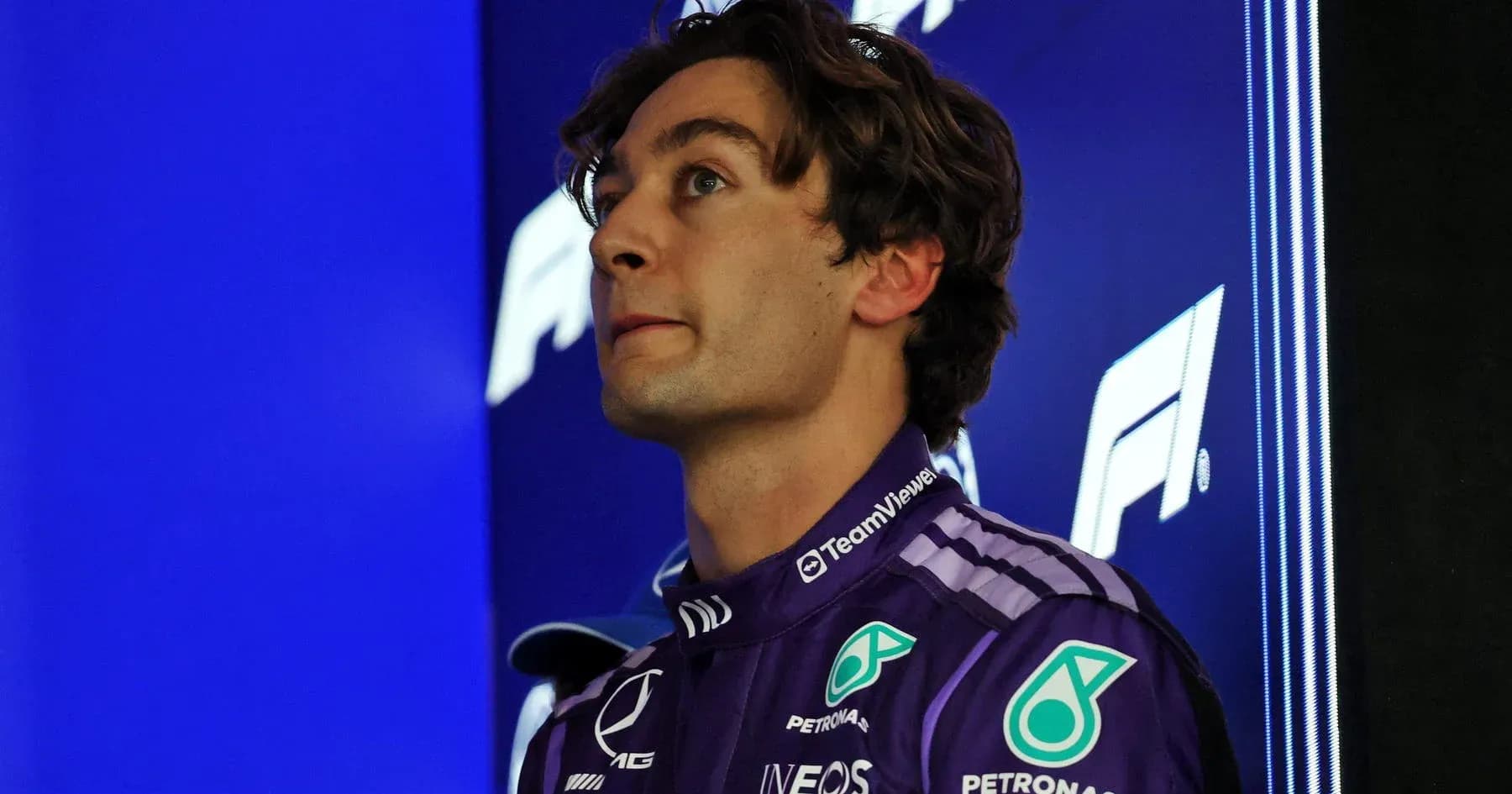
Last month in Mexico, the 30-year-old Japanese driver finally stepped into the world he had chased from afar. A Haas seat opened after Esteban Ocon’s controversial exit. Hirakawa, Toyota factory man and Haas reserve through the team’s tie-up with the Japanese giant, got the nod.
It was everything he had wanted.
“I just need to taste this moment. I'm really happy,” he said after salvaging a point – helped by a few post-race penalties for others. “Just enjoy this moment and see what we can do.”
He barely had time to do that.
Within a week, the door closed. Haas accelerated their plan for 2027 signing Rafael Camara, bringing the Brazilian in early to cover the rest of 2026. Hirakawa’s “dream” shrank back to a line on his CV and a handful of photos in the paddock.
That’s the modern reality. Teams are ultra-professional, driver programmes tightly managed, reserve drivers stacked up in the background. Only a sliver of them ever get a race start. Many of those who do are there to plug a gap, not build a future.
In the 1960s and 1970s, the sport’s “helmet-for-hire” culture made such cameos almost normal. Today it’s rare, but not extinct. A crash, a contract row, a sponsor pulling the plug – and somewhere a reserve driver’s phone lights up.
For Needell, that call came from another era entirely.
From Magazine Prize to the Belgian Grand Prix
Before he ever reached the F1 paddock, Needell’s story started in a place that now feels almost impossible in the corporate world of modern motorsport.
“I won a car in a magazine competition,” he recalls. “I was the kid on the terraces, on the fences – and made it on to the grid. We had no money at all in our family, so I was a working civil engineer five days a week and a mechanic in my garage five nights a week. At the weekend I was the van driver, the mechanic and the racing driver.”
He scraped his way up, not through academies or manufacturer backing, but through sheer persistence. First to the top of the British national scene. Then into Formula 3. After two years, a step into the now-defunct British Formula 1 championship, a quirky offshoot that kept old F1 machinery alive on UK circuits.
The dream, though, was always the world championship.
So he went hunting for it.
“I was out at the Nurburgring trying to get an F1 drive when I got the call,” he says. “I was hanging around the paddock trying to chat up an F2 team, trying to say I had a sponsor, which of course I didn't.”
Then Ensign rang.
“This weekend would you like to drive?”
He jumped in his orange Ford Capri, blasted back from the Nürburgring, squeezed in half a day’s test at Donington Park, and headed straight to Zolder for the 1980 Belgian Grand Prix.
The opportunity came from misfortune. Clay Regazzoni had crashed at Long Beach and injured his back. In that era, serious injuries created sudden vacancies with grim regularity.
“A lot of that in the olden days was due to injuries – chances would come up when someone had crashed and got injured. It was dangerous back then,” Needell says.
Dangerous, and unforgiving.
Humming The Chain on the Back Row
Getting the call was one thing. Getting on the grid was another. This was old-school F1: pre-qualifying, overcrowded entries, underfunded teams and fragile machinery.
“There was something like 30 drivers trying to pre-qualify, and somehow I made it to the back of the grid – 23rd in the Ensign,” Needell says. “It was so much cheaper then – aluminium chassis and a Cosworth DFV engine and away you go.”
Cheap, basic, brutal. But it was still Formula 1.
On race day, the 29-year-old found himself on the back row alongside a man whose posters had probably been on his bedroom wall.
Emerson Fittipaldi. Double world champion. One of the greats. And now, having a wretched weekend in his Skol Fittipaldi car, sharing the last row with the part-time civil engineer from Britain.
“I found myself on the back row of the grid, sitting by one of my big heroes. It was all a bit of a dream,” Needell says.
There were no VIP passes for the family. No paddock clubs. His parents and girlfriend – now his wife – drove to Belgium in the family car and watched from the crowd as he sat on the grid, helmet on, surrounded by legends.
Then the mechanics fired up the engine and walked away. Just him, Fittipaldi and the thudding pulse of 500bhp behind his back.
“When the mechanics started the engine and left me sitting there – me and Emerson – I actually started humming the theme tune [to Fleetwood Mac's The Chain],” he says.
Lights out. Twelve laps of fighting not for glory, not for points, but for the dubious honour of avoiding last place.
“For 12 laps I battled with Emerson for the honour of being last place at the 1980 Belgian Grand Prix. Then the engine broke.”
That was it. His one classified grand prix start. A week later he tried and failed to qualify for Monaco. The door closed almost as quickly as it had opened.
He turned to sportscars, to Le Mans, and eventually to television, where he became better known as the excitable wheelman on Top Gear and other motoring shows. The F1 chapter remained short, sharp and unfinished.
He is far from the only one to walk away with a story and little else.
The One-Shot Highs
Among F1’s one-race club, a few names shine more brightly than others.
Dorino Serafini, for one. In the final race of F1’s inaugural 1950 season at Monza, the Italian shared a Ferrari with Alberto Ascari and ended up classified second. One grand prix, one podium, standing alongside a legend. Hard to beat.
Yet in the modern era, Markus Winkelhock’s single outing at the 2007 European Grand Prix might be the most surreal of all.
He arrived at the Nürburgring as a touring car driver, a late stand-in for the painfully slow Spyker team. Little testing, no build-up, minimal expectation. He lined up exactly where you might expect a rookie in the slowest car to be: last.
F1 already ran in the family. His father Manfred had started 56 grands prix in the 1980s before dying in a sportscar crash in 1985. His uncle Jo tried seven times to qualify for a world championship race and never made the grid.
Markus would at least get that far. But even he admits he was undercooked.
“I had one day testing in Silverstone and one day in Paul Ricard,” he told Motorsport magazine. “The first couple of laps it felt like a PlayStation – so unreal, everything was so fast. You're accelerating till you reach the braking point.
“But after all the [practice] sessions I could feel my neck already.
“I told my mechanics to put some beddings on the side of the headrest, in case the neck is completely done, to lean on with the helmet.”
Then the Eifel weather intervened.
From Last to First in the Rain
Rain drifted in early from the hills, and Spyker, with nothing to lose and no championship to protect, gambled.
Winkelhock started on the right tyres at exactly the right moment. As the leaders tiptoed around on the wrong rubber, chaos erupted. Rivers of water cut across the tarmac. Lewis Hamilton, Jenson Button and others slithered helplessly into the gravel.
The orange Spyker, usually an also-ran, sliced through the spray like it belonged there.
Within a handful of laps, Winkelhock was 33 seconds clear of the field. In F1 terms, that’s not a lead. It’s a different postcode.
“I didn't know it was for the lead. I was just driving,” he said. “At the point they told me, 'You're P1'. I really didn't understand anything that was going on because this race was really crazy.”
For six laps, a car that had no business near the front led a grand prix. A one-off driver, in a backmarker team, at the top of the timing screens.
Then the track dried.
The quicker cars reeled him in, one by one, as the advantage of the tyre call evaporated. On lap 15, a hydraulic problem ended the fairy tale for good.
No points. No podium. But a story that sits right alongside Serafini’s shared second and Needell’s humming of The Chain. A career in a handful of laps, preserved forever in highlight reels and pub conversations.
Life After the Dream
For many of these drivers, the end of an F1 dream is not the end of a racing life. Far from it.
A “lost” F1 career often becomes something else entirely: a glittering run at Le Mans, a title charge in IndyCar, a long, well-paid spell in factory sportscar programmes. The cars are different, the circuits sometimes unfamiliar, but the speed and the stakes remain.
Even when rallying’s Group B monsters were stealing headlines in the 1980s, Formula 1 still towered over everything.
“Being a grand prix driver was where you wanted to go,” Needell says. “But I always had my eye sideways for any other drives.
“Single-seaters are the best cars to drive and they are made and designed to race. And the ultimate is the grand prix car. Everything else is second best.”
He knows how fine the margins were. No backing, no big sponsor, no long-term deal. Just one chance, grabbed with both hands.
“I was so proud I got there on no sponsorship and no money. I suppose I was a bit annoyed I couldn't stay for longer.
“But as I always say, 'unluckier than a few, but luckier than millions'.”
For Hirakawa, Winkelhock and the rest of F1’s one-race club, that’s the truth that lingers. You only get one debut. Some get a career to follow. Others get a single afternoon, a handful of laps, and a lifetime to replay them in their heads.