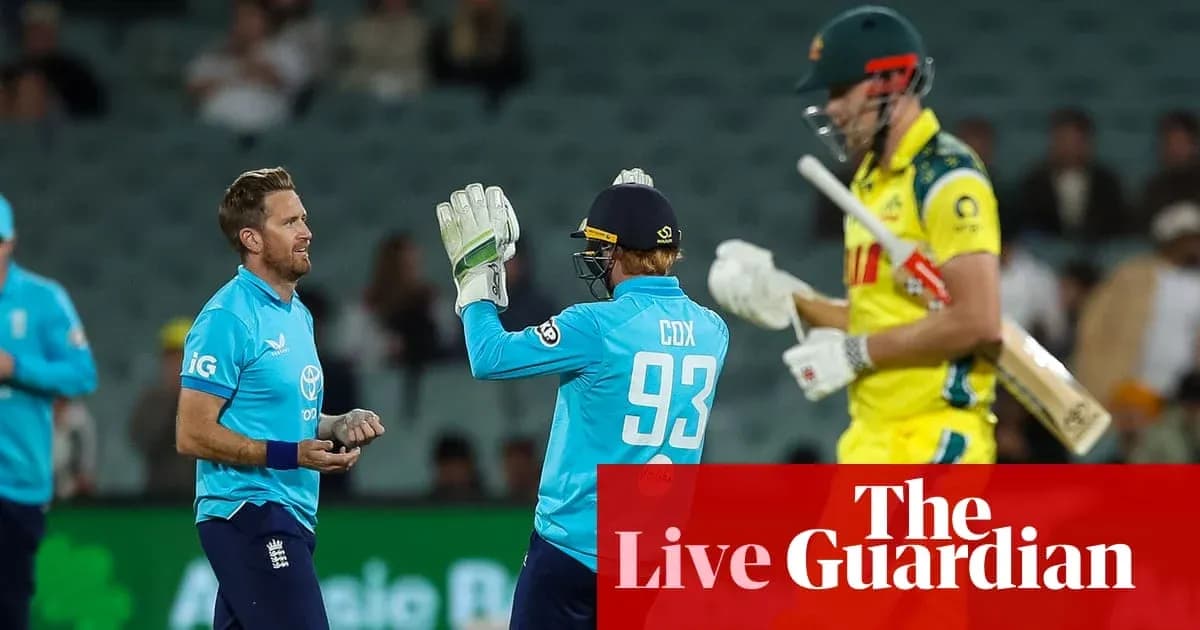
England arrived in Adelaide with questions hanging over them. They walked off having thrashed 355 – their highest ODI total in Australia – and then torn through the home top order with a new-ball spell that crackled with intent and a hint of menace.
This was a different England. Same shirts, very different posture.
Banton lights the fuse, finishers light the fire
The innings split into three distinct acts.
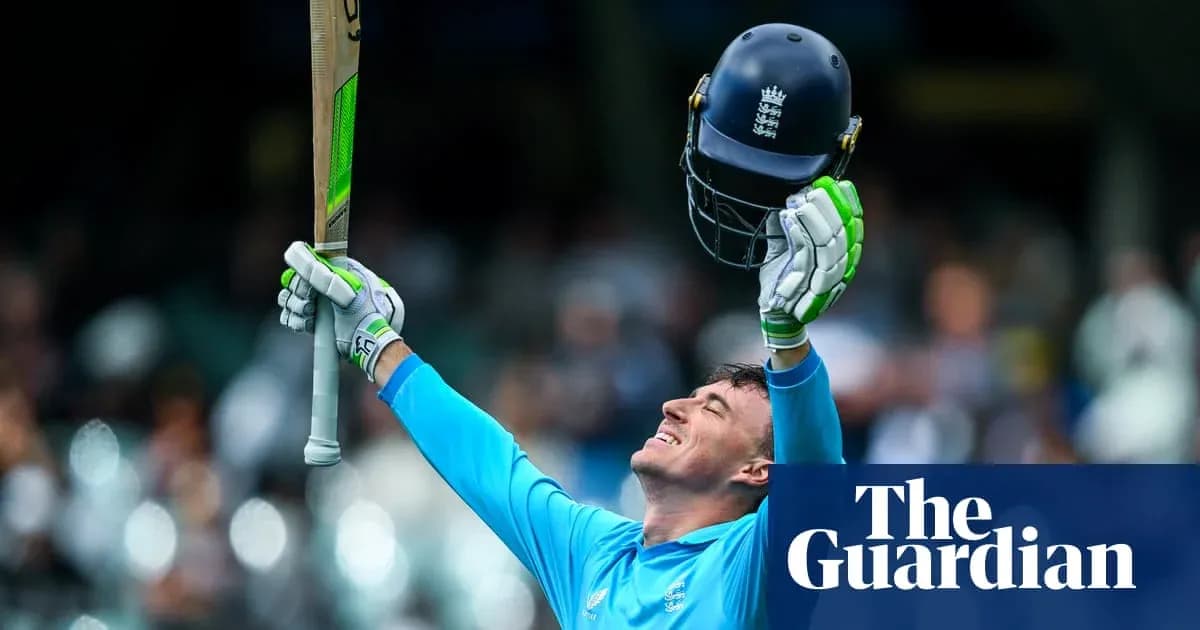
Tom Banton set the tone. His 121 from 99 balls, with four sixes, was the innings England have been waiting for from him in senior colours: crisp through the covers, strong off his pads, ruthless on anything even half a yard short. On a ground where par has drifted upwards over the years, he didn’t just anchor; he accelerated, forcing Australia to chase him rather than the other way round.
Behind him, the experienced core of Ben Duckett, Joe Root and Harry Brook played within themselves. Between them they mustered 76 off 99 balls without clearing the ropes once. It was almost old‑fashioned one‑day batting, busy rather than brutal, and for a while the scoreboard’s climb slowed.
Then came the surge.
Jordan Cox, Will Jacks, Sam Curran and Gus Atkinson treated the closing overs with the kind of disdain that has underpinned England’s white‑ball revolution. Together they plundered 148 from 102 balls, hitting five sixes and ripping apart whatever plans Australia had for the death.
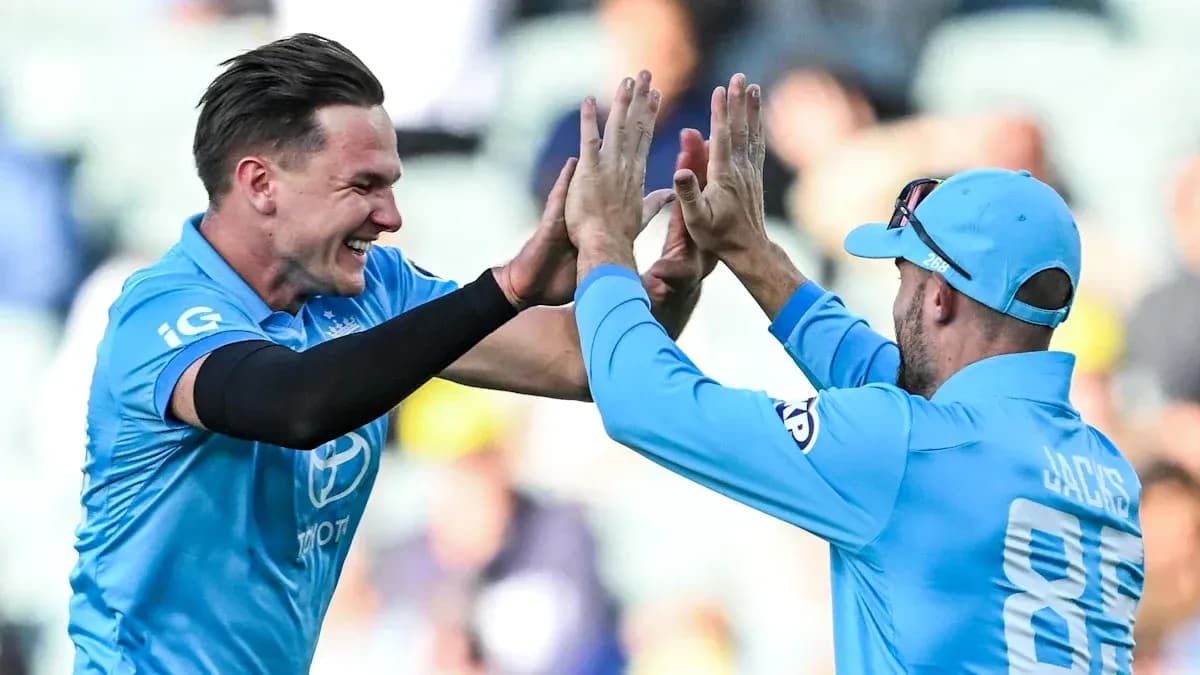
Jacks was the loudest of the late‑order voices. He romped to a 39‑ball fifty, clubbing Jack Edwards straight and square, before Atkinson arrived to apply the exclamation mark. The fast bowler swung hard and clean, launching two sixes off Edwards in the final over. Eighteen came from it, Jacks finished with a muscular blow down the ground, and England strode off with 355 on the board. A record for them on Australian soil, and a number that demanded something extraordinary in reply.
Australia, for their part, needed their own slice of history. No side has ever chased more than 334 in an ODI in Australia. They were being asked to go past that, on a night when the ball would do just enough and the bowlers would not miss.
Atkinson rips out the heart
If Banton and the finishers had shifted the mood, Gus Atkinson seized it and turned it into a statement.
Given the new ball, Atkinson started full and fast, finding a hint of outswing and immediate control. Mitch Marsh scratched a single, Travis Head – on his home ground and fresh from tormenting attacks around the world – played and missed. Atkinson, who had already showcased his hitting earlier, now went to work with the ball.
Sonny Baker, preferred to Jofra Archer at the other end to exploit early swing, offered contrast: bustling, skiddy, searching for movement. He beat Marsh, leaked four leg‑byes, and watched Head collect a single. Australia were 7 for 0 and feeling their way.
Then Atkinson detonated the chase.
In his second over, Head decided it was time to impose himself. Atkinson banged in a lifter outside off, Head’s eyes lit up, the stroke never matched the ambition and Joe Root at slip took the simplest of catches. Head gone for 7. Adelaide fell quiet.
One ball later in the spell, Cooper Connolly discovered what it feels like to be hunted by a bowler on a roll. Atkinson pinned him back, drew the edge, and Harry Brook at second slip accepted the gift. Australia, 13 for 2, were suddenly staring down a very long road.
Gus Atkinson had faced four balls with the bat and hit two of them for six. With the ball, after 12 deliveries, he had 2 for 7 and the game in his hands.
Baker then joined the party. Marsh, never quite settled, prodded and poked, and when Baker drew him into a stroke, Root flung himself to his left to pull off a fine catch. Marsh gone for 2. Australia 13 for 3. Baker looked like a kid opening an early Christmas present, Root roared, and England’s cordon swarmed.
Josh Inglis and Matt Renshaw, fresh from success with the Test side in South Africa, walked in with a mountain in front of them and the scoreboard already screaming. Realistically, they both needed something close to a miracle – 150 apiece, as one observer wryly noted – to drag Australia back into it.
England’s new attack bares its teeth
Atkinson refused to loosen his grip. His figures soon read 4-0-11-3, a spell as disciplined as it was dangerous. He conceded fewer runs in four overs than he had scored in four balls with the bat. It was that kind of night.
His third wicket came with Inglis looking increasingly jittery. Atkinson seamed one in and rapped him on the pad. The next ball held its line, Inglis pushed, the on‑field umpire said no, but Brook rolled the dice with the review. Snicko showed the faintest of touches. England had their man. Australia slumped to 29 for 4.
Brook’s captaincy had already been bold. He backed Baker over Archer with the new ball, stationed himself in the slips, and reaped the rewards. The gamble on Baker paid off early; the decision to keep Atkinson going paid off again and again.
When Baker did err, Renshaw pounced. Two handsome clips off his pads brought boundaries and a hint of counter‑punch in the sixth over. Eleven runs came from it.
Renshaw and Green resist as chances go begging
At 32 for 4, Cameron Green joined Renshaw. From that point on, it became their game: survive, then stretch, then somehow make a contest of it.
Renshaw settled first. Against Baker he looked composed, picking off anything on his pads and driving with authority. By the time the eighth over closed, he had 16 from 20 balls; the rest of the Australian line‑up had combined for 13 runs and three wickets from 26 deliveries. Two different matches were unfolding on the same pitch.
England, so ruthless early, suddenly showed a human side. The first blemish came when Josh Inglis, still on thin ice, guided Baker loosely and Root, going low to his right at slip, couldn’t cling on at full stretch. Brook had opted against a second slip; the ball flew into the vacant space and away. A minor blot, but a chance gone.
The drops kept coming.
Liam Dawson, introduced after a lively five‑over burst from Baker (1 for 25), saw Green top‑edge a pull off an Atkinson bouncer. It went high, hung in the night, and Dawson, running in, shelled it. Soon after, Renshaw slashed Dawson to short extra-cover, where Will Jacks couldn’t hold on. That made three missed chances, and by rights England should already have been into the tail.
Instead, Renshaw and Green began to stitch something together. Green unveiled the strokeplay that has made him such a tantalising prospect: a crisp square drive here, a firm punch down the ground there. Renshaw mixed power with touch, thumping Dawson over mid‑off one ball, then dinking a delicate lap for three the next.
By the time drinks arrived, England’s position remained dominant but not immaculate. Atkinson’s opening burst read 3 for 22 from seven overs. England had dropped three catches. Australia were 62 for 4, Renshaw on 31, Green on 15. The win predictor gave Australia 4% – a sliver, nothing more – yet Renshaw, in particular, refused to go quietly.
Archer returns, but Renshaw and Green keep dreaming
Gus Atkinson finally earned a breather. Jofra Archer, held back and then teased as an option earlier, came on as the third seamer with Australia 62 for 4. He looked smooth from the off: three dots, three singles, that familiar effortless lift off a length.
The ball that had hooped around in the first ten overs now did less. The swing faded, the surface flattened, and Renshaw and Green started to see opportunity where others had seen only peril.
Renshaw targeted Dawson again, driving over the infield and sweeping with control. Green picked off Sam Curran when Harry Brook turned to his fifth bowler. The contrast was striking: the towering Green against the bustling left‑armer, Little and Large in cricketing form.
Green glanced Curran fine for two, then climbed into a short ball with a mighty pull that sailed into the stands. Eleven came from the over. The partnership moved to 56 from 11 overs. Australia reached 85 for 4 in the 18th, then 93 for 4 in the 19th, as Archer found some late movement that was too late even for Jordan Cox’s dive, racing away for four byes.
The required rate hovered around eight and a half an over. Just about within reach on a ground like Adelaide. Just about plausible if these two could somehow bat another 15 overs together.
Renshaw’s numbers told the story of his defiance: 47 not out in a team total of 100 for 4 by the 20th over. Green’s 33 was growing in authority. Australia’s win probability stayed low, but the game refused to die.
England dominant, but a question lingers
For all the dropped chances and the late‑innings resistance, the shape of the contest remained clear.
England had stormed to 355, powered by Banton’s hundred and a ferocious late surge from Jacks, Curran, Cox and Atkinson. With the ball, Atkinson and Baker ripped out Australia’s top order, removing Head and Marsh early and leaving the hosts clinging to Renshaw and Green.
Archer’s presence, even used sparingly, underlined the depth of England’s seam stocks. Dawson’s control and Curran’s versatility completed an attack that looked far more rounded than the one that had stumbled not so long ago.
One nagging question hung over it all: the continued absence of Adil Rashid. On a night when spin was serviceable rather than central, his omission still felt like a storyline rather than a footnote.
England, though, had made their point. They had gone from doubt to dominance, from whispers of fragility to a record total and a ruthless new‑ball assault.
If this is the version of England that turns up for the rest of the tour, how many more records are about to fall?