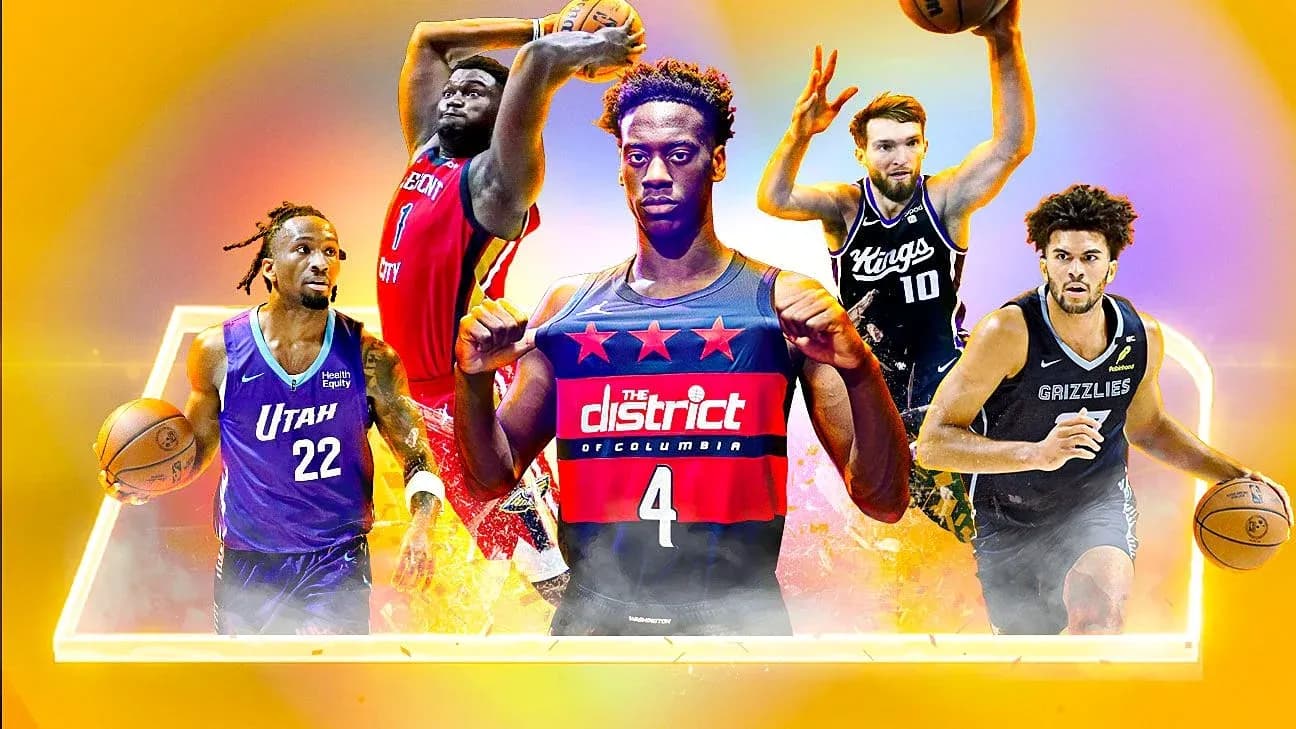
AJ Dybantsa and Zion Williamson: The NBA’s Unique Middle Class
The NBA’s latest top‑100 slice, from 78 down to 51, reads like a study in tension. Rising stars trying to crash the elite tier. Former All-Stars fighting the clock, their own bodies, or a changing league. Role players who, on the right team, feel a lot bigger than their ranking.
This isn’t the glamour end of the list. It’s the pressure end.
A No. 1 Pick with History on His Back
Washington hasn’t had a No. 1 overall pick since John Wall. Now the franchise hands the keys, or at least a copy of them, to AJ Dybantsa.
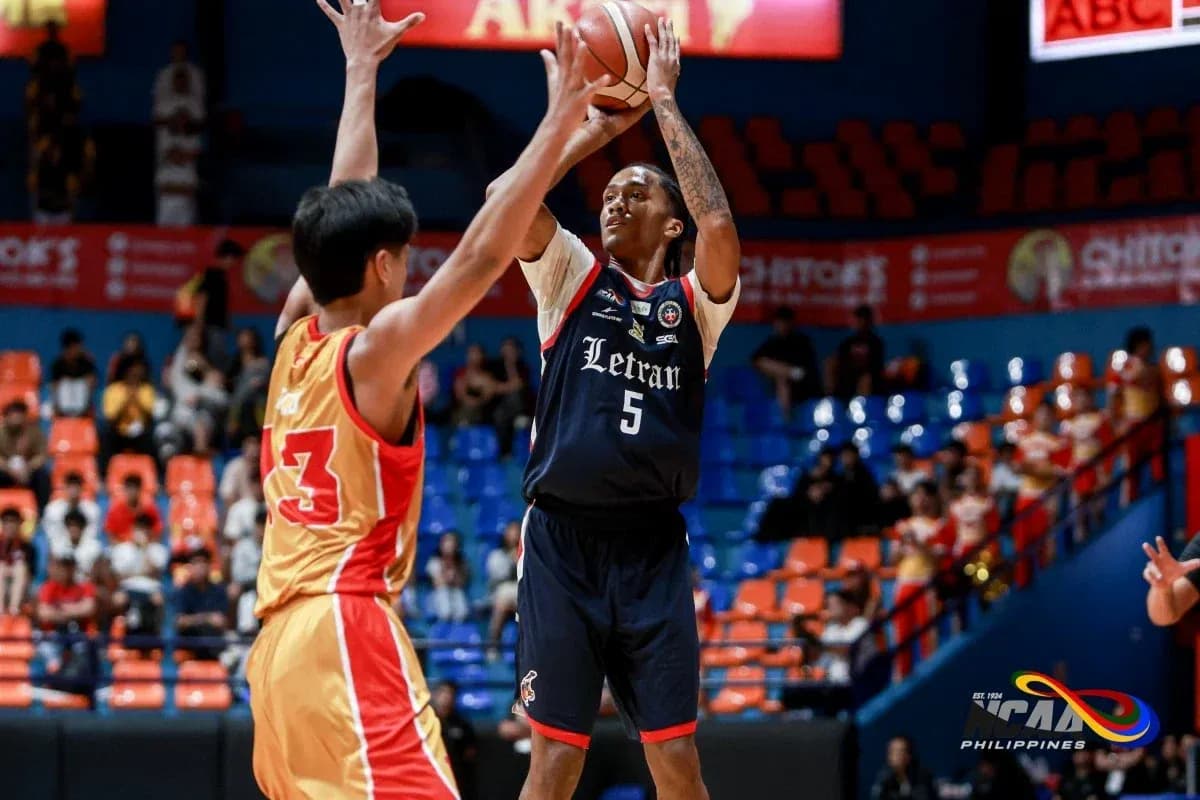
At 19, fresh off leading the nation in scoring at BYU with 25.5 points per game, Dybantsa arrives as something rare: the first player since Glenn Robinson in 1994 to top the college scoring charts and then go No. 1 in the draft. He doesn’t float around contact; he hunts it, a forward built for modern spacing who lives at the line and thrives off physicality.
The twist? He walks into a locker room that already features Anthony Davis and Trae Young plus a cluster of recent first‑rounders. Where he lands in that hierarchy will decide more than his Rookie of the Year chances. It will tell Washington whether this is the year they finally crawl out of the lottery after five straight misses.
Ja and Dame in Portland: Same Questions, New Jersey
At No. 77, Ja Morant is no longer the unstoppable rising force he once looked in Memphis. He’s the question mark in Portland.
Seventy‑nine games in three seasons is the problem. The talent is not. Since he entered the league in 2019‑20, he’s one of only nine players to average at least 20 points and seven assists, a live-wire guard who bends defenses with his burst. Now he lands on a Trail Blazers team already jammed with guards: Damian Lillard, Jrue Holiday, Scoot Henderson, and eventually Shaedon Sharpe when his right meniscus heals.
Lillard, at 69, returns from a lost season to the city that made him a legend. He hasn’t played for Portland since 2022‑23, but the last time he did, he was still a 25‑point scorer hitting 38% from deep. The Achilles injury clouds everything, yet he remains the franchise’s all-time leading scorer and second in assists.
How coach Micah Nori sorts those minutes will define Portland’s identity. How Morant and Lillard hold up physically will define their ceiling.
Culture Changers and Defensive Menaces
Dillon Brooks has worn a lot of labels. “Dillon the Villain” is giving way to something more substantial.
Now 30 and ranked 76, Brooks just posted a career-high 20.2 points per game as the Suns surged unexpectedly in the West, good enough to earn him a three‑year extension. Before that, Houston jumped from 22 to 41 wins in his first season there. He ranked top 10 in made two‑point jumpers last year, a nod to his willingness to live in the in‑between areas most players have abandoned.
On the other end of the spectrum, Cason Wallace (75) is proof that defense still moves the needle. All-Defense in his third season, he led the league in steals and topped the NBA in total steals and deflections. Opponents shot just 41.6% against him as the closest defender, fifth best in the league, and in the playoffs he smothered Austin Reaves, Devin Booker, Stephon Castle and Jalen Green into a combined 25% from three.
Then there’s Ausar Thompson (59) in Detroit, a wing whose jump shot still invites skepticism but whose defensive havoc is already elite. He led the NBA in steals per game and finished second in total deflections, then ramped it up in the postseason with nearly four combined steals and blocks per night. If Victor Wembanyama didn’t exist, Thompson might be sniffing Defensive Player of the Year chatter already. Detroit just locked him up on a deal that could look like a bargain very soon.
Big Men with Big Questions
Isaiah Hartenstein (74) has played only 94 games over the past two seasons, yet when he’s on the floor for Oklahoma City, the identity is obvious. He’s the rugged interior presence, averaging a double‑double while wrecking possessions on defense and punishing the offensive glass. ESPN Analytics had him fifth in total defensive net points last season. Paired with Chet Holmgren, he helps form one of the league’s most imposing big‑man tandems—if he stays healthy.
Walker Kessler (73) is another bet on size and timing. The Lakers paid heavily in unprotected first‑round picks and swaps to pry him from Utah, then handed him four years and $130 million. He’s averaged 2.4 blocks per game since entering the league in 2022‑23, second only to Victor Wembanyama over that span. The vision is clear: Kessler as the defensive anchor and lob finisher next to Luka Doncic. The risk is obvious too: he played just five games last season after shoulder surgery.
In Indiana, Ivica Zubac (66) anchors a different kind of project. He came off a breakout year where he finished fourth in the league in rebounding and made second‑team All‑Defense, then saw injuries interrupt what looked like a second straight double‑double campaign. Even so, he held opponents to just 49% at the rim on at least 200 attempts defended, fourth best in the league. For a Pacers team trying to re‑establish itself with a healthy core, his rebounding and rim protection are non‑negotiable.
Domantas Sabonis (58) sits in a more complicated space. Sacramento’s season unraveled when knee surgery limited him to 19 games, ending his three‑year run as the league’s leading rebounder per game. He still ranks second in double‑doubles over the past five seasons and remains a gifted passer and offensive hub. But his lack of three‑point range and below‑average rim protection continue to make roster construction around him a delicate puzzle.
Jarrett Allen (63) doesn’t carry those spacing issues, but his role in Cleveland is shifting. With James Harden now in town, the Cavaliers leaned hard into the Harden‑Allen pick‑and‑roll late last season. Allen set 13.7 on‑ball screens per game for Harden, a top‑five figure among duos running at least 100 such actions in that span. The result: 18.4 points per game for Allen on a blistering 70.5% shooting in those 13 regular‑season games. He finished the year at 64% overall, fifth best among qualified players.
Guards on the Rise, and One in Limbo
Utah’s backcourt is suddenly crowded with intrigue. Keyonte George (68) took a massive leap, one of only 18 players to increase his scoring average by at least 6.8 points, and one of 11 to average at least 23 points and six assists last season. He joined Deron Williams as just the second Jazz player to hit 3,000 points and 1,000 assists within his first three seasons.
Now the Jazz add Jaren Jackson Jr. (53), whose arrival in February slipped under the radar because he only played three games for them. His career averages—18.6 points, 5.6 rebounds, 1.9 blocks—slot neatly beside Lauri Markkanen, George, Ace Bailey and No. 2 pick Darryn Peterson as Utah chases its first postseason berth since 2022. Jackson’s defensive impact remains elite: he ranked top 10 in effective field goal percentage allowed as the contesting defender among those who challenged at least 800 shots.
In Atlanta, Nickeil Alexander-Walker (55) turned a career on the margins into a breakout season. He jumped to 20.8 points per game, the reigning Most Improved Player, and did it with efficiency as a starting shooting guard on one of the league’s hottest teams down the stretch. His 11.4‑point scoring bump from 2024‑25 to 2025‑26 was the largest increase in the NBA.
Boston’s Payton Pritchard (70) finally got the volume he’d long craved. His touches spiked from 51.8 to 68.9 per game, the second‑largest increase among players with at least 4,000 touches in each of the past two seasons. With that came career highs: 17.0 points, 3.9 rebounds, 5.2 assists, and 50 starts after just 17 total over his first five years.
Darius Garland (62), by contrast, slid down the rankings after injuries held him to 45 games and a midseason trade sent him from Cleveland to the Clippers. The good news for L.A.: they went 13‑6 in his 19 appearances after the deal. Garland, already one of 71 active players with at least 1,000 made threes, ranked 10th in points per direct pick among 51 players who ran at least 1,000 on‑ball screens as the handler. Ty Lue’s matchup‑driven offense now has another high‑end pick‑and‑roll organizer and spacer.
Desmond Bane (52) gave Orlando exactly what it lacked: reliability from deep and durability in the lineup. He started all 82 games—one of only four players in the league to do so—and has now averaged at least 20 points in three of the past four seasons. His run of five straight years with two or more made threes per game on strong percentages is the backbone of the Magic’s spacing and playoff ambitions.
At the other end of the health spectrum sits Zion Williamson (51). The Pelicans finally got something close to a full season from him—62 games, the second‑highest total of his career—but the explosive dominance that once defined him faded. His usage and scoring dipped to career lows, 21.0 points per game, even as he still led the league with 15.4 paint points per game among players who appeared in at least 40 contests. The problem is no longer just availability. It’s fit. In a league obsessed with spacing and switchability, his defensive limitations and lack of range make him harder to build around, and he hasn’t made an All‑Star team since 2023.
Wings Who Decide Seasons
Paul George (67) lands in Boston with a familiar mandate: help a contender get over the top. The Celtics become his fourth team after stints in Indiana, Oklahoma City and Philadelphia. His last act for the 76ers was a sharp first‑round series against these same Celtics—17.4 points per game on 55% from three, plus 4.0 rebounds, 3.0 assists and 1.4 steals—in a seven‑game win. Now he arrives as part of the blockbuster Jaylen Brown trade, a 36‑year‑old still capable of elite two‑way stretches. He needs just two more threes to pass Kyle Korver for eighth on the all‑time list.
Mikal Bridges (61) remains the league’s iron man. His consecutive games streak stands at 638, eighth all‑time, and he could leap Harry Gallatin, Bill Laimbeer and Dolph Schayes this season. It’s also the second‑longest streak to start a career, trailing only Johnny Kerr’s 844. His scoring dipped in the regular season, but when the playoffs hit, he sharpened: 56% shooting and big shots during the Knicks’ run. New York knows exactly what it’s getting every night—and how rare that is.
Michael Porter Jr. (60) needed a reset and found it in Brooklyn. The Nets traded for him and a 2032 unprotected first‑rounder, and Porter responded with a career‑best 24.2 points per game and 36.3% from three, his fourth straight season above 36% from deep. He notched 14 games with at least 30 points, more than double any other season in his career, before a strained left hamstring cut his year short. On an expiring $40.8 million deal and eligible for up to four more years and $234 million, he’s now one of the league’s most intriguing contract calls.
Julius Randle (54), now also in Brooklyn, arrives with his own contradictions. He averaged 20‑plus points for the fifth time in six seasons, one of just four players to hit 1,500 points, 500 rebounds and 300 assists last year. Then the playoffs hit and his efficiency cratered: five fewer points per game, 39% from the field, 24.4% from three. The Nets, owners of the league’s 30th‑ranked offense, will lean on his playmaking, especially given his 5.0 assists per game in lineups where Minnesota played without a traditional point guard. He has two years left on his deal, including a 2027‑28 player option.
Trey Murphy III (57) in New Orleans is the archetype every front office chases: true 3‑and‑D with hints of more. A career 38% shooter from deep on high volume, he ranked sixth in made threes per game last season and has quietly increased his assists every year. He just became only the second player in league history with at least 200 made threes and 100 dunks in a season, joining Lauri Markkanen’s 2022‑23 campaign. At 26, on a team constantly juggling its core, he’s one of the league’s most attractive trade targets.
Jaden McDaniels (56) in Minnesota is the defensive specialist who suddenly looks like much more. Long viewed as a stopper, he climbed 19 spots in the rankings largely because of his offensive growth: 14.8 points, 2.7 assists and 41% from three, all career highs. His Game 6 masterpiece against Denver—32 points to close out the defending champions—offered a glimpse of what happens when his confidence catches up to his tools. He defended 2026 All‑Stars for 1,163 matchups last season, fourth most in the NBA, and with Julius Randle and Naz Reid gone plus Donte DiVincenzo out long‑term with a torn Achilles, his offensive role will only grow even after LaMelo Ball’s arrival.
Aaron Gordon (64) still embodies Denver’s winning formula when he’s on the floor. With him, the Nuggets played at a 62‑win pace last season. Without him, that dropped to 48‑win territory. A calf issue hampered him in a first‑round exit, part of a three‑year stretch in which he’s averaged only 53 games played since the 2023 title run. Yet when he’s available, his cutting, defense and versatility remain the perfect complement to Nikola Jokic and Jamal Murray. His shooting has quietly transformed too: 41% from three over the past two seasons after sitting at 32% over his first 10 years.
Brandon Ingram (65) arrives at the Clippers as one of the league’s great paradoxes. Since his 2019‑20 Most Improved Player season, he’s essentially lived in the same neighborhood: 20 to 25 points per game, high usage, roughly league‑average efficiency. The production is steady. The impact is harder to pin down. Now on his third team in three seasons, he’ll keep filling up the scoring column—he made 197 midrange shots last year, third most in the league behind DeMar DeRozan and Kevin Durant—but whether he can tilt games in other ways remains an open question.
A Rookie Who Refused to Play Like One
VJ Edgecombe (72) didn’t just survive his first NBA season. He carried a starter’s load from opening night on a Philadelphia team that reached the second round.
The No. 3 pick averaged 16.0 points, 5.6 rebounds and 4.2 assists, hitting 35% from three. He logged 2,623 minutes, the most by a rookie since Ben Simmons and Donovan Mitchell in 2017‑18, and finished third in Rookie of the Year voting. That draft slot suggests expectations; his workload and composure suggest something more.
A Fresh Start for a Scorer with an Edge
Tyler Herro (71) endured a brutal offseason: traded from Miami to Milwaukee, then involved in a physical altercation with former teammate Bam Adebayo in Las Vegas weeks later. Now he returns home to Milwaukee as a 2025 All-Star who evolved from sixth man to primary initiator with the Heat.
The Bucks, stripped of Giannis Antetokounmpo and rebuilding their identity, can offer him something simple: the greenest of green lights. GeniusIQ had him second in points per direct isolation last season among players with at least 100 isos, trailing only Shai Gilgeous-Alexander. A scorer with that profile, back in his hometown, on a roster searching for a new focal point—there’s no mystery about how this will look. Only how far it can go.
From Dybantsa’s first steps in Washington to Zion’s uneasy middle age in New Orleans, this stretch of the rankings is where careers pivot. Some of these players will leap into the top 30 next year. Some will slide out of the top 100 altogether.
The numbers are in. The roles are set. Now the only question left is who turns this season into a launching pad—and who finds out they’ve already hit their ceiling.