Jordi Cruyff leans into the question and barely blinks. Risk? This, he insists, is not it.
After one of the most demanding and dramatic transfer windows in Ajax’s recent history, the sporting director is adamant: the club has not gambled with its future. It has doubled down on its identity — and its name.
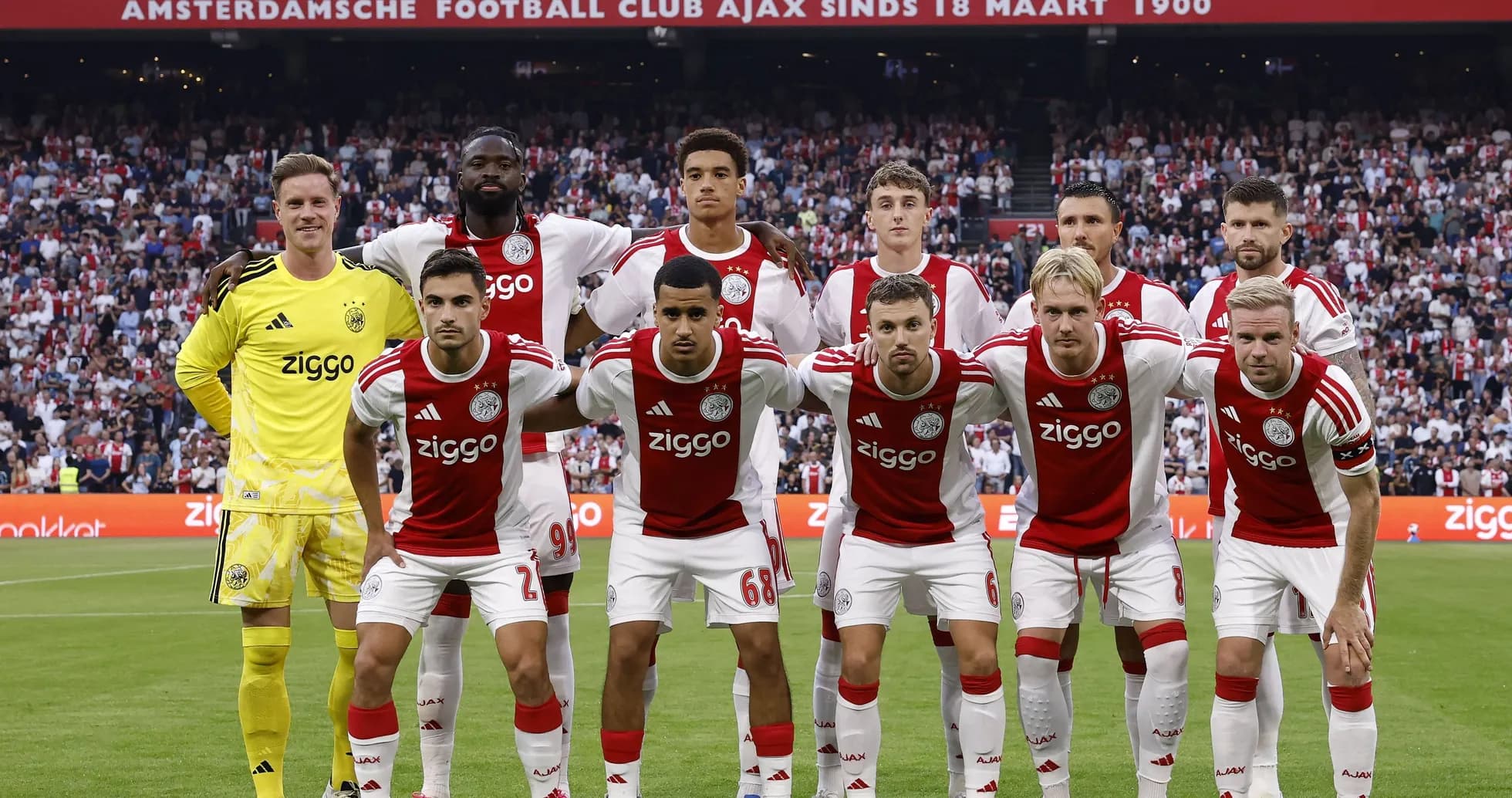
Because when Ajax called this summer, heavyweight names picked up. Marc-André ter Stegen. Sofyan Amrabat. Julian Brandt. Players accustomed to Champions League anthems and title races chose a club that has spent the last years licking its wounds and rethinking its place in the European food chain.
Cruyff knows why.
“When you mention the name Ajax, you can see from their eyes that they are very interested,” he told ESPN NL, underlining a simple truth that still carries weight in dressing rooms across Europe. Ajax’s recent struggles haven’t erased decades of aura. “We have to get back to the top. Senior players want to compete and perform at their peak right now.”
That urgency has defined the window. This is not a slow rebuild. It is a reset done at full speed.
Brandt in the shadows
Among all the arrivals, one move clearly touched Cruyff more than the others.
Julian Brandt, the German playmaker, arrived under a veil of silence. No leaks. No teasing briefings. No drip-feed to social media. In an era where transfers are often live-blogged in real time, Ajax went old school.
The deal stayed completely underground until the club dropped the news on a Friday evening.
“For once, we as a club showed that we determine when information comes out,” Cruyff said, with a hint of satisfaction. In that moment, Ajax didn’t just sign a player; it reminded the market it can still control the narrative when it wants to.
Cruyff framed the move with a line from his father, Johan: “If you don’t shoot, you will never score. Sometimes you just have to try.” The quote fits the window. Ajax have taken their shot — but in a way Cruyff insists is calculated rather than reckless.
Free agents, loans, and a different kind of risk
Outside the club, the noise has been growing. High-profile names often mean high wages, and critics have questioned whether Ajax are stretching their structure to breaking point.
Cruyff pushed back hard.
“This is not risky at all,” he said. In his view, the real danger lies elsewhere: “The biggest risk is paying expensive transfer fees from club to club. Eight of eleven new players arrived for free or on loan.”
That statistic is the backbone of Ajax’s argument. No transfer fee means no long-term amortisation burden, no giant sunk cost if a signing fails to perform. Wages can be adjusted, contracts can be shorter, loans can be cut. Transfer fees, once paid, are gone.
Cruyff stressed that sales revenue has “significantly” outstripped expenditure, even with the absence of Champions League money. The message is clear: this is not a club flailing in panic; it is a club trying to rebuild while keeping the balance sheet intact.
In a market where mid-tier European clubs routinely overreach, Ajax are trying to walk a narrower line — big names, smaller fixed costs.
Accepting the food chain
Not every departure has pleased the fanbase. Losing young talents is never easy, and Mika Godts’ move to Paris Saint-Germain underlined a reality Cruyff no longer bothers to dress up.
Ajax, and the Eredivisie more broadly, remain a springboard. The club that once hoarded Europe’s best prospects now lives in a world where the richest teams arrive earlier, with bigger offers and grander promises.
Cruyff accepts it. He doesn’t celebrate it, but he understands the ecosystem. Ajax’s task is to make sure that for every Godts who leaves, there is a pathway for the next one — and, crucially, a first team strong enough to compete while that cycle continues.
De Topper as an early verdict
The theory now meets the test. A radically reshaped squad, a bold wage strategy, a summer of stealth and persuasion — all of it walks into the fire of De Topper against PSV.
PSV bring something Ajax do not yet have: continuity. Their stability is no secret, and Cruyff acknowledges it openly. On paper, they look like the more settled machine.
Ajax, though, are not easing themselves into this new era. The expectation inside the club remains uncompromising.
Cruyff still talks in the language of trophies, not transitions. He expects Ajax to fight for every piece of silverware on offer, even as the squad learns each other’s movements and the new leaders find their voices.
“We have taken a big step in the right direction,” he said. “Our job now is to prove it tangibly on the pitch.”
The names have arrived. The balance sheet, Cruyff insists, is under control. The rebuild has a clear logic.
Now comes the only verdict that matters to a club of Ajax’s size: what happens when the whistle blows against PSV, and whether this daring reset can drag a fallen giant back into the places where its name still makes players’ eyes light up.