The words were calm. The impact was seismic.
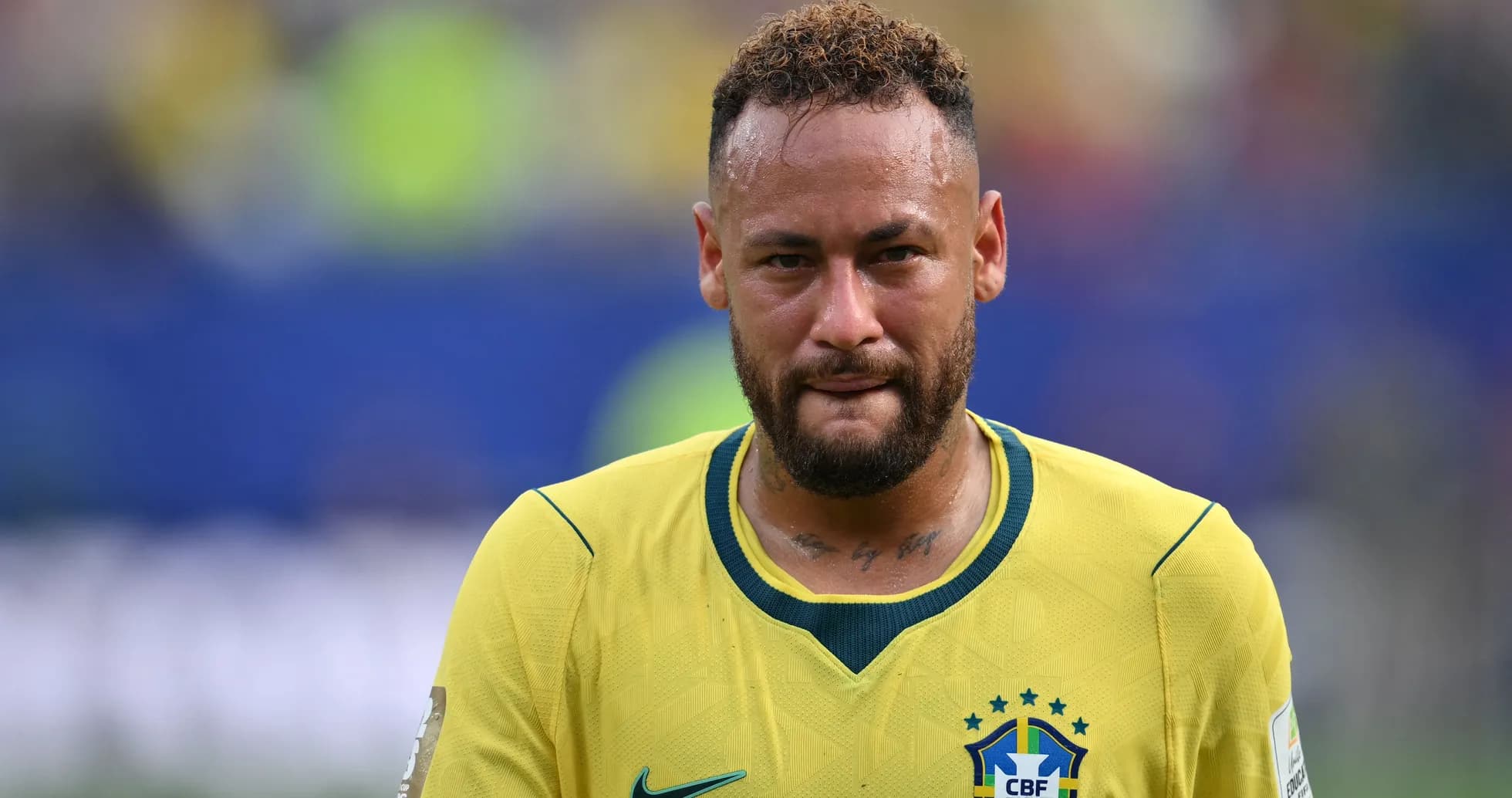
Carlo Ancelotti has confirmed that Neymar’s time with the Seleção is over, drawing a firm line under one of the most turbulent and dazzling eras in Brazilian football.
Speaking to CNN Esportes, the Brazil coach revealed that the decision came from the player himself, ending months of uncertainty that lingered after the 2026 World Cup. No farewell tour. No final cameo. Just a clean break.
“He deserved to be there because of his quality. Neymar has already confirmed that he does not want to return to the national team,” Ancelotti said. “Neymar cannot be replaced because he was an extraordinary and unique talent. So, an irreplaceable player.”
A decade as Brazil’s reference point, gone with one choice. And with it, an uncomfortable truth: there is no like-for-like successor.
An irreplaceable star, an unavoidable reset
For years, Brazil bent its football around Neymar. Coaches came and went, systems shifted, generations rotated, yet the constant was the No. 10. His brilliance carried weight, but so did the dependence on it.
That era is now officially over.
Ancelotti did not try to dress it up. He openly admitted the void Neymar leaves cannot be filled by a single player. The response, then, is structural rather than symbolic: a radical rebuild of the squad and of the idea of what Brazil should look like on the pitch.
Alongside national team director Rodrigo Caetano, the Italian is already deep into a renewal project aimed squarely at the 2030 World Cup. The goal is blunt and familiar: put Brazil back on top of the world. The method, less romantic but more modern, is to accelerate a generational shift.
Veteran names are sliding out of the picture. Teenagers and rising domestic talents are stepping into it. The change is visible in the latest call-ups, where the emphasis falls not on reputation, but on birth certificates and potential.
The mid-2000s generation takes centre stage
Ancelotti laid out the timeline with unusual clarity. This is not a vague “future project.” It is mapped out in years and birth dates.
“I think we need to proceed step by step,” he explained. “Now we need to focus on the young players who could be the future, the players born in 2004, 2005, and 2006. We have young players born in 2008 with a lot of quality, who aren't playing yet, but who can play.”
That is a striking admission. Brazil are not just scouting the next cycle; they are already eyeing kids who are barely out of academy football.
“Now is the time to look at them, taking their age into account and respecting it,” Ancelotti added. “It's true that a player can play very well even at 36 or 37. Now is the time to prioritize the youth.”
The message is clear: the door is not closed to older players, but the pathway is being cleared for a new core. This is not a gentle phase-out. It is a reset.
From Neymar-dependence to collective steel
One of the enduring criticisms of the Neymar years was Brazil’s tendency to wait for him to solve problems on his own. When he sparkled, the team soared. When he struggled or was absent, the whole structure seemed to sag.
Ancelotti wants that pattern gone.
“I believe that in modern football, teamwork is what matters, not individual talent,” he said. “Of course, if you have great individual talent, you have a greater chance of winning, but modern football doesn't tolerate a lack of teamwork.”
That line cuts to the core of his vision. Brazil will still lean on talent—this is Brazil, after all—but the framework will be collective, not built around one star.
He talks of integrating young players into a structure that is “rigid but creative,” a team capable of matching the intensity, pressing, and tactical discipline that define the current elite. The days of waiting for a dribble or a free-kick to change a game are giving way to a more synchronized, hard-running model.
The theory will be tested quickly. Upcoming fixtures against Australia and India will double as live auditions. Several debutants are expected to feature as the coaching staff sift through options and measure who can handle the rhythm and responsibility of the Seleção.
These are friendlies on paper. In reality, they are entrance exams.
Pain of the past, pressure of the future
The urgency behind this overhaul is rooted in failure. Brazil’s last World Cup campaign ended in disappointment, earlier than a country of five stars is willing to accept.
“I think the World Cup was a disappointment, we're sorry about that, but now we have to look forward,” Ancelotti admitted. There was no attempt to soften the blow. The failure has forced a rethink, from selection to style.
“We have time to prepare a new generation of players. And now we'll use the friendlies to see the new young talents that Brazilian football is developing in action. I believe Brazil should be among the best teams in the world,” he concluded.
Accountability and growth. Two words often spoken, rarely lived. Brazil now have four years to prove they can turn those ideas into a team that no longer leans on one genius, but rises as a collective force.
Neymar’s story with the national team is over. The question now is whether this next chapter, written by teenagers and shaped by one of the game’s great coaches, can restore Brazil to where Ancelotti insists they belong.