
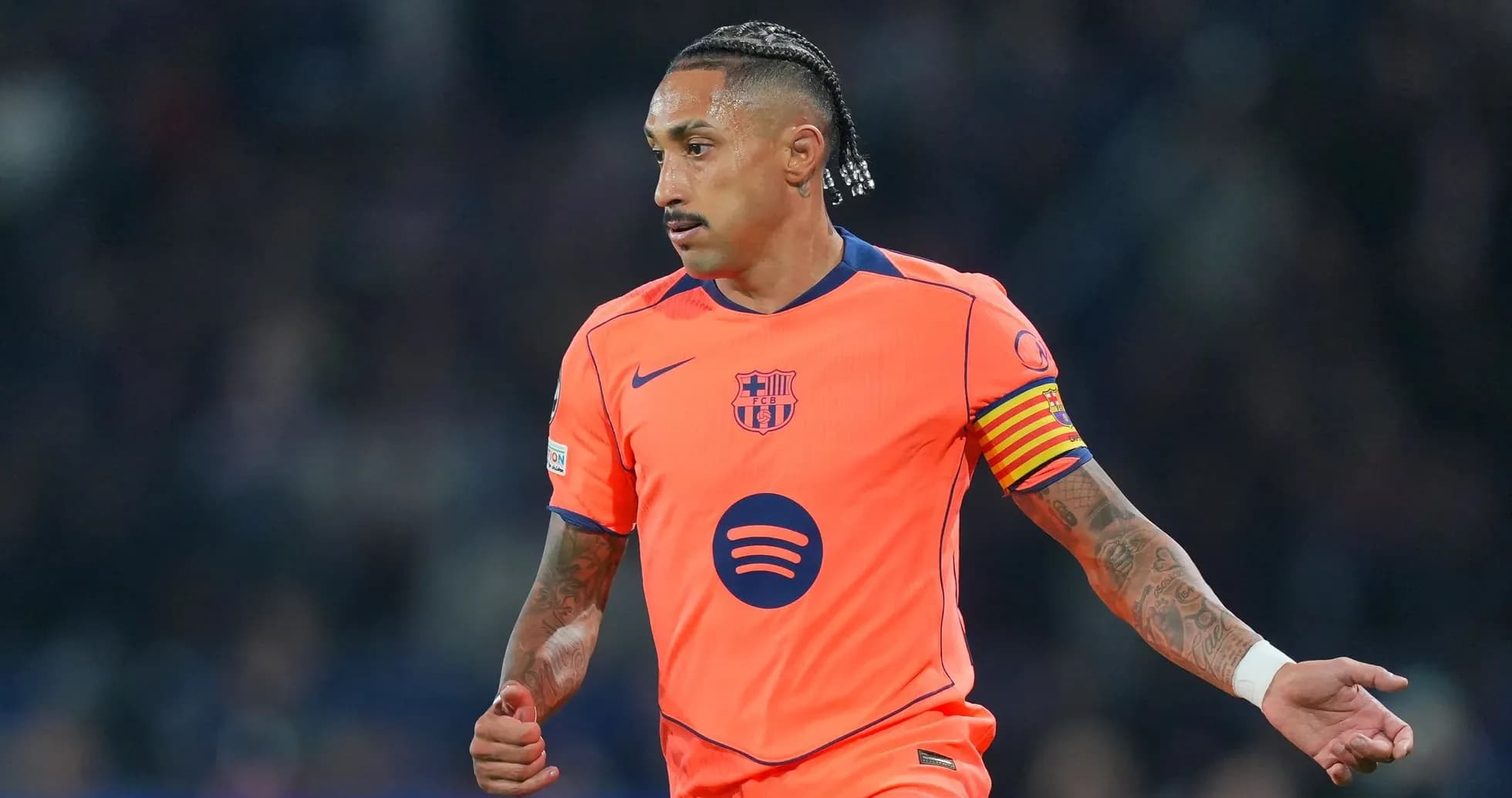
Carlo Ancelotti is not backing down. Not for Barcelona. Not for Joan Laporta. And certainly not over Raphinha.
The Brazil head coach has named the 29-year-old in his squad for the upcoming Asian tour, a pair of friendlies in Singapore against Japan and the hosts, despite open irritation from Barcelona’s president and fresh concern over the winger’s recent muscle problems.
For Laporta, the numbers alone sting. A near 22,000-kilometre round trip for a player who has only just returned from injury, all in the middle of a demanding club season. For Ancelotti, that is simply the cost of doing business at the highest level of international football.
Ancelotti draws a line
Speaking at CBF headquarters in Rio de Janeiro, Ancelotti cut a calm but uncompromising figure. He acknowledged the dialogue with clubs, but made it abundantly clear who calls the shots when the calendar flips to a FIFA window.
“We maintain good relations with Brazilian clubs and with European clubs, with whom we share information about the players. In general, this relationship is good,” he said, as quoted by SPORT.
Good relations, yes. Concessions, no. Not when it comes to his core players.
The Italian coach is in the middle of a reconstruction job after Brazil’s recent disappointments on the big stage. Every international break counts. Every session, every flight, every minute together. That context explains why Raphinha, still edging back towards full sharpness, is deemed non-negotiable.
At Barcelona, the mood is different. The Spotify Camp Nou hierarchy sees risk: a fragile muscle, a punishing journey, a calendar that already feels stretched to breaking point. Laporta has been vocal about what he views as an unfair burden on clubs. Ancelotti listened. Then selected Raphinha anyway.
One rule for Brazil, another for Europe
Where Ancelotti has shown a touch of flexibility is at home. Domestic giants Flamengo and Palmeiras, locked in a fierce title race, have been spared. No call-ups from either, and only one player per Brazilian club in this squad.
“This is a sensitive moment, that's why we've only called up one player per team and decided not to bring anyone from Flamengo or Palmeiras because they are fighting for the title,” he explained.
European clubs, though, receive no such protection. For them, the message is blunt: the Selecao comes first when the dates are official.
“We have no particular requests, nor do we need them. In the FIFA dates, we will call the players that we consider important for the Brazilian national team,” Ancelotti said.
Raphinha falls squarely into that category. He is not just another name on the list; he is, in Ancelotti’s words and actions, part of the spine.
A new cycle, with old pillars
Behind the selection row sits a broader project. Ancelotti is trying to weld together a new Brazil, one that blends promise with proven class.
“We have started a renewal project and now is the ideal time to do it. In September, we started evaluating younger players and now we continue doing so with these players who can be the future of the Selecao,” he said. “We have made a balanced call-up, but in which there are nine players of Olympic age and up to fifteen under 23 years old.”
That is a significant tilt towards youth. Yet he has deliberately anchored this fresh wave to a core of leaders who know the pressure of a World Cup and the weight of the yellow shirt.
“We've chosen five players who were at the last World Cup and who will be important for this new cycle in which we'll compete in the Copa America and another World Cup. These players are Marquinhos, Gabriel Magalhaes, Bruno Guimaraes, Vinícius Junior, and Raphinha.”
Those names sketch the outline of his team: Marquinhos and Gabriel Magalhaes at the back, Bruno Guimaraes in the engine room, Vinícius Junior and Raphinha as the attacking reference points. Strip one of them out, and the structure changes. That is why Ancelotti is willing to clash, quietly but firmly, with a club as powerful as Barcelona.
Raphinha’s evolving role
There is also a tactical layer to this insistence. Raphinha is no longer simply the right-sided winger who hugs the touchline and whips in crosses.
Under Hansi Flick at Barcelona, he has been used centrally, drifting and darting as a mobile number nine. It is an experiment that has added new dimensions to his game, and Brazil are watching closely.
Asked whether he would mirror that role with the national team, Ancelotti kept his cards close to his chest.
“We have versatile forwards who can occupy various positions. I focus on what we can do and not on the quality of our opponents. We will continue playing with three midfielders and three forwards,” he said.
Three midfielders, three forwards. Within that framework, Raphinha could stretch the game from wide or slide inside to unsettle defences through the middle. His versatility only heightens his value to a coach trying to shape a flexible, modern Brazil.
For Barcelona, that same versatility is something they would prefer to exploit without the looming threat of long-haul fatigue. For Ancelotti, it is precisely why leaving him at home was never really an option.
The flights to Singapore will be long, the debate even longer. But as Brazil’s new World Cup cycle gathers pace, one thing is already clear: Ancelotti will build his team on his own terms, and Raphinha is right at the heart of that plan.





