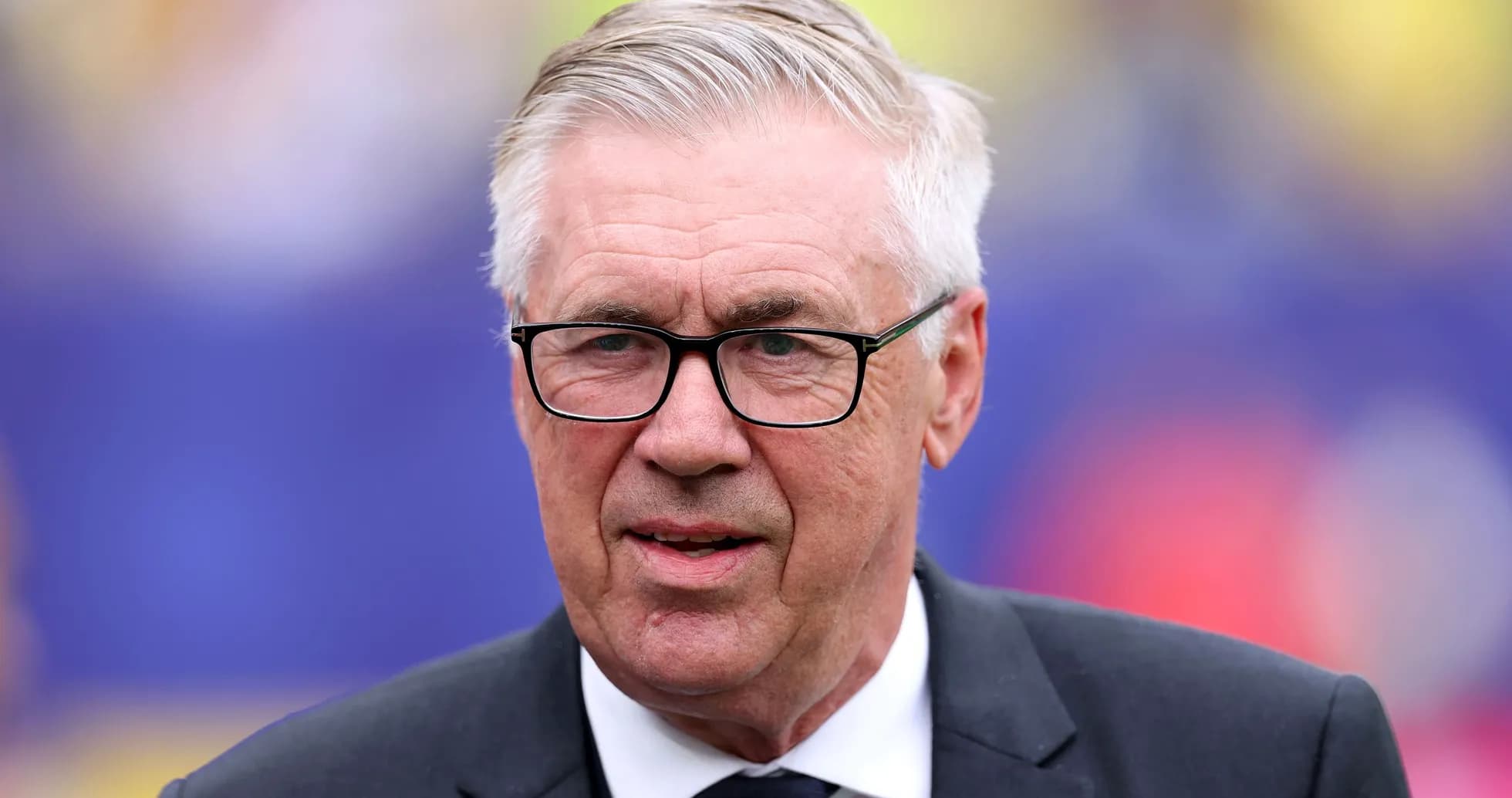
Carlo Ancelotti has never been afraid of a hard reset. Now he is doing it with Brazil.
Stung by a bruising World Cup exit to Norway in the round of 16, the veteran Italian has torn up his old blueprint and unveiled a squad that looks more like an Olympic selection than the traditional heavyweight Brazil senior list. The message is unmistakable: the next Brazil will be built now, not in 2029.
A ruthless break with the past
The names missing from this squad are as striking as the ones included. Alisson, the Liverpool goalkeeper who has been a pillar of the national team for years, is out. So are long-time midfield anchors Casemiro and Fabinho. Neymar, of course, has already stepped away from international duty.
This is not a gentle phase-out. It is a clean cut.
Ancelotti had promised change after that shock defeat to Norway, and he has delivered. He has deliberately targeted players eligible for the 2028 Olympic Games, using those age parameters as a filter to identify the core he wants ready for the 2030 World Cup cycle.
The World Cup failure clearly stung him on a personal level. He admitted that the pain of an international defeat lingers in a way club setbacks do not, and his response has been to embrace the long road back rather than search for quick fixes.
Alisson out, a new goalkeeping era in
If one decision sums up the shift, it is in goal. Alisson is not just dropped; the entire goalkeeping department has been turned over.
Hugo Souza, Pedro Morisco and Otavio are the three keepers called up. All are younger options, all part of the new cycle Ancelotti wants to accelerate.
He made a point of stressing that Alisson is not exiled forever. If the Liverpool man remains Brazil’s best goalkeeper when tournaments like Copa America arrive, Ancelotti says he will play. Right now, though, development trumps hierarchy. The gloves, for the moment, belong to the next generation.
Youth first, but not youth alone
This is not a kids-only experiment. Ancelotti has kept a thin spine of high-level experience to guide the transition.
At the sharp end of the pitch, Vinicius Junior stays on as the standard-bearer of the attack. Raphinha is also retained, while Joao Pedro returns after missing the World Cup, adding a Premier League-hardened presence to the forward line.
At the back, Paris Saint-Germain captain Marquinhos remains the defensive reference point, and new Arsenal signing Bruno Guimaraes anchors a revamped midfield unit. They are there to lead, to talk, to drag standards up in training as much as in matches.
“I chose these players to help with this change in direction,” Ancelotti explained. In his view, they are essential bridges between eras, mentors for the younger talents now being thrown into the senior environment.
The coach also drew a sharp line between present and future. A 34- or 35-year-old, he argued, belongs to the present, not to the long-term plan. If such a player is in top shape when a major tournament arrives, they will be selected. But the structural work, the day-to-day building of a squad, will revolve around those who can still be at their peak in 2030.
The new faces of Brazil
The list reflects that philosophy from back to front.
Behind the three new goalkeepers, the defensive group is built around Marquinhos and Gabriel Magalhaes, with Arthur Dias, Wesley, Douglas Santos, Jair, Matheuzinho, Maurio Junior and Vitor Reis all pushing to establish themselves.
In midfield, Bruno Guimaraes is joined by Andrey Santos, Danilo Santos, Douglas Luiz, Breno Bidon and Gabriel Bontempo. It is a unit with legs, energy and room to grow, tasked with replacing a generation that included Casemiro and Fabinho.
Up front, the talent is as exciting as it is raw. Endrick headlines a forward line that also includes Joao Pedro, Estevao, Pedro, Raphinha, Rayan, Samuel Lino and Vinicius Junior. Some already have Champions League nights behind them; others are only just stepping into the spotlight.
This is the core Ancelotti wants to mould over the next four years.
Australia, then history in India
The first test of this new-look Brazil will not come in the cauldron of a World Cup qualifier but in a pair of friendlies in Australia. The Selecao face the Socceroos in Townsville on September 25, then meet them again four days later in Brisbane.
Those games offer a relatively controlled environment for Ancelotti to experiment with combinations, test the temperament of his younger players and begin to install his ideas without the suffocating pressure of knockout football.
Then comes something different altogether.
On October 3, Brazil will travel to Kolkata for their first ever match in India. For a country that has followed the Selecao with near-religious devotion from afar, it is a landmark moment. For Ancelotti, it is also a chance to expose his fledgling squad to a new kind of intensity: the emotional weight of representing Brazil in front of a fanbase that has waited decades to see them in the flesh.
The pain of the last World Cup still hangs in the background, but this is no mourning period. Ancelotti has chosen to treat it as a starting gun. The rebuild has begun, the old guard has been pushed aside, and the next Brazil will be forged on long flights, new continents and unfamiliar stages.
The question now is simple: how quickly can this generation turn promise into something worthy of the shirt?