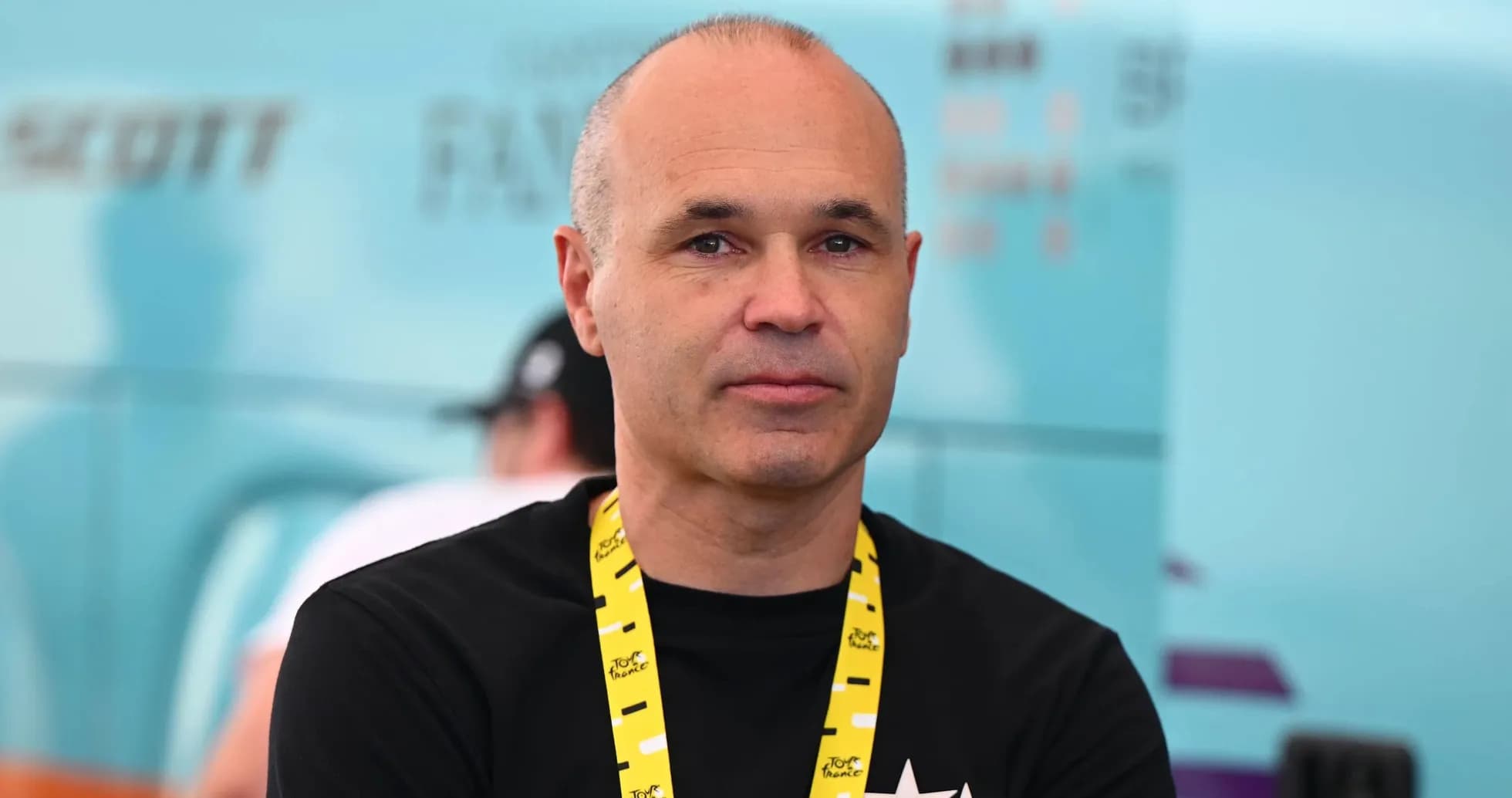
Andrés Iniesta has walked into plenty of hostile arenas in his life. This Friday, he walks into something far more unfamiliar: a dugout that finally belongs to him.
The Spain and Barcelona icon officially begins his managerial career in charge of Gulf United FC, a young, ambitious UAE First Division club that has handed one of football’s great midfield minds the keys to its project. The venue is the New Dibba Stadium. The stakes, for a modest Dubai-based side, suddenly feel much larger.
From maestro on the pitch to architect on the touchline
Iniesta called time on his playing days with Emirates Club in 2024, ending a career that bent some of the sport’s biggest nights to his will. Rather than drift into the background, he went straight back to school. UEFA A licence completed. UEFA Pro Licence now in progress. The transition has been deliberate, not sentimental.
He took the reins at Gulf United in June, stepping into a club that has moved quickly since its founding in 2019. Two promotions already, a clear sense of direction, and the youngest squad in the division. For a coach shaped by La Masia and Barcelona’s obsession with development, the fit is obvious.
Iniesta has wasted no time stamping his ideas on the group. Training sessions in Dubai have been built around a clear tactical identity, the kind of structure he once thrived in as a player. The work has been intense, detailed, repetitive. Now it has to withstand the chaos of competition.
“We are really looking forward to Friday. We have been working with the team for several weeks on a clear style of play, and now it is time to compete,” Iniesta said, drawing a line under pre-season and everything that came with it.
A project built on youth, not nostalgia
Gulf United’s reputation as a progressive club is no marketing slogan. The squad is young, raw, and deliberately so. The club’s vision prioritises individual growth as much as league position, a stance that can look brave or reckless depending on the scoreline.
Iniesta’s own philosophy mirrors that stance. He wants to win, but he wants to build. He wants players to understand the game, not just survive it. Far from the glare of European cameras, the four-time Champions League winner is choosing the long road: constructing a managerial legacy from the ground up, one training session and one teenager at a time.
This is not a soft landing. It is a test of whether a legendary player can turn ideas into habits, and habits into results, without the safety net of elite infrastructure or star-studded squads.
First hurdle: a wounded heavyweight
The fixture list has offered no gentle introduction. Iniesta’s first competitive match pits Gulf United against Dibba Al Fujairah, a club stung by recent relegation from the top flight and widely tipped to come straight back up.
Dibba carry expectation. Gulf United carry intrigue.
For Iniesta, this is more than a debut; it is an immediate benchmark. Can the youngest squad in the division execute his blueprint when a promotion favourite leans on them? Can they keep their nerve when the press comes, when the spaces tighten, when the match stops looking like the training drills they have rehearsed for weeks?
The answer will not define his career, but it will set a tone. Establishing consistency early on will be vital if Gulf United are to turn promise into a genuine promotion push before the league pauses for its upcoming breaks.
On Friday, one of football’s great conductors steps onto the touchline in the UAE second tier, far from Camp Nou and World Cup finals. The stage is smaller, the noise quieter. The scrutiny, for Andrés Iniesta, may never have been louder.