The number 10 will stop a nation this weekend.
Across Argentina’s top flight, every league match will pause in the 10th minute as the country’s clubs unite in a coordinated tribute to Lionel Messi, following his retirement from international football.
For one minute, there will be no tackles, no passes, no shouts for the ball. Just applause.
The Argentine Football Association confirmed the gesture, explaining that referees have been instructed to halt play in the 10th minute of every fixture “in tribute and homage to Lionel Messi's career with the Argentina national team,” inviting supporters to rise and join the ovation.
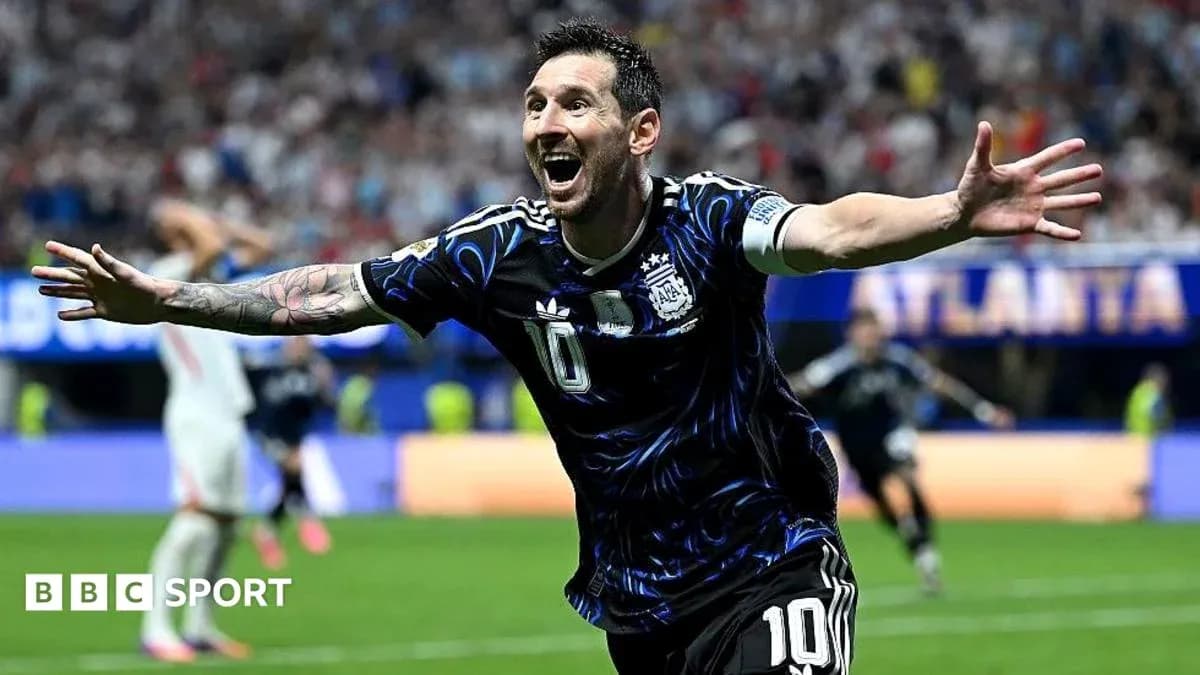
It is a simple idea. It is also loaded with symbolism. Messi wore the number 10 for Argentina, a shirt that once belonged to Diego Maradona and that, in many eyes, he has redefined for a new generation.
A Farewell After the Highest Stage
Messi, now 39, announced his international retirement on Monday, drawing the curtain on a remarkable national-team career that began in 2005 and ended on the grandest stage of all: a World Cup final.
His last match for Argentina came in July, in the 2026 World Cup final defeat to Spain. It was a painful ending, but it followed the greatest peak of all — the World Cup triumph in Qatar in 2022, where he finally lifted the one trophy that had eluded him and, for many, settled the eternal debate about his place in football history.
He leaves the Albiceleste as their captain, their record appearance holder with 207 caps, and their all-time leading scorer with 125 goals. No one has worn the shirt more. No one has scored more in it.
From Early Heartbreak to Redemption
This is not the first time Messi has walked away from international duty.
In 2016, shattered by a Copa America final defeat to Chile in which he missed a penalty in the shootout, he announced he was done with the national team. That loss marked Argentina’s fourth major final defeat in nine years. The burden seemed too heavy, even for him.
He returned, of course. And everything changed.
Messi went on to win the World Cup and two Copa America titles with his country, turning years of near-misses into a golden era. The image of him in Lusail, bathed in confetti, lifting the World Cup as captain, is now part of Argentina’s sporting mythology.
A Career That Started Far From Home
Messi’s bond with the national team has always carried an extra layer of complexity because of his club career.
He left Argentina as a 13-year-old for Barcelona’s La Masia academy and never played senior club football in his homeland. His international debut, a 63rd-minute substitute appearance in a 2-1 friendly win over Hungary in 2005, felt at the time like the country reclaiming a prodigy who had slipped away to Europe.
From that moment, he became the face of Argentina’s ambitions and anxieties, the player expected to carry a nation’s dreams, and eventually the man who fulfilled them.
His numbers reflect his dominance on the world stage. Messi is the second-highest scorer in World Cup history with 21 goals, behind only France’s Kylian Mbappe on 22. Across all internationals, his 125 goals place him second only to his long-time rival Cristiano Ronaldo, who has 146 for Portugal.
Grief, Conviction and What Comes Next
Away from the pitch, the past year has reshaped Messi’s outlook.
In August, he revealed he was considering his future in football after the death of his father, Jorge, who passed away aged 68 following a long illness. When Messi finally announced his retirement from international duty, he said that, after losing his father, he was “even more convinced than before” that stepping away from the national team was the right decision.
The shirt is off his shoulders now, but the story is not over.
Messi will continue his club career in Major League Soccer with Inter Miami, where his contract runs until the end of the 2028 season. His presence there keeps him in the global spotlight, even as the blue-and-white jersey becomes part of his past rather than his present.
This weekend, though, the focus returns to Argentina.
In the 10th minute, across stadiums up and down the country, whistles will blow and matches will stop. Players will stand, fans will rise, and a minute of applause will roll around the grounds for the boy who left home at 13 and spent the next two decades carrying a nation from afar.
For once, Messi will not be on the pitch. The game will pause for him anyway.