Bukayo Saka supplied the flash of quality. Everything around it was sweat, strain and a manager calculating risk in real time.
Arsenal’s 1-0 win at Aston Villa on Monday night will not live long in the memory for its aesthetics, but it might matter deeply in the months ahead. Two games, two wins for the champions, and a reminder that title defences are often built on nights like this, when rhythm deserts you and resilience has to take over.
Arteta plays the percentages
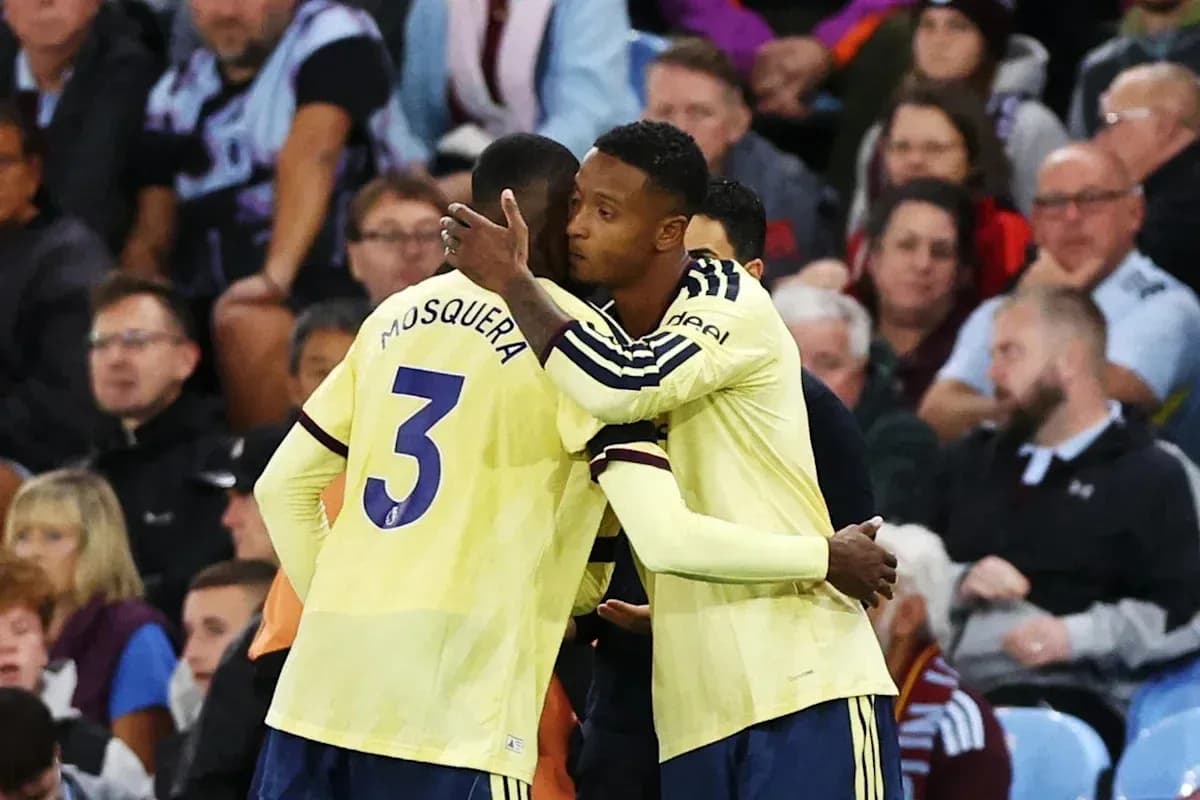
The key moment on the touchline came before the decisive one in the box. With the game still in the balance, Mikel Arteta saw something he did not like in Cristhian Mosquera’s body language.
The 22-year-old Spanish defender signalled he could not continue. With Jurrien Timber already out, the calculation was brutal: push Mosquera through the discomfort and risk a serious problem, or turn to a debutant walking into a storm.
Arteta chose the bench.
“We knew that if we had an injury on the back line with Jurrien out, we'd be in big trouble – so we had to do Ezri,” he explained afterwards.
Ezri Konsa, the new signing, stepped off the bench into a cauldron. Back at Villa Park, the stadium where he had grown into an England international, he was greeted not with nostalgia but with jeers. Every touch, every clearance, carried an extra edge.
Arteta revealed Mosquera was “fine” and that the change was precautionary. The defender “was feeling like he was about to have something,” the manager said, the kind of tightness that can turn into weeks on the sidelines if ignored.
That is why the club built this squad. That is why Konsa is here.
“Ezri makes a debut in really difficult circumstances; it's not easy emotionally to come here and play,” Arteta added. “But he looks so composed, so calm, so in control.”
It was exactly what Arsenal needed in the closing stages: no drama, no rush, just a defender playing as if the noise belonged to someone else’s night.
One chance, one finish
This was not Arsenal at full flow. Far from it. For long spells, Villa made the game scrappy, broke up passing lanes, and turned the contest into a series of duels and second balls.
Then the door opened. Just before the hour, with Arsenal still waiting for their first shot on target, Riccardo Calafiori picked his moment.
The full-back, who has started the season with a quiet authority, stepped forward and found Saka. One pass, one swing of that left foot, one ruthless finish. Arsenal’s first effort on target, and the only one that mattered.
The pressure finally told.
Calafiori now has two assists already this campaign, but he was far more interested in the zero at the other end.
“I'm so happy with the clean sheet,” he said. “Especially when I talk with the guys – the defenders – I always say that if we don't concede, we obviously have much more chance to win the game, and I think we always do so well.”
This was a defender speaking like a defender. No apology for the grind, no concern that the game lacked sparkle. Just satisfaction that a difficult away ground had been silenced.
“At the end of the game, it's so important for us, especially at a tough place like this one, we just want to win when we come here and we did it.”
From pre-season doubts to defensive bite
Calafiori did not hide from the recent past either. Pre-season had raised eyebrows; Arsenal looked loose, easy to play through, far from the defensive machine that powered their title win.
“In pre-season we were upset, I think we conceded too much,” he admitted. The difference now? Bodies back, and a collective obsession with the ugly work.
“As the season started, we have all the players back. We fight, and you see how we do mistakes sometimes, but how we track back with the runs, it's unbelievable, and each player, even the attackers, so I'm so happy.”
That was evident in the final minutes. Forwards sprinting 40 yards to double up. Midfielders snapping into tackles. Konsa, under fire from the stands, staying ice-cold in his positioning.
Calafiori’s assist to Saka sealed the points, but it was the relentlessness without the ball that closed the door on Villa.
“I'm just so happy to pass the ball to B [Saka],” the Italy international said. “As I say, it was a tough, tough game, we need these kind of moments, you know, to change the game – and we did it.”
Arsenal did not dazzle. They did something more ominous for the rest of the league: they won away, under pressure, with a patched-up back line and a debutant thrown into a hostile reunion.
If this is how they grind through the early weeks, what happens when the football starts to flow?