
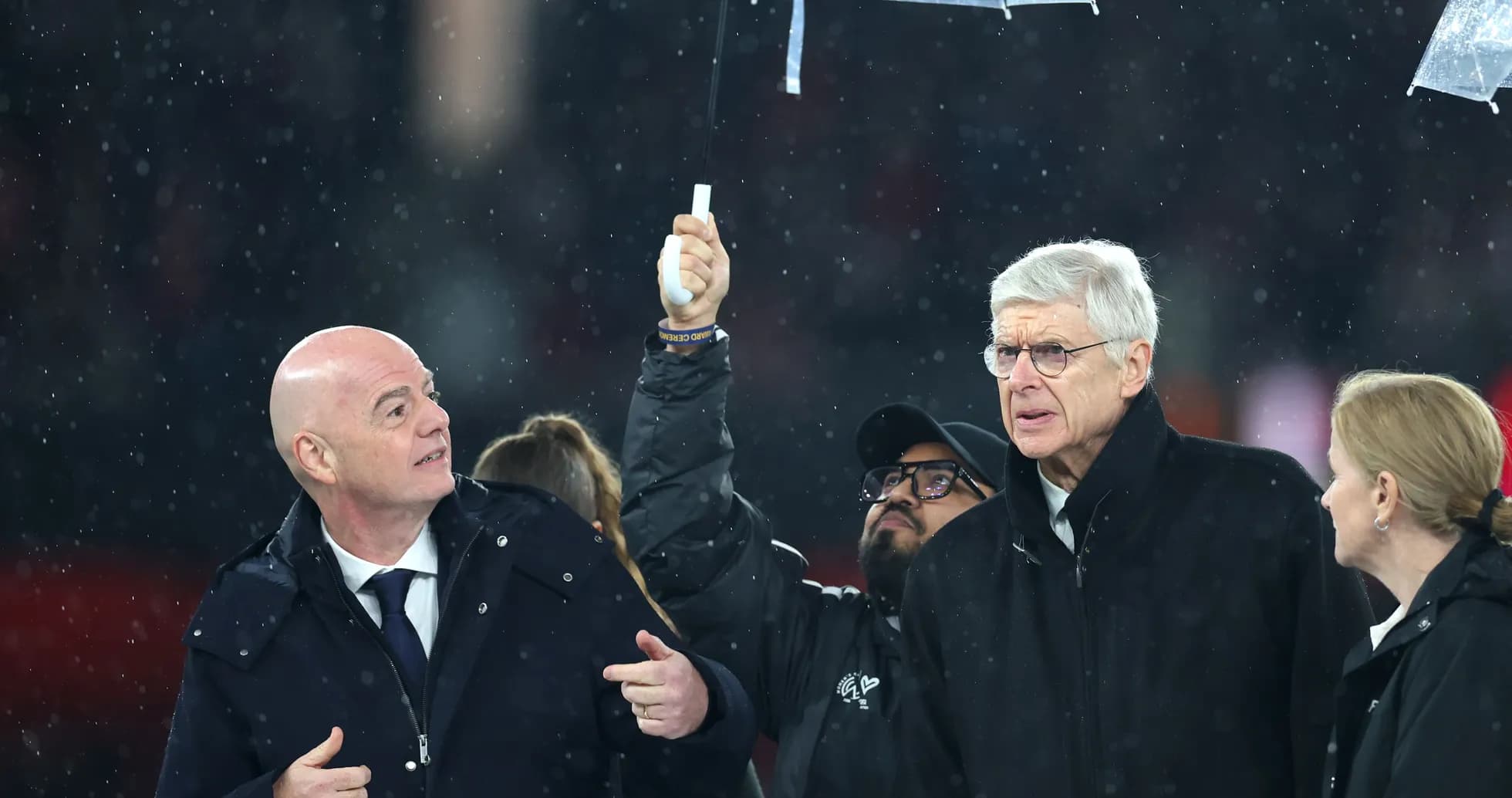
Arsene Wenger is weighing up a decision that could jolt world football out of its current orbit.
The former Arsenal manager is seriously considering a run for the FIFA presidency against Gianni Infantino, a move that has been whispered about in European corridors of power for weeks and is now edging towards reality.
This is not a coincidence of timing. Infantino is mired in anger and suspicion after his failed attempt to sell commercial stakes in the World Cup to private investors. The backlash has left him exposed in Europe and under rare, sustained pressure.
Into that space steps Wenger. Or at least, he might.
Europe’s quiet campaign for Wenger
Senior figures across Europe have been lobbying him, urging him to stand. Some have been doing so for weeks. Wenger, 77, is finally listening.
His age is no small detail. It raises obvious questions about how long he could realistically lead the global game. Yet some of his backers, speaking to BBC Sport, have floated an unorthodox idea: they would gladly accept a short Wenger era. Win the election, steady the ship, then step aside before completing the four-year term. Use him as a bridge to something new.
That in itself tells you how desperate parts of European football are for an alternative to Infantino.
Infantino, though, is no easy target. He still enjoys powerful backing across South America, Africa and Asia, and he recently claimed the support of the “overwhelming majority” of the football world. If Wenger enters the race, that majority will be tested like never before in his presidency.
Should he run, Wenger would walk straight into the contest with UEFA at his back. The European body has led the opposition to Infantino’s leadership and his commercial vision. Wenger, now FIFA’s chief of global football development, brings something they lack: a global aura that stretches well beyond Europe’s borders.
He is respected across continents, especially in Africa, where his long-standing support for expanding the World Cup to 48 teams landed well with many federations.
For now, though, he is still on the fence. Those close to him say he has not made up his mind and still regards Infantino as favourite to secure a fourth and final term in next year’s election.
A race that’s already moving
The clock is ticking. Candidates have until 18 November to confirm they will stand against Infantino in the March election. The field is not empty.
Ramon Vega, the former Tottenham defender, went first, announcing his candidacy in October. Kozo Tashima, honorary president of the Japan Football Association, has also signalled his intention to run.
So the ballot paper is filling up. But a Wenger entry would change the scale of the contest overnight.
At the same time, FIFA is trying to contain the political damage from the World Cup stake-sale saga. This month, the organisation said it would make “key documents” on Infantino’s plan available to members of its council. There was a catch. Anyone wanting to see them would have to travel to Zurich, where access would be controlled under “strict protocols”.
The message was clear: transparency, but only on FIFA’s terms.
The ‘strikers’ project’ and a president on the back foot
The controversy has been building for weeks. Last month, UEFA set FIFA a deadline of 2 November to disclose full details of the contentious “FIFA Forward” (FFE) proposal and to answer questions about how the plan was conceived and pushed forward.
That demand followed a tense council meeting at which Infantino apologised for the abandoned club-sale project. He did not explain who had drawn it up or how it had reached such an advanced stage. Instead, he told officials to submit their questions in writing.
As the fallout spread, one of Infantino’s most loyal public allies stepped away.
Wenger, long seen as a dependable supporter of the president inside FIFA, moved to distance himself. He stated: “I was not involved in this strategic plan, and I first learned of the project through media reports.”
He went further, saying: “The decision to withdraw the project was absolutely necessary and indisputable, because I firmly believe in an independent FIFA that serves our sport with commitment, transparency and integrity.”
For a man of measured public tone, those words carried weight. They also marked a clear line between his vision of FIFA and the one now under scrutiny.
Wenger’s baggage – and his reach
Wenger would not arrive as a spotless reformer. His tenure at FIFA has already drawn fire, particularly over proposals to stage the World Cup every two years and his push for a “clear” offside law. Traditionalists bristled. Coaches and players questioned the strain on the calendar.
Yet his name still resonates in dressing rooms and boardrooms alike. He built a global network during his Arsenal years, championing African talent and giving players from the continent a stage in the Premier League long before it became fashionable.
That history matters now. Africa is central to Infantino’s re-election strategy. He recently secured the public backing of all 54 member national associations there, helped by a promise to increase funding. On paper, that looks like a locked bloc.
But Wenger’s legacy on the continent, and his role in elevating African players to the elite level, gives him a unique foothold in the very region Infantino is counting on most.
The question is no longer whether Arsene Wenger could influence the race. It is whether he is willing to step out of the shadows and turn a simmering discontent into a direct challenge for the most powerful job in football.





