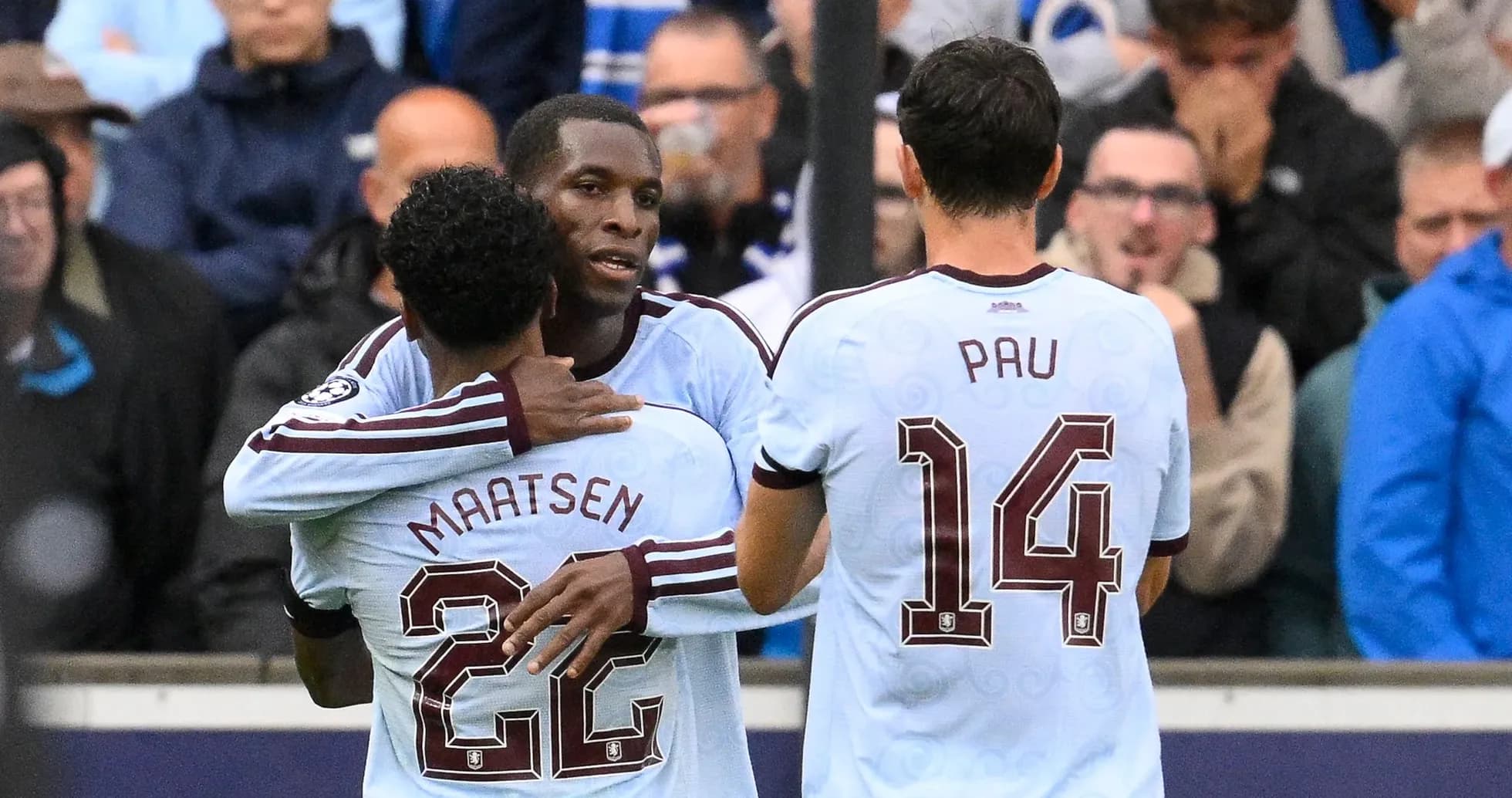
Aston Villa’s return to the Champions League stage began with a statement – not of swagger, but of steel. Under the lights at the Jan Breydel Stadium, Unai Emery’s side survived a bruising, breathless contest to beat Club Brugge 3-2 and bank three valuable points on matchday one of the league phase.
They started like a team in a hurry.
Villa flew out of the blocks, pinning Brugge back and snapping into every duel. The reward came early. On 11 minutes, John McGinn – so often the heartbeat of this side – arrived with trademark timing to sweep Villa into the lead, capping an opening spell that crackled with intent.
The noise inside the stadium barely dipped. Brugge hit straight back.
Eight minutes later, the home crowd had the equaliser they demanded. Hugo Vetlesen finished off a sharp move, converting a pass from Jan Virgili to drag the Belgians level at 1-1 and flip the mood. For a moment, Villa looked rattled. The volume rose, tackles flew in, and the game threatened to tilt.
It didn’t. Emery’s team reset, tightened up, and struck again.
On 22 minutes, Villa carved Brugge open with a move of real clarity. Joao Gomes picked the pass, Emiliano Buendia supplied the finish. The Argentine’s composure in front of goal restored the visitors’ lead and briefly silenced the home end. The pattern was set: Villa ruthless when they broke, Brugge refusing to go away.
Turning Point
The third goal felt like a turning point.
Two minutes before half-time, new signing Nicolas Jackson seized his moment. Slipped into space, the striker buried his first official goal for the club in the 43rd minute, a clean, confident strike that sent Villa into the dressing room 3-1 up and seemingly in control of the night.
At that stage, it looked like a European away performance straight from Emery’s playbook: sharp early, clinical in transition, then manage the game.
Second Half
Brugge had other ideas.
They came out after the interval with a different edge, pressing higher, running harder, forcing Villa to retreat. The hosts needed a spark and found it just before the hour, courtesy of a chaotic sequence in the box that changed the tone of the contest.
In the 59th minute, Nicolo Tresoldi rose to win a header, nodding the ball into the path of Joaquin Seys. Seys tried to drive a cross back into the danger area and saw it crash against the arm of Aaron Wan-Bissaka. Under the current Champions League handball regulations, the referee pointed to the spot. A lifeline for Brugge, and a flashpoint that ignited the home support again.
Tresoldi stepped up. No hesitation.
He sent Zion Suzuki the wrong way with a cool penalty, trimming Villa’s advantage to 3-2 and turning the closing half-hour into a test of nerve as much as quality. The momentum swung, and suddenly every loose ball felt heavier.
Brugge poured forward. Cross after cross, wave after wave. Villa, who had attacked with such freedom early on, now had to show another side of themselves. Centre-backs stood firm, full-backs tucked in, midfielders dropped deeper. Emery’s men dug in, managed the tempo where they could, and trusted their structure.
The equaliser never came.
Despite the late onslaught, Villa’s defensive line held and Suzuki stayed largely unflustered behind them. When the final whistle went, the away end roared with the release of a team that knows how precious any away win in Europe can be – especially one earned the hard way.
For Villa, this is the ideal launchpad: three goals, three points, and a reminder that they can both thrill and suffer on the same night and still come out on top. Their attention now swings back to the Premier League and a meeting with Nottingham Forest, where the challenge shifts from continental chaos to domestic consistency.
Brugge, stung but far from disgraced, must turn this frustration into fuel. Antwerp await in the Belgian Pro League, and after coming so close to clawing back a heavyweight English side, they will know exactly what level they need to hit.