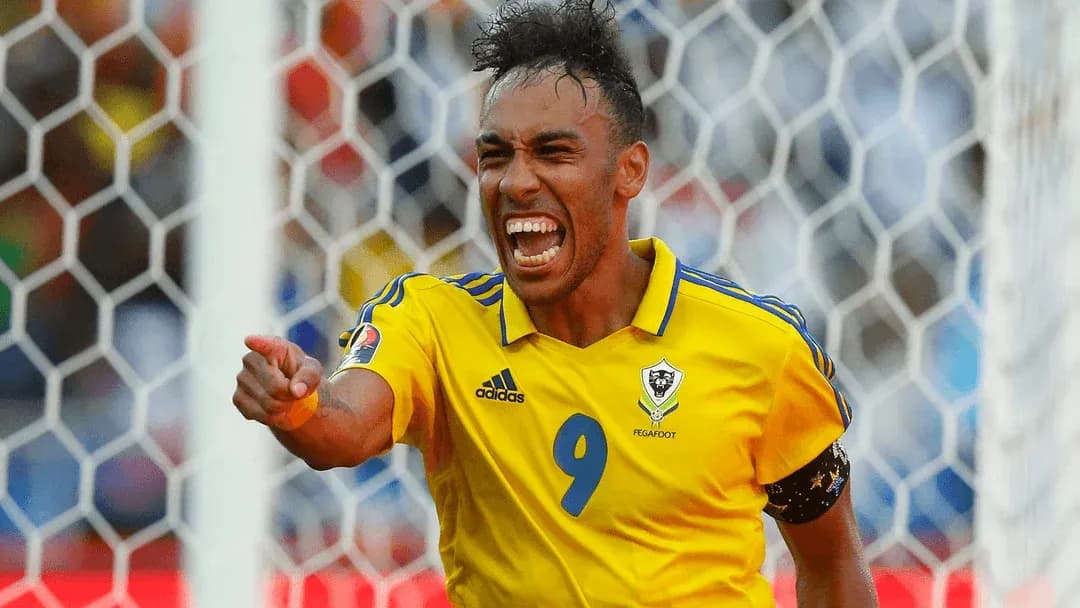
Pierre-Emerick Aubameyang was supposed to leave the Gabon national team to applause and nostalgia, not anger and accusation. Instead, at 37, the country’s greatest goalscorer has closed the door on the Panthers with a blunt message: he feels betrayed.
The Deportivo forward has announced his international retirement after a stormy fallout from Gabon’s disastrous 2025 Africa Cup of Nations campaign in Morocco, a tournament that ended in humiliation on and off the pitch.
“They humiliated me and tarnished my image when I had played at AFCON while injured,” Aubameyang said in a television interview. “It was the last straw and I’d rather leave it here.”
Those words land like a verdict on an entire era.
AFCON collapse lights the fuse
Gabon arrived at AFCON with expectation, if not outright belief. They left with nothing.
Three games. Three defeats. Out in the group stage, their campaign ending in a 3-2 loss to Ivory Coast that underlined a deeper fragility than a single scoreline could show.
The reaction back home was ferocious.
Gabonese president Brice Clotaire Oligui Nguema publicly framed the failure as more than a sporting disappointment, saying at the time that “a part of the national identity” had been weakened. That phrase set the tone: this was no ordinary post-tournament inquest.
The response from the authorities was sweeping. The coaching staff was dissolved. The national team was suspended until further notice. And, pointedly, two of the most senior players – Aubameyang and Bruno Ecuele Manga – were dropped from the squad.
In a team that had collectively failed, two names were placed in bold. Many supporters saw it as scapegoating. Aubameyang clearly did too.
“The problems run much deeper”
For a player who had long carried Gabon’s hopes and global profile, the sense of being singled out cut deep.
“I think the national team’s problems run much deeper than the little part that I represent,” he said, outlining his position with a mixture of restraint and obvious hurt.
He had gone to AFCON carrying an injury, by his own account pushing through pain to be on the pitch. Instead of gratitude for that commitment, he felt exposed and blamed.
The sequence stung: dropped in the wake of the tournament, grouped with Ecuele Manga as a symbol of failure, then later reinstated once the dust began to settle. By then, the trust had gone.
Being brought back into the fold did not feel like a fresh start. It felt like an afterthought.
The damage, as he put it, was already done.
End of an era for the Panthers
With Aubameyang’s decision, Gabon lose more than just a centre-forward. They lose the face of a generation.
He leaves as the national team’s all-time leading scorer, the man who captained the Panthers and carried their colours into the global spotlight for over a decade. From qualification campaigns to AFCON runs, his name became shorthand for Gabonese football itself.
Now Sébastien Migné, newly installed as head coach, must begin his tenure without the player who for years defined Gabon’s attacking threat and international identity. The rebuild starts minus its most recognisable figure.
This is not the farewell anyone envisaged. No testimonial atmosphere, no lap of honour, no final ovation. Instead, Aubameyang exits feeling “humiliated” and unfairly cast as a central culprit in a crisis he insists goes far beyond him.
For Gabon, the question is stark: how does a team already in turmoil replace its greatest striker at the very moment it is being forced to confront its deepest structural flaws?