
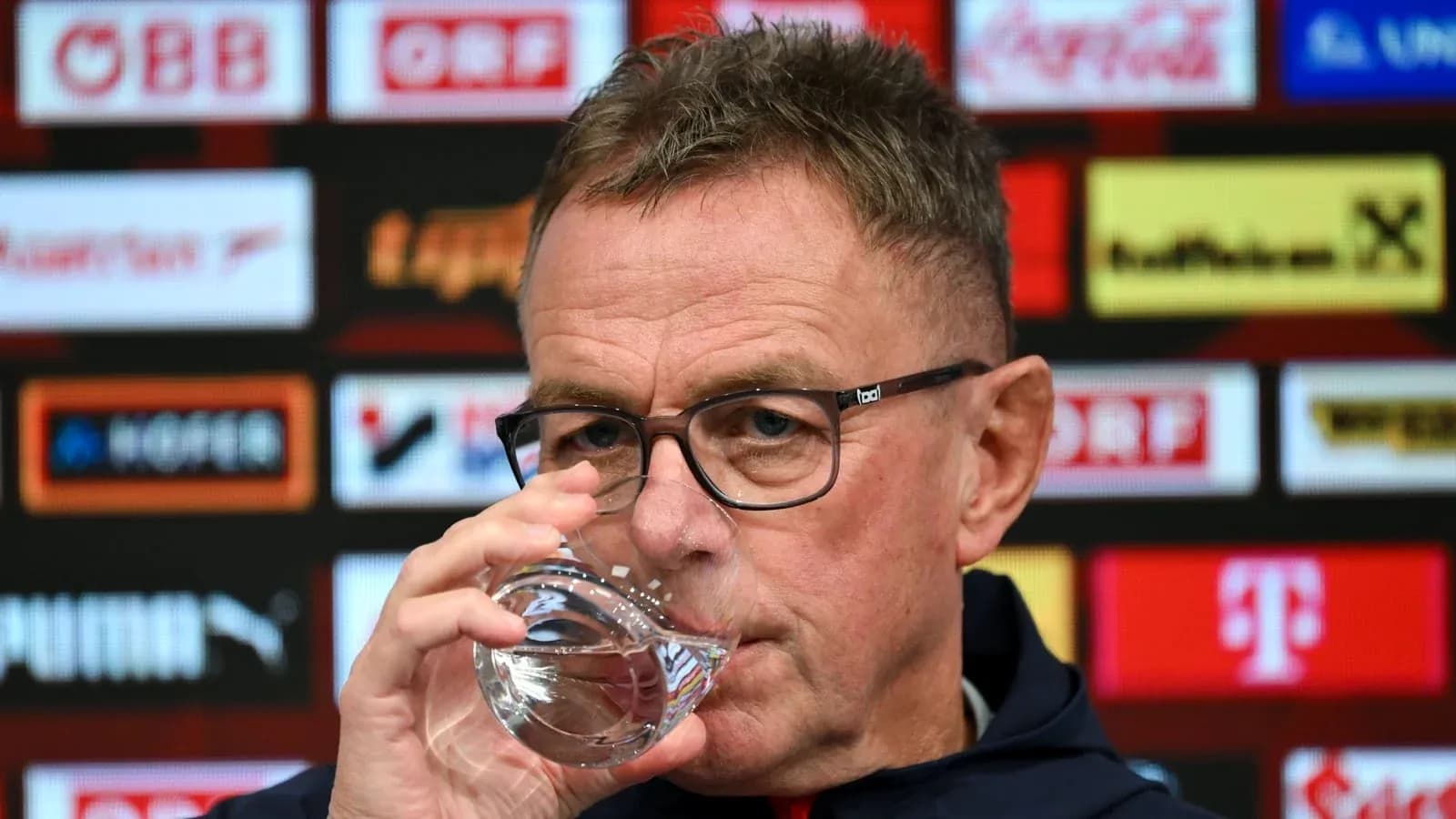
Ralf Rangnick has already faced down Erling Haaland. That is the benchmark he is using as Austria prepare for Troy Parrott.
A month ago in Dublin, Parrott ripped through Austria with a solo goal that instantly joined the Aviva Stadium’s highlight reel, then added a second in a 2-2 draw that briefly had the visitors staring at their first setback of the campaign. Rangnick walked away that night calling the Real Betis forward the best player on the pitch.
Admiration, yes. Intimidation, no.
“We played Norway here and we beat them 5-1 and Erling Haaland didn't have a single opportunity to score,” Rangnick told RTÉ Sport, referencing October 2024 with the casual certainty of a coach who knows his structure works. “So, if we can do that with Norway and with Erling Haaland, I'm positive that we can also do it tomorrow.”
The stakes in Linz are clear. Austria sit top of the group on eight points after that comeback in Dublin and a draw in Kosovo. Win at home and they seal promotion to League A. Drop points and the door swings open again.
Injuries bite, but belief holds
The build-up has not been smooth. Rangnick has lost Xaver Schlager and Alexander Prass to injury, two more names added to a list he would rather not be compiling at this stage of the campaign. The response has been typical Rangnick: adjust, promote, move on.
Into the squad comes 19-year-old Stuttgart midfielder Yanik Spalt, drafted in for the final training session, a late reinforcement rather than a headline act. Christoph Baumgartner, one of Austria’s key attacking outlets, is only expected to manage 65 to 70 minutes against the Republic, but even that feels significant for a side that has spread goals around.
There will also be a change in goal. Werder Bremen’s Alexander Schlager starts this time, replacing the goalkeeper from the 2-2 draw at the Aviva. New hands, same demand: control the box, play out under pressure, keep Austria’s promotion charge on track.
“We are fully aware of the importance of tomorrow's game but we are also fully aware that Ireland has a good team,” Rangnick said. “We have experienced that, especially in the first half when we played in Dublin.
“We have a few players missing due to injuries but we had a good week of training in our camp in Aspern. If we can confirm the kind of performance that we played in the second half in Dublin and in the last four days in training, I'm positive and optimistic that we can win the game.”
Goals flowing, clean sheets missing
Austria have not been shy in front of goal. Both home matches so far have ended in 3-1 wins, against Israel and Kosovo, a pattern that underlines their attacking intent but also hints at vulnerability.
Nine scored, five conceded. For Rangnick, the balance is acceptable, if not perfect.
“I wouldn't say we conceded a lot of goals. We've conceded five and we scored nine. If we can keep that level, it's okay,” he said. “But obviously, we also want to keep a clean sheet tomorrow, knowing that, especially in offence, Ireland has good players.
“We need a very concentrated and stable performance tomorrow in order to have a clean sheet.”
That “especially in offence” is not accidental. Parrott’s performance in Dublin is fresh in the memory, his movement and confidence a clear warning. Austria survived that night by turning the game on its head in the final 20 minutes. In Linz, they want control from the first whistle, not another rescue act.
Midfielder Konrad Laimer echoed his manager’s stance, stripping the plan back to its essentials.
“We have to exert some pressure,” Laimer said. “We have to look to see if we can get some chances to score goals. The Republic of Ireland have a good team, but I think if we perform well we can win the game tomorrow.”
From Ernst Happel to the “tiger cage”
Ireland know what it feels like to win in Austria. A decade ago this week, they walked out at the vast Ernst Happel Stadion and left with a 1-0 victory in the country’s grand football arena, a 50,000-seater stage named for a two-time European Cup-winning coach.
This time, the setting is different. Smaller. Tighter. Louder.
The Raiffeisen Arena in Linz holds around 19,000, but Rangnick paints a picture that has nothing to do with numbers.
“The atmosphere has always been amazing. It feels like a tiger cage when we play here,” he said. “It's up to us to create the same kind of atmosphere tomorrow.”
That is the challenge now: recreate the intensity that shredded Norway, harness the noise of Linz, and prove that if Austria can shut down Haaland, they can live with Parrott and an Irish side that has already pushed them to the brink once.
Promotion to League A is within reach. The question is whether Austria finish the job in their “tiger cage” or invite one last twist into a campaign they have largely controlled.





