
The numbers are simple. The margins are not.
Republic of Ireland walk into the Raiffeisen Arena on Sunday night with promotion to League A of the UEFA Nations League sitting squarely in their own hands. Beat Austria, then finish the job against Kosovo in Dublin on Tuesday, and Heimir Hallgrimsson’s side jump to the top tier. Slip, and the route becomes longer, messier, more anxious.
This is the kind of night that shapes seedings, seasons and, in time, reputations.
Promotion, pressure and a group on a knife-edge
Ireland arrive in Linz third in Group B3, with five points from four games, but still very much alive. Austria lead the section, Kosovo lurk, and the arithmetic is laced with jeopardy.
Two Irish wins mean automatic promotion and top spot, thanks to their head-to-head advantage over Austria. Second place keeps the door open via the promotion play-offs, where a third- or fourth-placed League A side will stand in the way.
There’s more than Nations League status at stake. Final positions here will feed directly into the Euro 2028 qualifying seedings. Finish higher now, land a kinder draw next month. This window is not just about the present; it’s about the next campaign too.
Austria’s equation is cleaner. Victory at home and they’re guaranteed to win the group, their superior head-to-head over Kosovo doing the rest. In front of an expectant, sold-out crowd, they know anything less than three points would feel like a failure.
The setting? A dry, clear but biting night in Linz, temperatures dropping towards freezing by kick-off. The kind of cold that stiffens legs and sharpens minds. Or dulls them, if you’re not ready.
Hallgrimsson’s tweaks and the fatigue question
The last meeting between these sides still stings for Ireland. In Dublin, Troy Parrott lit up the Aviva with a performance that looked set to define the campaign. A dazzling solo goal, a coolly taken penalty, and Ireland cruised into a 2-0 half-time lead.
Then it unravelled.
Five chaotic second-half minutes, two Austrian substitutes – Alexander Prass and Michael Gregoritsch – and a commanding Irish display dissolved into a 2-2 draw. What should have been a statement win became a warning.
Hallgrimsson pointed the finger at fatigue in the aftermath. That game sat in the middle of a mentally draining double-header against Israel, and his players ran out of emotional and physical fuel. This time, he has moved early to make sure that excuse is off the table.
He’s changed the rhythm of the camp. Players were called in on Monday evening instead of Sunday, given an extra day to recover before training. Meetings have been reshaped, routines altered, every department – from medical to kit – pushed to find marginal gains and foster the “growth environment” he wants.
Small details, yes. But nights like this are often decided on those.
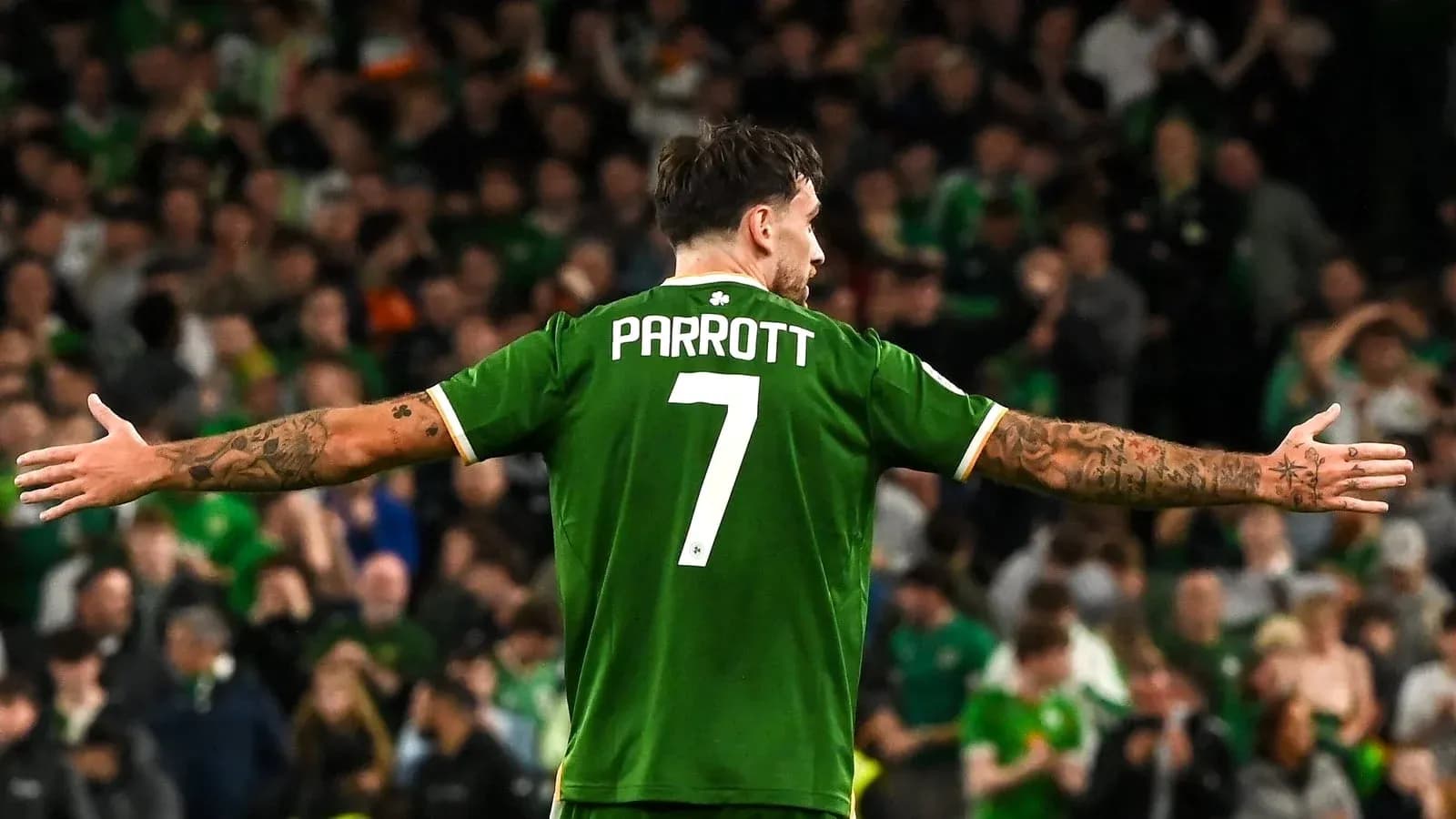
What won’t change is the man leading the line. Parrott, with 10 goals in his last seven competitive games, is the clear reference point in attack. He arrives in form and in focus, the kind of striker who can turn a tight, tactical away tie with one flash of movement or touch.
Behind and around him, there are decisions to make. Jack Moylan and Adam Idah impressed in support during the last international window, and the temptation to unleash all three in Linz is real. Hallgrimsson has kept his cards close, talking up his options and acknowledging that playing men out of position is “a brave option” he now has in his toolkit.
Brave might be exactly what this game demands.
Austria’s home fortress and a thirst for revenge
Austria have not forgotten Dublin. They felt they underperformed, felt they were ambushed by Ireland’s intensity in the first half, and they have carried that irritation into this week.
“This time it will be a different game,” warned RB Leipzig midfielder Nicolas Seiwald. He spoke of taking control from the start, of refusing to be “caught off guard” again. That’s the mindset of a side that believes it should dictate terms at home.
The record backs that up. Austria are unbeaten in their last 14 home matches, with 11 wins and just three draws. You have to rewind to 2023 and a 3-2 Euro 2024 qualifying defeat to Belgium to find the last time they were turned over on their own patch.
Linz, in other words, has become a fortress.
Yet the walls are not without cracks. Ralf Rangnick is juggling a significant injury list. Patrick Wimmer and Xaver Schlager, both starters in Dublin, are out. Prass, the super sub who changed that game, is missing too. Add David Alaba, Paul Wanner, Carney Chukwuemeka and Marco Grull to the casualty list, and the Austrian bench looks thinner than the manager would like.
The belief, though, remains intact.
Centre-back Philipp Lienhart has already framed the challenge: frustrate Parrott, Moylan and the rest, shut down the space Ireland love to attack, and impose Austrian authority. He has seen the danger once and has no intention of reliving it.
“They have a lot of quality up front, and of course a robust style of play,” he said. Ireland go forward quickly, hunt the space behind, and look to turn defences around. Austria, he insisted, learned plenty in Dublin – not only about Irish strengths, but about where they themselves can inflict damage.
They clawed their way back once. This time, as Lienhart put it, the aim is brutally simple: keep a clean sheet.
Fine margins in the cold
So it comes to this: a cold night, a sold-out stadium, one side chasing revenge and control, the other chasing promotion and momentum.
Ireland cannot afford another five-minute blackout. Austria cannot afford another slow start.
Somewhere in that tension, between Parrott’s ruthless form and Austria’s unbeaten home run, between Hallgrimsson’s search for small gains and Rangnick’s patched-up squad, this group will tilt one way or the other.
By the time the frost settles on the Raiffeisen Arena, we’ll know if Ireland are marching towards League A on their own terms – or scrambling through the play-off trapdoor instead.





