Bacary Sagna has watched enough transfer windows to know when the market has lost its bearings. This one, he believes, has crossed a line.
The former Arsenal and Manchester City full-back, a veteran of the Premier League’s first great money surge, has been left stunned by the latest round of spending in England’s top flight, with Liverpool’s capture of Champions League winner Barcola the deal that crystallised his concern.
‘This has to stop’
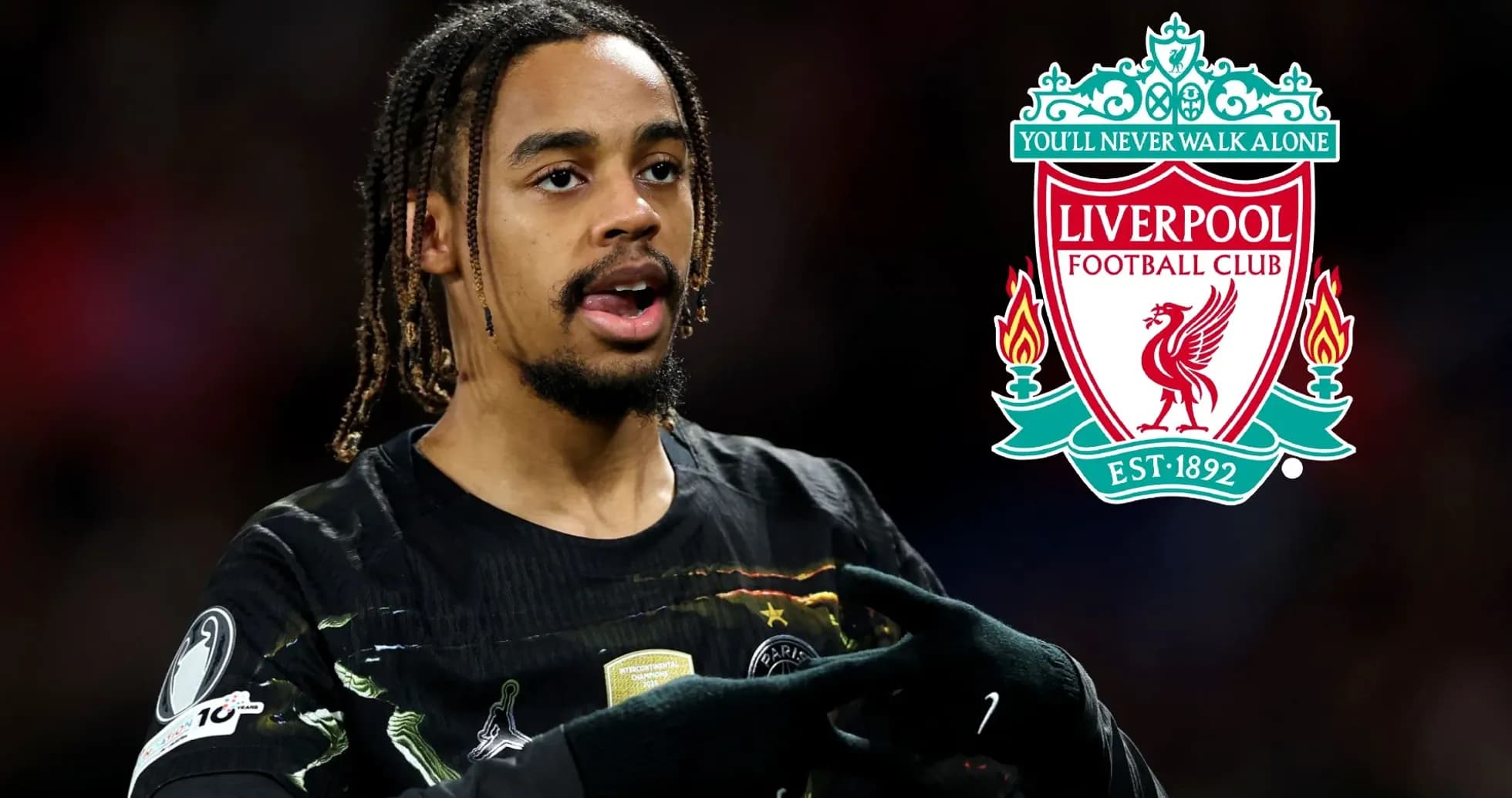
Barcola’s move to Anfield, for a fee of around £123 million after shining at Paris and previously at Lyon, has been hailed as another statement signing by a club determined to stay among Europe’s elite. Sagna has no issue with the player. Quite the opposite.
“Barcola is an amazing player,” he said, reflecting on the transfer and on reports that Arsenal had walked away once the price climbed into nine figures. “He's young, he's 24 now, he has proven himself at Paris and in Lyon previously but this has to stop.”
The number is what jars with him.
“He went for 123 million, no? That's a lot of money if he's evaluated now. I know that we can't compare generations and I know the world is moving and economically it's not the same. Proportionally, yes it makes sense because you sell other players for 100 million and he's better than them, but it doesn't make sense.”
Chelsea, Manchester City, Tottenham and Arsenal have all poured huge sums into their squads over the last 12 months. Records have tumbled again, with Morgan Rogers and Enzo Fernandez among the headline figures in a market that seems to reset its ceiling every few months. For Sagna, that constant inflation doesn’t feel like progress. It feels like a warning.
“They should have limit,” he insisted. “For me it doesn't remove anything on his quality, he's a top player and I think he's going to be good at Liverpool, but for me this is crazy, this is 123 million. They should have a limit and they should set up a limit because in five years what's going to happen? Players will leave for 500 million?”
That question hangs over every new record fee. Each deal drags the next one higher. Each “one-off” becomes the new normal.
When business overwhelms the game
Sagna understands that football is no longer just a sport. He lived through the era when television money exploded, when global tours became routine and when image rights turned players into brands. He isn’t naïve about what the game has become. That is precisely why he’s worried.
“You know it's football, a business, it's good football became a business but any business going high also has its bad side and danger,” he said.
The Premier League’s latest binge has arrived against a backdrop of wider governance concerns. FIFA has spent years fighting off scandal and criticism, and Sagna sees a link between the absence of clear financial boundaries and the headlines that continue to dog the sport’s institutions.
“So to regulate football rules and football financial rules you have to be very smart because soon something like we saw with FIFA trying to sell the World Cup will happen and I'm not surprised,” he said. “I'm not surprised because there is no limit, there is no financial rules anymore. Any player can leave for any kind of money.”
For him, the problem is not just the size of individual deals, but the erosion of the framework around them. Without firm rules, he believes, the game risks drifting away from its foundations.
“There have to be rules and roots,” Sagna said. “When you were educated, you have 60 per cent from when you are little, you were grounded in that, and then of course you will develop yourself on the other 40. Football has to be the same.”
The basics, he argues, are non-negotiable. Once those are tampered with, everything else starts to wobble.
“The basics will never change if you start touching the most important things and you get trouble. When I see all the problems with FIFA being attacked by everyone, I'm not surprised. And this is the same for players.”
A future shaped by the few?
The consequences, in Sagna’s eyes, won’t be confined to balance sheets. They will reshape competition, distort image rights and deepen the divide between the richest clubs and the rest.
“Soon you will have players complaining and clubs complaining and clubs being out of the financial fair play, so top clubs will control it and you'll have to bring other clubs that are not going to have the same quality,” he warned.
That scenario would hit the product the game sells to the world.
“The image rights will be damaged because if you don't have the same quality, then you don't have the same money, and when you start going down that path it is difficult to stop. We need to be careful.”
Liverpool will hope Barcola justifies every penny and becomes the next great Anfield star. Chelsea, City, Tottenham and Arsenal will argue that heavy investment is the price of ambition in an unforgiving era.
Sagna’s question cuts through the noise: if £123 million for a 24-year-old is where football stands today, what kind of game will be left when the first £500 million transfer finally arrives?