The Ballon d’Or race for 2026 has its runners and riders, and this year the stage feels different. New city, new era, familiar giants.
France Football, working with UEFA, unveiled the full list of nominees on Tuesday evening, confirming the cast for football’s most coveted individual prize. The winner will be crowned on 26 October, when the Ballon d’Or gala lands in London for the first time in the award’s history – a deliberate shift of the spotlight to the English capital, now one of the game’s financial and cultural nerve centres.
That night will not just be about the main trophy. The ceremony will also deliver the Yashin award for the best goalkeeper, the Kopa trophy for the standout young player, and honours for the season’s top coach, best club and more. But everything orbits one question: who will be named the best player in the world?
Old kings, new order
At the top of the ticket sit names that have defined the past year, whether in club colours or under World Cup lights.
Kylian Mbappé, now the star attraction at Real Madrid and still the heartbeat of France, heads into another Ballon d’Or campaign with the weight of expectation that usually follows only the very greatest. Lionel Messi, captain of Inter Miami and Argentina, remains in the conversation too, a veteran presence whose mere inclusion keeps the thread of a long-running era alive.
Rodri, the metronome who has swapped Manchester City for Barcelona, stands as the emblem of the modern midfielder: control, rhythm, and an iron grip on big matches. His presence among the favourites underlines how central midfield, not just goalscoring, now shapes these debates.
The list is thick with players who turned last season and the 2026 World Cup into their own stage. Lamine Yamal, the Barcelona and Spain prodigy, steps into the senior Ballon d’Or discussion as one of the brightest young talents on the planet. Fabián Ruiz arrives with perhaps the most complete trophy cabinet of all: a Champions League crown and a World Cup title, both with Paris Saint-Germain and Spain, anchoring a case built on big-game authority.
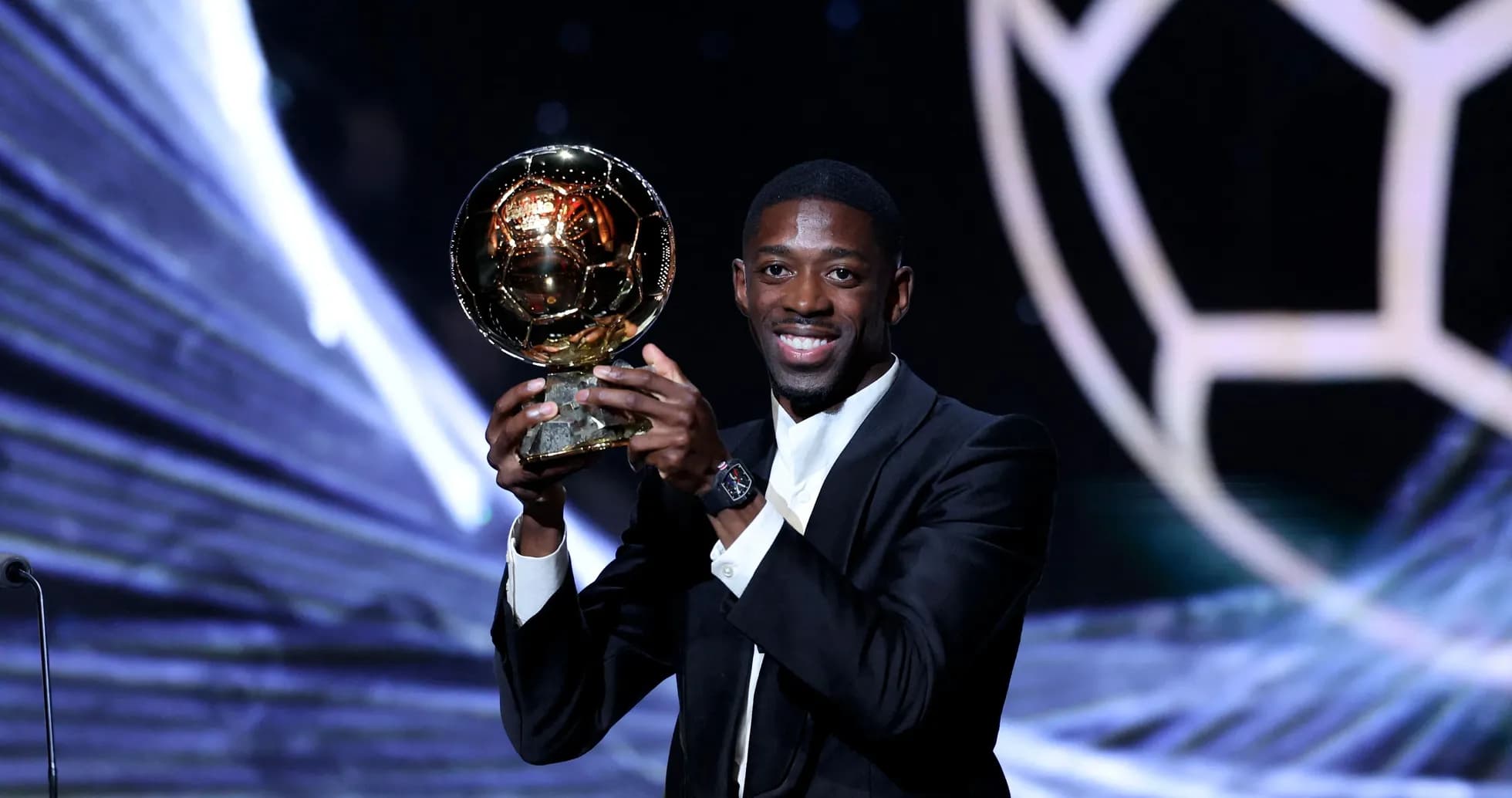
Defending winner Ousmane Dembélé is back to protect his throne. The Paris Saint-Germain and France winger has turned raw potential into end product, and his inclusion confirms that last year was no one-off.
The power shift: Spain and Paris on top
Scan the list and a pattern jumps out. Players from world champions Spain and European champions Paris Saint-Germain dominate the field.
PSG’s spine runs right through the nominees: Dembélé, Achraf Hakimi, Marquinhos, Nuno Mendes, Khvicha Kvaratskhelia, João Neves, Willian Pacho, Vitinha and, of course, Fabián Ruiz. It reads like a roll call of a superclub that has finally aligned its star power with continental success.
Spain’s influence is just as clear. Lamine Yamal, Pau Cubarsí, Marc Cucurella, Ferran Torres and Fabián Ruiz all ride the momentum of a national team that has reclaimed its place at the summit of the international game.
Real Madrid, Bayern Munich, Arsenal, Manchester City and Barcelona all have multiple nominees, but the gravitational pull of Paris and La Roja shapes the story of this shortlist.
Saudi Arabia on the map – and a few giants left out
Two names from the Saudi Roshn Pro League cut through the European noise. Sadio Mané, the Senegal forward at Al-Nassr, and Julián Quiñones, Al-Qadsiah’s prolific Mexican striker, both force their way into the conversation from a league still fighting for full recognition on the global stage. Their inclusion underlines how individual brilliance can still travel, regardless of where a player plies his trade.
The absentees speak almost as loudly as the nominees.
Cristiano Ronaldo, captain of Al-Nassr and Portugal, does not make the cut. Mohamed Salah, once the talisman of Liverpool and now at Trabzon while leading Egypt, is also missing. For two players who spent years living on this list, their omission marks a stark sign of the changing of the guard.
Barcelona and Brazil winger Raphinha is another notable casualty, as is Pedri, the Barcelona and Spain midfielder whose injuries and inconsistency have stalled what once looked like an unstoppable rise. The Ballon d’Or has always been ruthless in reflecting the present rather than the past; this year is no different.
The 2026 Ballon d’Or nominees in full
- Jude Bellingham (Real Madrid, England)
- Pau Cubarsí (Barcelona, Spain)
- Marc Cucurella (Chelsea, Spain)
- Ousmane Dembélé (Paris Saint-Germain, France)
- Luis Díaz (Bayern Munich, Colombia)
- Bruno Fernandes (Manchester United, Portugal)
- Gabriel (Arsenal, Brazil)
- Erling Haaland (Manchester City, Norway)
- Achraf Hakimi (Paris Saint-Germain, Morocco)
- Harry Kane (Bayern Munich, England)
- Khvicha Kvaratskhelia (Paris Saint-Germain, Georgia)
- Lamine Yamal (Barcelona, Spain)
- Sadio Mané (Al-Nassr, Senegal)
- Marquinhos (Paris Saint-Germain, Brazil)
- Lautaro Martínez (Inter Milan, Argentina)
- Kylian Mbappé (Real Madrid, France)
- Nuno Mendes (Paris Saint-Germain, Portugal)
- Lionel Messi (Inter Miami, Argentina)
- João Neves (Paris Saint-Germain, Portugal)
- Michael Olise (Bayern Munich, France)
- Willian Pacho (Paris Saint-Germain, Ecuador)
- Julián Quiñones (Al-Qadsiah, Mexico)
- Declan Rice (Arsenal, England)
- Rodri (Manchester City, Spain)
- Fabián Ruiz (Paris Saint-Germain, Spain)
- William Saliba (Arsenal, France)
- Ferran Torres (Barcelona, Spain)
- Dayot Upamecano (Bayern Munich, France)
- Vinícius Júnior (Real Madrid, Brazil)
- Vitinha (Paris Saint-Germain, Portugal)
From Mbappé’s chase for his first Ballon d’Or in Madrid white, to Messi’s bid to stretch an already absurd legacy, to Rodri’s campaign to put a controller in a striker’s world, the London ceremony promises a clash of eras and ideas.
On 26 October, one name will step out from this crowded field. The question now is whether the Ballon d’Or will finally pass fully to a new generation, or whether the old magic still has one more night left under the lights.