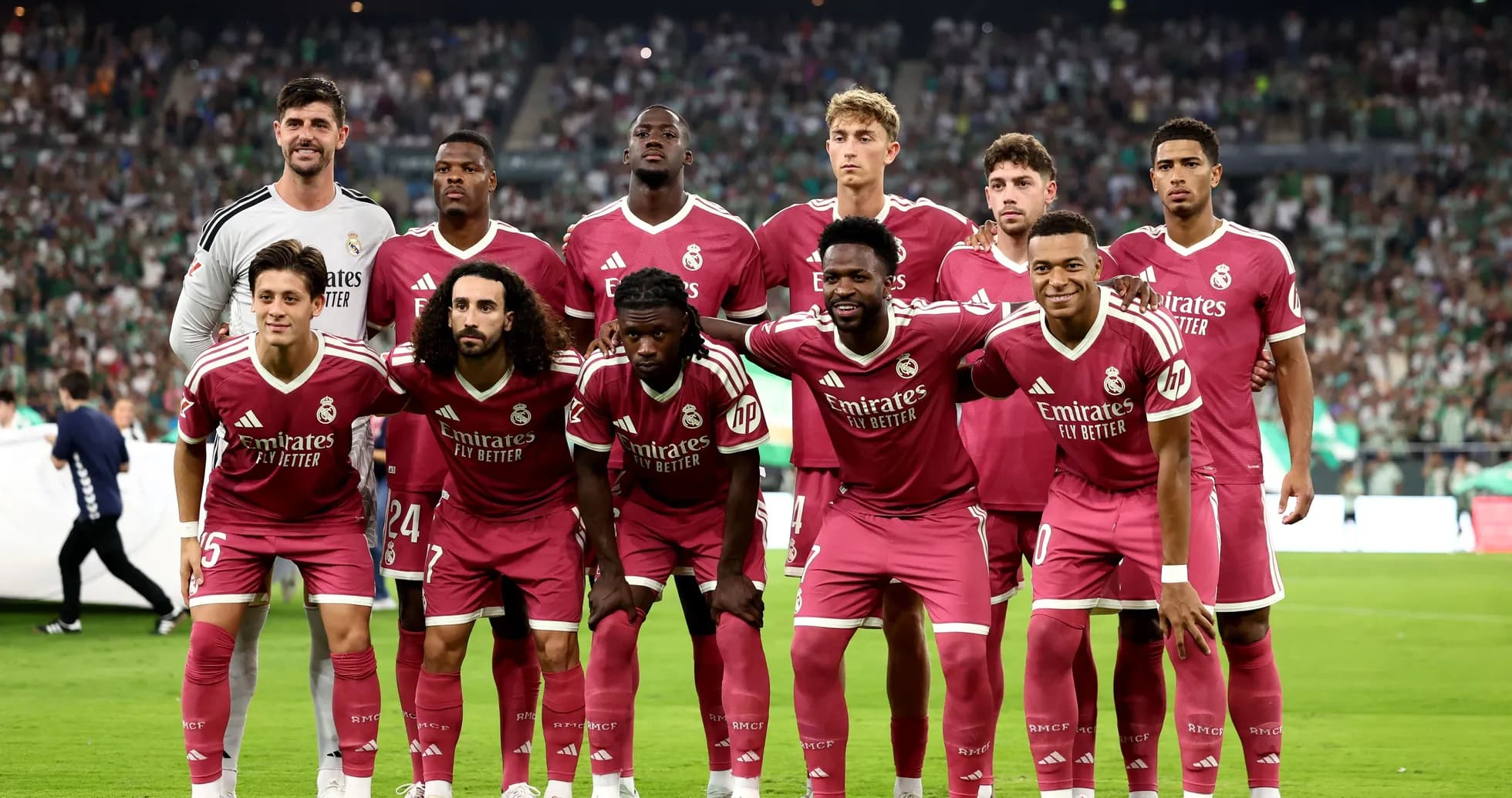
Barcelona are still chasing Real Madrid on the pitch. Off it, they are closing in at speed.
The Catalan giants have climbed to second place in Forbes’ latest ranking of the most valuable football clubs on the planet, with the American business magazine valuing Barça at 7.5 billion dollars. Only Real Madrid, out in front at 9.5 billion, sit higher.
For a club that only a short time ago was drowning in financial alarm bells, the shift is striking.
Spotify Camp Nou: half-built, half-monetised
According to Catalan daily Mundo Deportivo, the current valuation still reflects a Barcelona that is only halfway through exploiting its greatest financial weapon: the revamped Spotify Camp Nou.
Forbes’ figures are based on the situation at the end of the 2024-25 season. At that point, Barça were still operating with a reduced stadium, not the finished 104,600-seat arena that is due to define the next era of the club’s economy.
During the 2025-26 campaign, capacity already began to climb. From 22 November 2024, the stadium could host 45,401 spectators. Between 15 March and 17 May 2025, that rose to 62,652 seats, up to the date of Barcelona’s last home match of the season. Even that partial reopening nudged matchday income upwards. The real storm has yet to arrive.
Once complete, Spotify Camp Nou will not just be bigger than the refurbished Santiago Bernabéu. It will be sharper as a revenue machine. The project includes 9,400 VIP seats, a vast premium inventory that Barcelona expect to turn into a long-term cash engine.
Madrid, of course, are already there. The Bernabéu renovation has been finished for two years, running at its full 83,186 capacity and squeezing every euro out of its corporate and hospitality areas. That head start explains much of the current financial gap.
The question now is how much of that gap survives once Barcelona’s stadium is finally fully open, fully sold, and fully priced.
Revenue records and a reshuffled elite
Barcelona’s board will put a number on their resurgence on Monday, when they reveal the exact figure for record revenues in the 2025-26 season. The club expects to approach 1.1 billion euros in income, having already broken the 994 million mark in 2024-25.
That financial momentum has translated into movement in the Forbes table. Barça have jumped from third to second, overtaking Manchester United, who are valued at 7.2 billion dollars.
The rest of the top ten underlines how fierce the commercial arms race has become. Liverpool sit at 6.2 billion, Paris Saint-Germain at 5.8 billion. Bayern Munich follow at 5.7 billion, with Manchester City on 5.5 billion and Arsenal on 5.4 billion. Chelsea, at 4.2 billion, and Tottenham, at 3 billion, complete a Premier League-heavy list of football’s financial superpowers.
Barcelona’s message is clear: they are back in that conversation, and this time they believe the numbers will be sustainable, not just fuelled by short-term levers and asset sales.
Beyond football: Barça in the global money league
Step outside football and the scale of the global sports economy becomes even clearer.
Across all sports, Barcelona sit only 15th in the Forbes ranking. The Dallas Cowboys lead the world at a staggering 13 billion dollars. The Golden State Warriors come next at 11 billion, ahead of the Los Angeles Rams at 10.5 billion, the New York Giants at 10.1 billion, and two NBA giants, the Los Angeles Lakers and New York Knicks, both at or just above the 10 billion threshold.
Real Madrid, with their 9.5 billion valuation, sit seventh in that overall list. Barcelona, despite their historic badge and global reach, still look up at a group of American franchises that have turned scarcity, closed leagues and domestic TV power into a financial fortress.
Even so, the Catalan club now find themselves back in the elite bracket they feel they belong to. They are second in world football, climbing in the global sports hierarchy, and still only operating at half-throttle in their main stadium.
When the cranes finally leave Spotify Camp Nou and 104,600 seats – including those 9,400 VIP spots – are filled week after week, the numbers will move again.
The only real unknown is whether that next leap will be enough to drag them level with Madrid, or to rewrite the balance of power in football’s richest rivalry.