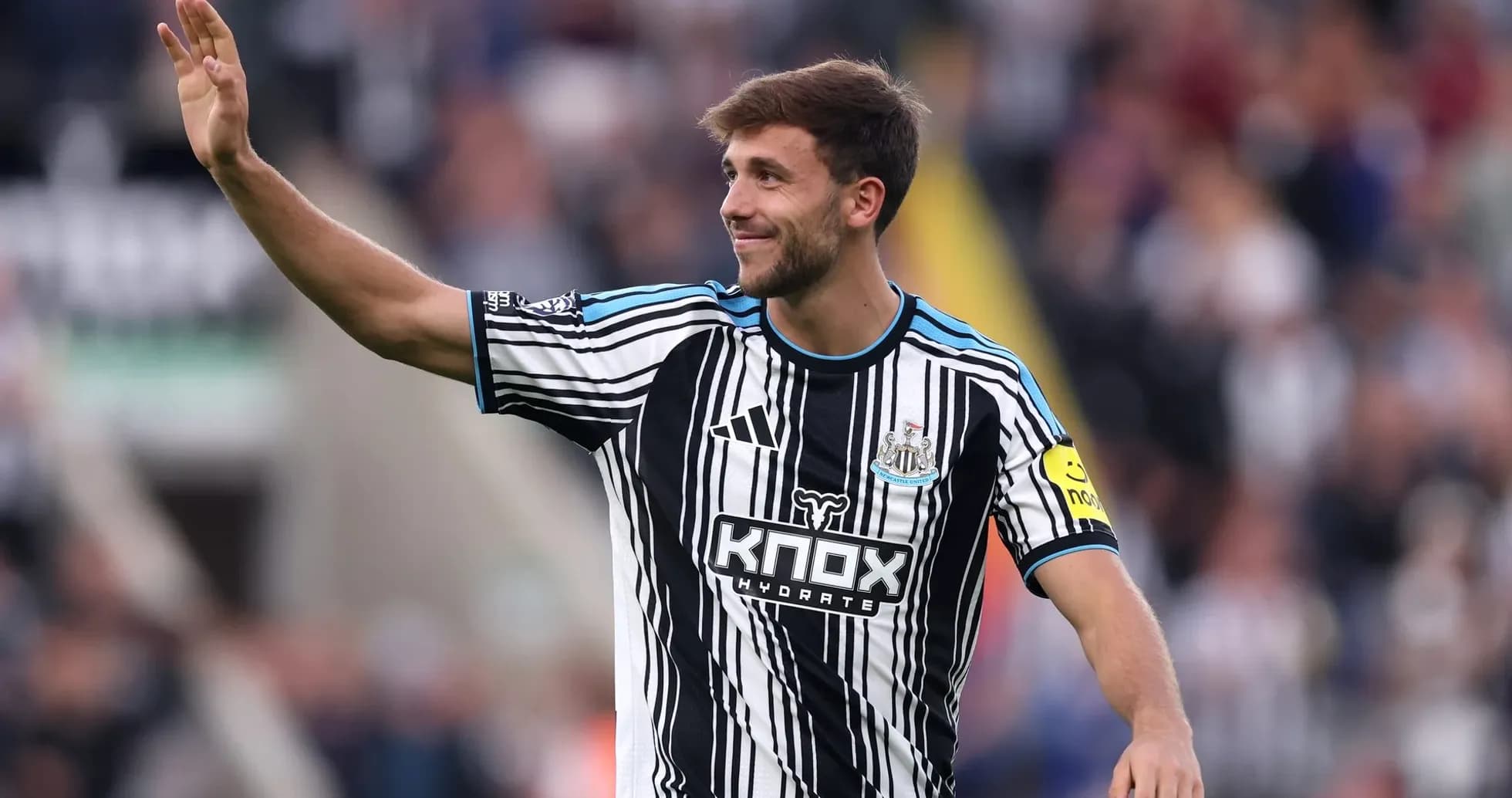
Barcelona have not seen Nico Gonzalez in their shirt for years, yet the midfielder’s career keeps wiring money back to Camp Nou.
His latest move – a transfer from Manchester City to Newcastle in a deal that could climb to around €56 million, with another €4.6 million in potential add‑ons – will once again drop cash into Barça’s accounts. Not through a sell-on clause, not through a buy-back trick, but via FIFA’s solidarity mechanism.
FIFA’s quiet money machine
According to figures reported by O Jogo and confirmed by SPORT, Barcelona are in line for roughly €1.9 million from this transfer, thanks to Nico’s formative years in their academy.
Under FIFA rules, 5% of any qualifying transfer fee is carved out and distributed among the clubs that trained the player between the ages of 12 and 23. Nico is now 24. Those development years were spent largely in Barcelona’s system, with a loan spell at Valencia and then his eventual move to Porto also on his path.
The calculation works heavily in Barça’s favour. Of that 5% solidarity pot, the Catalan club will pocket the biggest slice, estimated at around €1.9 million. Porto are expected to receive about €560,000, while Valencia stand to collect around €280,000.
The money will land in stages over the coming months, in line with the structure of the Newcastle–City agreement.
Small number, big context
On its own, €1.9 million looks modest next to a transfer that can push towards €56 million. Inside Barcelona’s current financial reality, it matters.
This is a club still counting every lever, every clause, every mechanism. Any additional income stream, even one born years ago on the training pitches of La Masia, helps ease the pressure on the balance sheet and underlines why youth development is not just a sporting philosophy but a financial strategy.
Nico, the unexpected gold mine
The solidarity payment is only the latest chapter in a quietly lucrative story. Nico has become one of the most profitable academy exports of recent years for Barcelona, despite never establishing himself as a long-term first-team fixture there.
The numbers tell the tale.
When Nico joined Porto, Barcelona received €8.5 million. His subsequent sale from Porto to Manchester City brought in another €15 million for the Catalans. Add the expected €1.9 million from his move to Newcastle, and the total revenue linked to his departure climbs to approximately €25.4 million.
A quarter of a hundred million euros, generated by a midfielder who built his name elsewhere.
For Barcelona, it is a reminder that not every academy success story has to end with a legend in their own shirt. Sometimes the payoff comes years later, in the fine print of regulations and the steady march of a player’s career through Europe’s elite.