
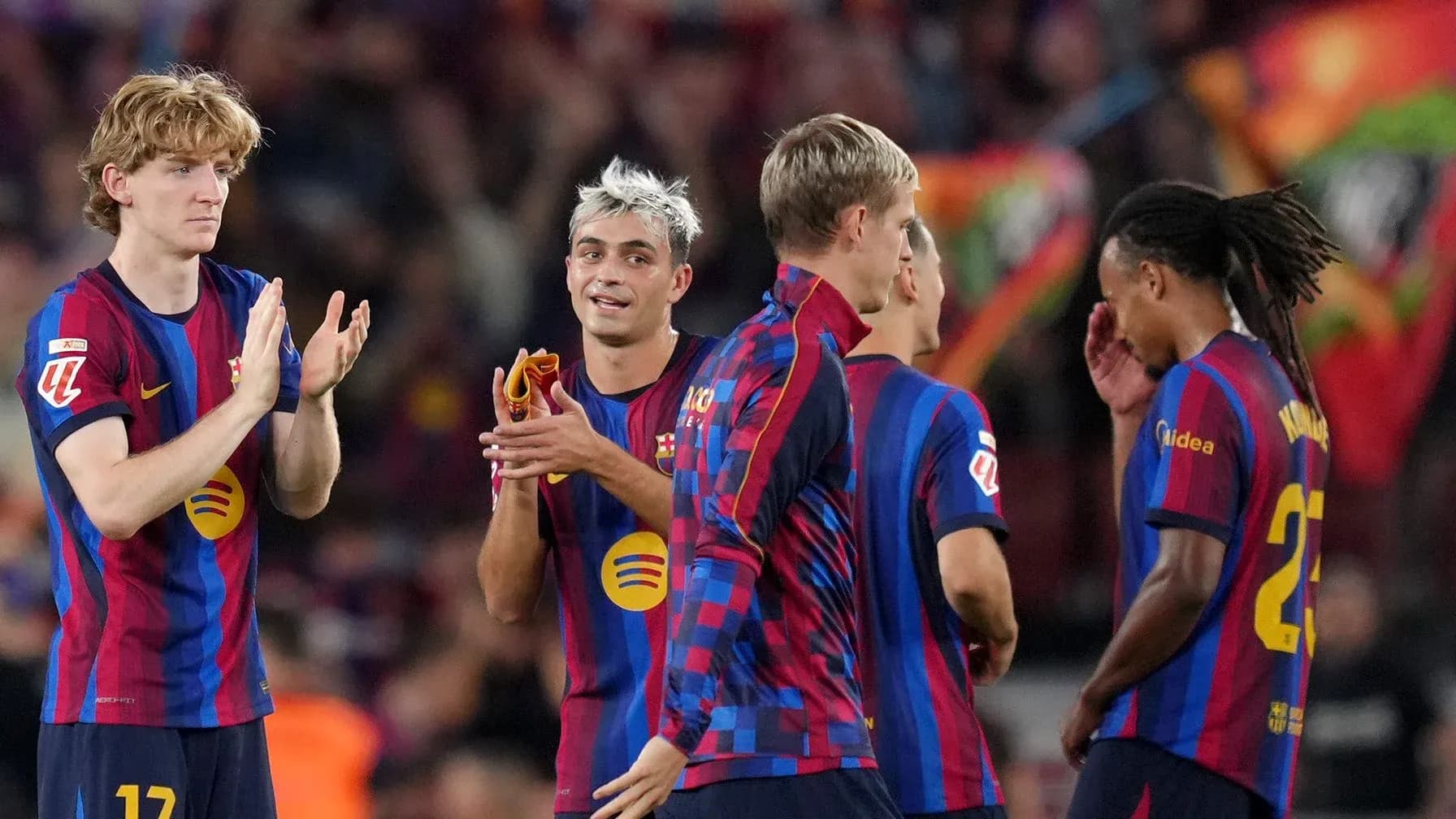
Barcelona look for a way out of a brutal fortnight. A Champions League exit at the hands of Paris Saint-Germain, a bruising defeat to Real Madrid at the Spotify Camp Nou, and the mood around the club has darkened quickly. The calendar offers no mercy, only another test: a tricky away trip to Deportivo Alavés and Quique Sánchez Flores.
In the middle of the storm stands Pedri.
Once the golden symbol of Barça’s rebirth, the midfielder has suddenly become a lightning rod. According to Sport, some of the harshest words in the aftermath of those two defeats have been reserved for him, with Cadena COPE’s Manolo Lama leading the criticism.
Lama went straight to the heart of the issue: Pedri’s body.
“To be a top-class player, you have to be at the peak of your physical level,” he argued, insisting that the Canary Islander is nowhere near that standard right now. For Lama, this isn’t just a fitness note on a medical chart. It is the root of everything that has gone wrong in Pedri’s game.
“I have seen that he has a physical problem,” he said. “When he suffers from a physical problem, his passing is not as accurate as it was before.”
The judgement is blunt. A player once praised for his clarity on the ball now looks, in Lama’s eyes, dulled by fatigue.
He didn’t stop there. Lama painted the picture of a footballer running on fumes, talking about a Pedri who “looks tired after the first ten minutes of the match”, a detail that, in his view, explains the lack of spark when games open up and legs grow heavy. The idea is stark: when Barcelona need him most, he is already spent.
To underline his point, the Tiempo de Juego presenter drew a comparison with one of La Liga’s rising midfielders, Pablo Barrios. The reference wasn’t about talent, but about how quickly tiredness betrays even the most gifted players.
“When feelings of fatigue build up in a player, he loses his energy, and your mind no longer works at the same speed as your legs move, something that shows clearly on you,” Lama said. The message is clear: once the body goes, the brain follows, and the decisions that used to seem effortless suddenly arrive a second too late.
The debate around Pedri’s status is not new. At that moment, Juanma Castaño, presenter of El Partidazo on Cadena COPE, brought the conversation back to the World Cup, reminding listeners that Pedri had already lost his starting place there. It was a warning sign that, in hindsight, feels less like a blip and more like an early marker of his current struggles.
Castaño, though, drew a line between that tournament and the situation at Barcelona. He does not see a repeat of the same scenario at club level, arguing that Pedri generally delivers when he pulls on the Barça shirt. For him, this is not a player to be casually discarded or rotated out of the spotlight.
Then came the final verdict from another seasoned voice. Journalist Miguel Rico narrowed the discussion to one night, one opponent, one brutal mismatch.
“Pedri’s problem has a name and a surname, and it is Bernardo Silva,” Rico said. A footballer with “great experience” and the strength “when the situation demands it”, as well as being “a top-class footballer”. In other words, exactly the kind of rival who exposes any weakness, physical or mental, in a young midfielder still finding his limits at the very top level.
For Barcelona, the argument around Pedri cuts deeper than one bad week. He is supposed to be a pillar of the next era, a player the club builds around, not one they debate on late-night radio. Now he travels with the squad to Vitoria under a harsher spotlight than ever, his every touch set to be examined for signs of life, or of lingering fatigue.
The question is no longer whether Pedri is special. It is whether his body will allow him to prove it when Barça’s season is starting to tilt.





