
The corridors at Säbener Straße are rarely quiet, but right now the noise isn’t coming from the pitch. It’s coming from upstairs.
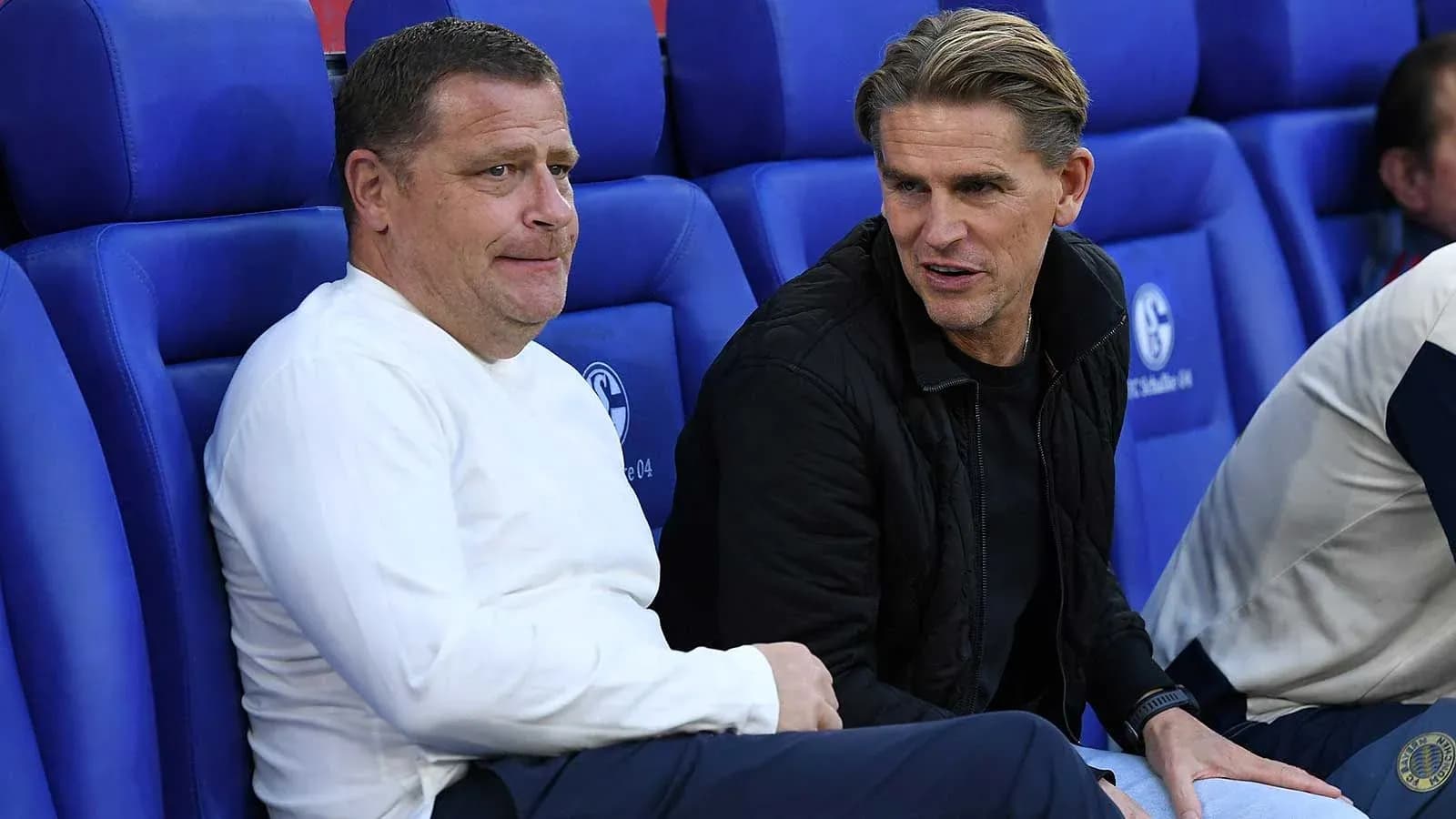
With Bayern Munich still reshaping their sporting hierarchy after the departure of Jörg Schmadtke, the focus has shifted to the uneasy power axis between Max Eberl and Christoph Freund – and to a succession plan that already seems to have stalled.
Vivell: From favourite to fallback
According to reports from tz and the Münchner Merkur, Freund moved quickly when it became clear Schmadtke’s role would need a successor. The sporting director identified Christopher Vivell as his preferred candidate for the key position.
On paper, the profile fits. The 39-year-old, born in Karlsruhe, currently runs the scouting operation at Manchester United, even if that department has not exactly been showered in praise in recent times. Before that, Vivell climbed through the Red Bull system: chief scout at RB Salzburg, squad planner at RB Leipzig, then technical director at Chelsea. He and Freund know each other well from their shared years in Salzburg, where the RB network’s talent machine became the envy of half of Europe.
For a moment, it looked like Bayern might import another piece of that model.
Then the brakes went on.
The same reports say interest in Vivell has cooled. Not because of his CV, but because of politics. Specifically, a reported disagreement between Freund and his nominal superior, board member for sport Max Eberl. Eberl is said to be sceptical about filling yet another strategic role at Bayern with someone from the RB orbit.
Freund, Salzburg. Eberl, ex-Leipzig. Vivell, Salzburg and Leipzig. For some in Munich, that’s starting to look less like a network and more like a takeover.
Eberl and Freund: Partnership or power struggle?
The question now hangs over the club: what is the relationship between Eberl and Freund really like?
Eberl himself is no stranger to the RB world. After leaving Borussia Mönchengladbach in early 2022 for health reasons, he resurfaced at RB Leipzig as managing director for sport. The move infuriated many Gladbach supporters, who had long held him in high regard, and cast a shadow over his previously glowing reputation.
His Leipzig stint ended abruptly. After just 18 months, the club announced his departure, citing a “lack of commitment”. At the same time, Bayern’s board member for sport role had been empty since Hasan Salihamidzic’s exit in May 2023, and Eberl’s name kept circling around Munich.
By the end of September 2023, the separation with Leipzig was official. By March 2024, Eberl was in Munich, installed as Bayern’s new board member for sport. In the interim, it had been Freund – recruited from RB Salzburg in the summer of 2023 – who largely shaped the squad planning and transfer strategy.
That overlap of responsibilities inevitably created tension points. Media reports in recent months have painted a picture of a brittle alliance. kicker went the furthest, describing a “forced marriage” in April 2026 and highlighting several differences between the two decision-makers.
Freund pushed back hard. Asked last summer about the talk of internal rifts, he sounded almost bemused.
“That surprised me too,” he said at a press conference, insisting: “It’s enjoyable working together. What matters is how things work internally, and they work very, very well.”
Outwardly, the message is unity. Behind the scenes, the Vivell episode suggests a more complicated reality.
Schmadtke exit leaves Eberl exposed
On the pitch, the trio of Eberl, Freund and head coach Vincent Kompany has so far justified Bayern’s restructuring. Results have stabilized, the squad looks more coherent, and the club recently underlined its faith by extending the contracts of both Freund and Eberl.
That does not mean everyone in the hierarchy is equally secure.
Schmadtke’s departure, in particular, hits Eberl. The board member for sport had been one of his strongest backers. Eberl brought Schmadtke to Munich in October 2024 and is reported to have pushed internally for an extension of his appointment through to summer 2027 – a significant show of trust in the son of his long-time friend Jörg Schmadtke.
Inside the club, that faith was not universally shared. For months, Schmadtke’s position had come under heavy internal fire. Criticism focused on his performance and suitability for the role, and now Bayern and Schmadtke will part ways earlier than planned, at the end of January 2027.
The pressure did not stop there. Rumours began to circulate that Schmadtke had leaked confidential Bayern information to the media – a toxic accusation in a club obsessed with control over its own narrative.
On Thursday evening, the 37-year-old went public on LinkedIn to draw a clear line.
“I have never passed confidential information to the media. Not in Munich and not anywhere else. I have never put down people under my responsibility,” he wrote. “I am demanding, and sometimes uncomfortable when it comes to quality. I am not disrespectful. And none of what was written had even the slightest connection to my departure from Bayern Munich. I do not speak publicly about internal matters. I have not done so at any of my previous posts, and that remains the case now.”
The words were sharp, the denial absolute. But the damage, in terms of internal trust, had already been done.
For Eberl, losing Schmadtke means losing a close ally in the club’s daily power game. His preferred man is out. His preferred candidate to replace him, Vivell, is being resisted. The RB axis he once seemed to stand at the centre of now looks more fragile, more contested.
Freund, by contrast, remains firmly embedded, his influence on squad planning secure, his contract extended, his network still a powerful card to play.
So who really holds the keys to Bayern’s sporting future – the board member with the title, or the sporting director with the squad in his hands?





