BCCI’s title-sponsor hunt drags on as big brands ruled out
More than two weeks after the deadline, the Board of Control for Cricket in India is still without a title sponsor for India’s home international matches. The most powerful board in world cricket is negotiating behind closed doors, but the front of the jersey and the series naming rights remain unsold.
Talks are understood to be ongoing with a clutch of heavyweight brands — Google Gemini, SBI Life, IDFC First Bank and Spinny among them — as the BCCI works the phones directly rather than rushing back to an open auction.
At the same time, the board has quietly drawn a thick red line through several sectors. Not just the usual suspects like tobacco, liquor, fantasy gaming and gambling. This time, tyre companies, paint manufacturers and sports apparel brands have also been told they are out of the running for the current cycle.
The fine print in the Invitation to Tender (ITT) is blunt. Any bidder “engaged directly or indirectly in the tyres, tubes and flaps industry” is barred. The document goes further, spelling out that any group company involved in manufacturing, marketing, distributing or selling those products cannot submit a bid.
The same applies to “athleisure wear, performance wear, and sports merchandise and equipment” and to firms in “paints, waterproofing and wallpapers.” If a brand sits in any of those spaces, it does not even reach the starting line.
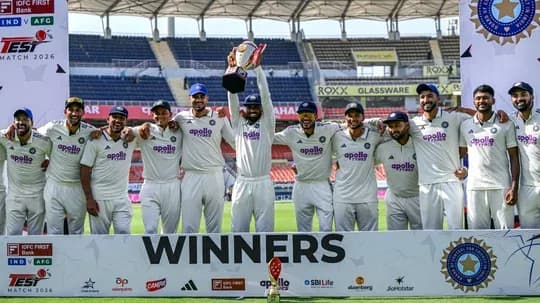
The intent is obvious: ring-fence the money already on the table. Apollo Tyres, the lead jersey sponsor of the Indian team, Adidas, the kit sponsor, and Asian Paints, an Associate Partner of the BCCI, all gain an extra layer of protection from potential rivals muscling in via the title-sponsorship route.
The knock-on effect is stark. Names such as MRF, CEAT, Berger Paints, JSW Paints, Nike, Puma and Decathlon are effectively shut out of this tender. There is no indication that any of them had formally shown interest, but the ITT ensures they cannot do so even if they wanted to.
Behind the commercial fencing sits a fairly straightforward rights package.
For the duration of the deal, the BCCI “presently expects” to stage around 35 Chargeable Matches. That number is only for tender purposes; the board stresses it is not a guarantee and reserves full control over the final schedule.
Chargeable Matches cover international fixtures played by the India Senior Men’s National Team in bilateral series or events hosted by the BCCI. Domestic games do not count. Nor do matches that fall under ACC or ICC events, or any international fixture involving the India senior women’s national team.
The reserve price tells its own story of the market the BCCI believes it operates in. Each Chargeable Match carries a floor of INR 4,85,00,000 — four crore eighty-five lakh rupees. Any bidder stepping into the room knows the minimum cheque expected for every men’s international under this deal.
The board has also tightened the profile of who can bid. Individuals are out. So are unincorporated entities, consortia, joint ventures and joint bidders. Only a single, incorporated entity will be entertained.
On top of that, there is a financial bar to clear. Each bidder must show an average turnover of at least INR 100 crore over the last three audited financial years, or an average net worth of at least INR 100 crore over the same period. No deep pockets, no entry.
So the picture is clear: a high reserve price, a defined but flexible inventory of matches, a narrow corridor of eligible sectors, and a hard filter on financial muscle.
The BCCI has made its move. The question now is which brand is willing to match that valuation and step into one of the most visible sponsorship slots in world cricket.