
Cristiano Ronaldo’s final bow for Portugal has done more than close a chapter. It has redrawn the hierarchy of a national team that has lived under his shadow for nearly two decades. Into that space steps Bernardo Silva.
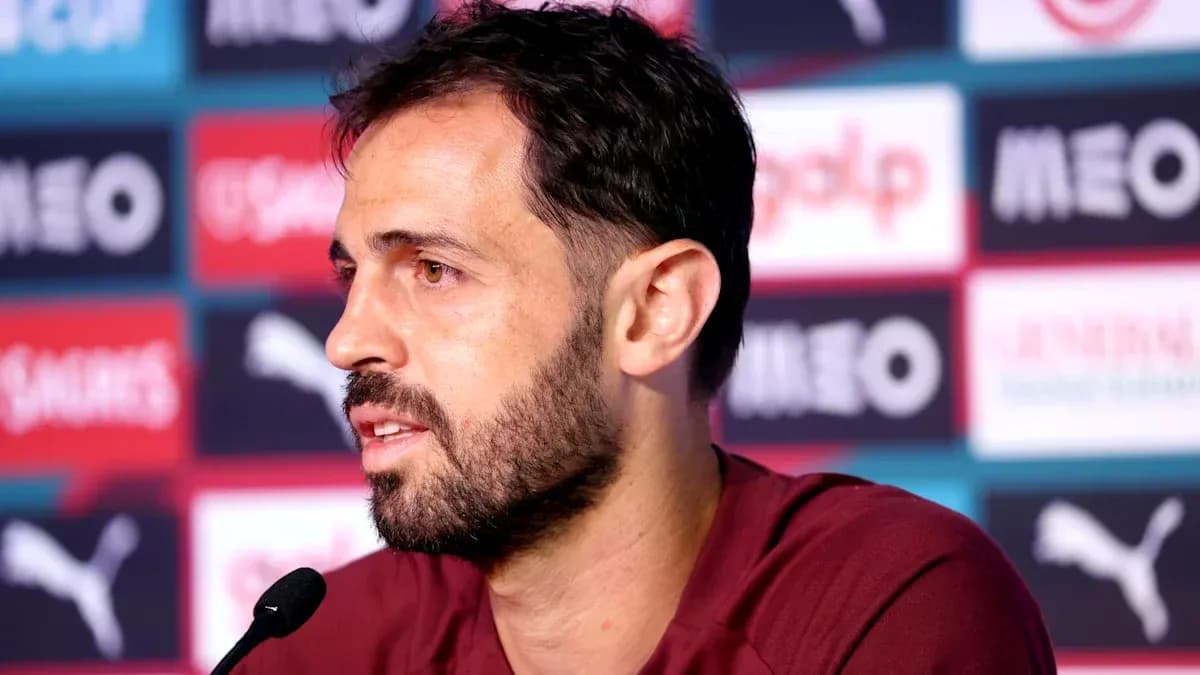
The Real Madrid midfielder has been confirmed as the new captain of the Portugal national team, manager Jorge Jesus announced, following Ronaldo’s retirement from international football on Thursday.
Ronaldo, Portugal’s record scorer and long-time standard-bearer, walks away from the Seleção with a trophy-laden legacy and a captaincy that had become almost synonymous with his name. His departure, accelerated by a recent falling out with Jesus during the last international break, left a void at the top of the dressing room.
Now there is a new figure at the front of the line.
Caps, not sentiment, decide the armband
Jesus made it clear: this was not a decision driven by emotion or debate, but by a simple rule.
“In the national team, captains are chosen based on their international appearances. Currently, there are five players with the most international caps. Interestingly, all of them were my players at the clubs I managed,” the Portugal coach explained, as quoted by AS.
“The logic will remain the same. The player with the most international caps after Cristiano Ronaldo is Bernardo Silva,” he confirmed.
At 32, the Real Madrid summer signing now stands as Portugal’s most experienced active international, with 115 caps. Behind him come Bruno Fernandes on 97, Ruben Dias on 84, Joao Cancelo on 77, and Ruben Neves on 73.
“Then there’s Ruben Dias, Joao Cancelo, Ruben Neves, and Bruno Fernandes. Not in any particular order, but these are the five who will be captains,” Jesus added, outlining a leadership group rather than a single voice.
Bernardo will wear the armband immediately, having been named in the squad for the upcoming UEFA Nations League fixtures against Denmark and Wales. A new cycle starts with him at the front of the team photo.
From slow start in Madrid to central figure
His rise to the captaincy comes at a moment when his club career has just taken another sharp turn upward.
Real Madrid picked up Bernardo on a free transfer in the summer after his contract with Manchester City expired, a move that looked like shrewd business but not necessarily transformative. His early weeks at the Santiago Bernabeu did little to change that perception. Under Jose Mourinho, he struggled to secure regular minutes, often watching key stretches from the bench as he adjusted to new surroundings and a new role.
Then his season flicked into life.
An influential performance in the 2-1 win over Barcelona in El Clasico marked a clear shift. Bernardo’s intelligence between the lines, his ability to dictate tempo and knit attacks together, finally came to the fore in white. From that point, Mourinho’s trust grew, and so did Bernardo’s authority on the pitch.
He has already made 12 appearances for Los Blancos in all competitions, contributing one goal and one assist. The numbers are modest, but the impression is not. His touch on the ball, his reading of the game, the way teammates now look for him in tight moments – all of it speaks of a player whose voice is getting louder.
Now that voice carries to the national team.
No one can replace Ronaldo’s aura, his goals, or his global pull. Portugal are not trying to. Instead, they are shifting towards a different kind of leadership: quieter, more cerebral, built on continuity and shared responsibility.
Bernardo Silva, the playmaker who once operated in Ronaldo’s orbit, will now walk out ahead of everyone, armband strapped on, as Portugal discover what they look like without their greatest icon.





