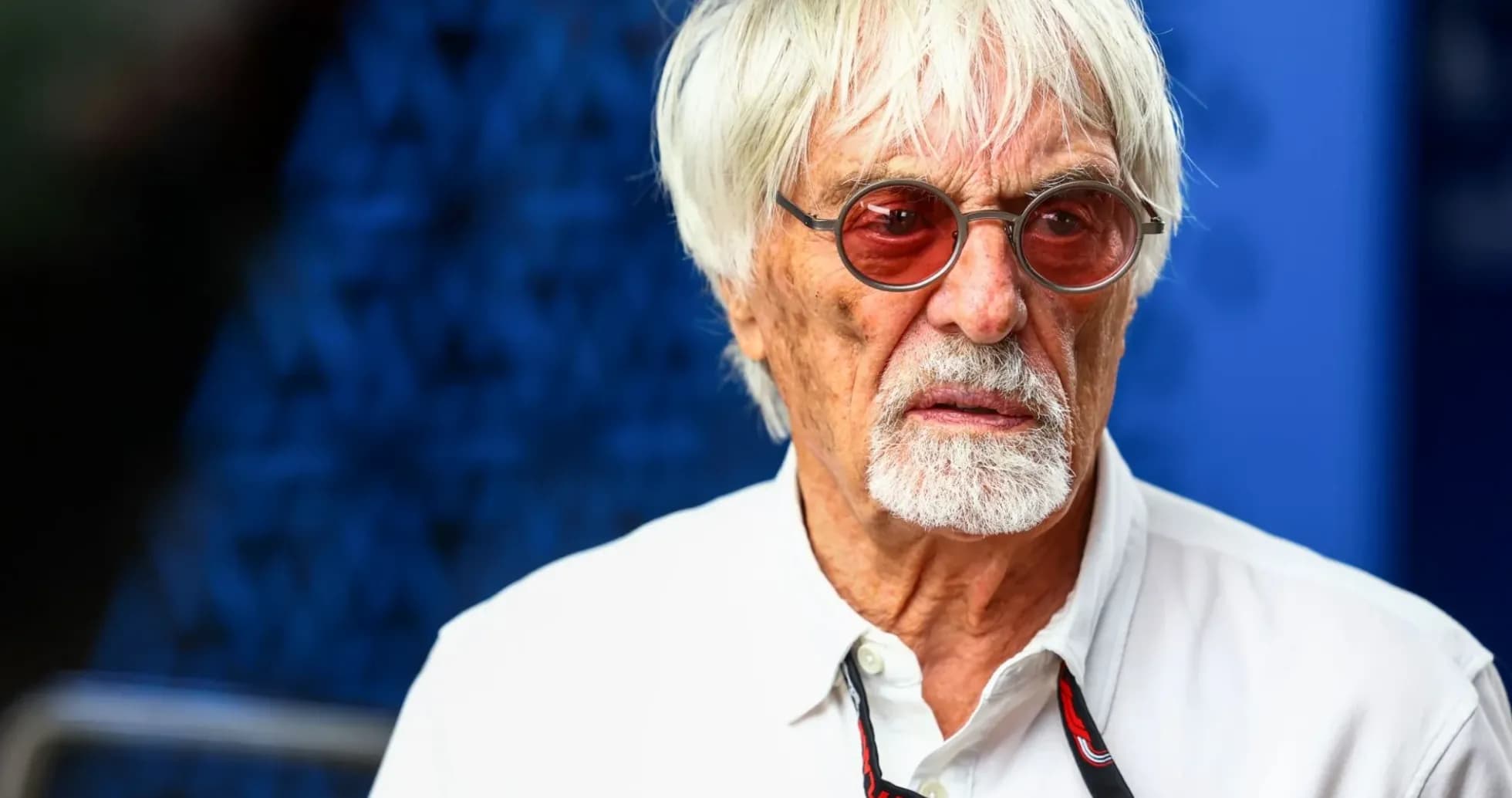
Bernie Ecclestone, the man who once ruled Formula One with an iron grip, is back in the headlines for all the wrong reasons.
The 95-year-old former F1 supremo has reportedly been arrested at a Portuguese aerodrome after authorities discovered he was carrying a shotgun when he landed in his private jet.
Ecclestone was held at Tires Aerodrome in Cascais, just outside Lisbon, according to Portuguese outlet Correio da Manhã. What began as a “routine operation” by officials at the airfield ended with one of motorsport’s most powerful figures being detained over a firearm for the second time in four years.
Portugal’s Airport Division of the Public Security Police (PSP) has not yet issued an official statement on the incident. A PSP spokesman has already moved to distance the force’s border officers from the reported arrest, saying they were not the ones who carried it out and pointing instead to the Tax and Customs Authority – Lisbon Delegation. Customs officials have so far been unavailable for comment, leaving key details of the case still hanging in the air, including whether Ecclestone will be charged or brought before a judge.
For Ecclestone, the setting is different. The storyline is uncomfortably familiar.
In 2022, he was detained at Campinas airport near São Paulo after a gun was found in his luggage as he prepared to board a private jet bound for Switzerland. He admitted carrying the weapon but insisted he had not realised it was in his bag. After paying bail, he was allowed to fly on to Europe.
He later dismissed that episode as a “silly, tiny little incident”, complaining that it had caused major aggravation as he tried to travel back with his family. At the time, he also rejected the notion that he had been “formally arrested”, despite Brazilian authorities confirming that a businessman – not named in their statement – had been arrested for possession of a firearm at the airport.
Ecclestone went on to explain that he had bought the LW Seecamp .32 pistol years earlier from a Formula One mechanic in Brazil, without ammunition. He claimed he kept it more as a deterrent than a weapon, saying acquaintances had told him he needed something like it in case of a mugging. He described having it at home and joking around with visitors, treating the gun almost as a prop rather than a threat.
Now, in Portugal, the stakes feel higher. A shotgun discovered on arrival in a European Union country brings a different set of legal questions, and for a man already under intense scrutiny in recent years, the timing could hardly be worse.
Ecclestone, who divides his time between Switzerland, Portugal and Brazil, owns property in all three countries. His links to Portugal run deeper than a holiday home. He played a central role in bringing Formula One back to the country in 1984, helping restore the nation to the calendar and cementing its place in the sport’s modern history.
Yet his legacy in F1 has long since been overshadowed by legal battles. In 2022, the same year as his Brazilian gun case, Ecclestone agreed to pay £652 million after failing to declare overseas assets, including a trust in Singapore holding around £400 million. He pleaded guilty to a single charge of fraud and received a 17‑month prison sentence, suspended for two years.
For decades, Ecclestone dictated the pace, money and politics of Formula One. Now, in the twilight of his life, it is police, customs officers and courts setting the terms. The latest arrest adds another chapter to a turbulent post-F1 existence – and raises a blunt question: how many more times can the man who once controlled a global sport find himself losing control at the airport gate?