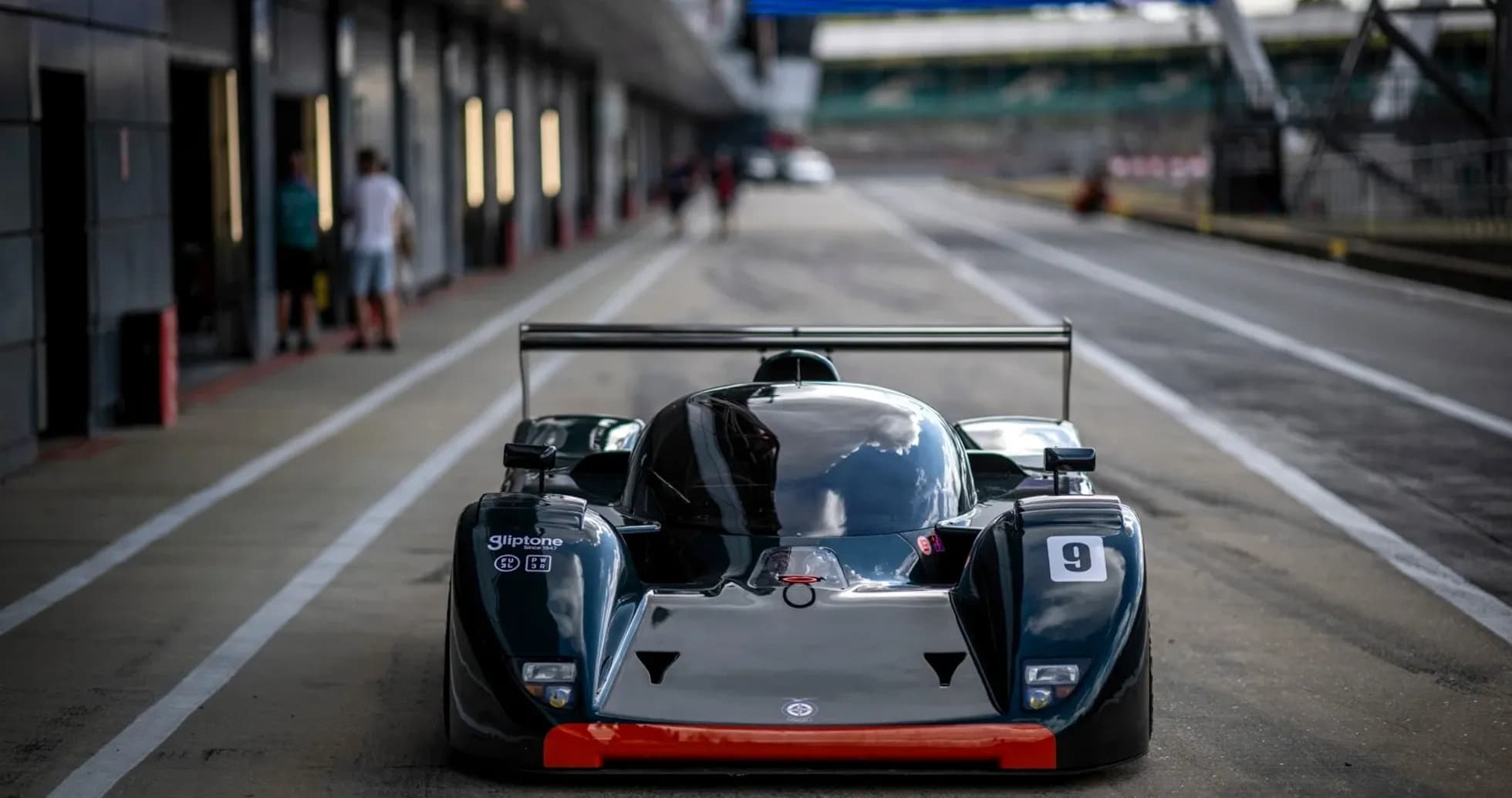
British Racing Motors has never been just a name in the record books. It’s a thread that runs from the birth of British Formula 1 right through to the modern age of sustainable racing. This weekend at Silverstone, that thread tightened again as one of its great what‑ifs, the BRM P351, rolled back into the spotlight in its original, snarling form.
From Hill’s Titles to Le Mans Dreams
BRM’s story starts in 1949, when Raymond Mays and Peter Berthon set up a team that would become Britain’s first Formula 1 outfit. By 1951 they were on the F1 grid; by 1962 they were on top of the world, Graham Hill delivering both the Drivers’ and Constructors’ crowns.
But BRM was never content to live solely inside grand prix paddocks. The marque pushed into endurance racing and rallying, chasing new challenges and new glory. Out of that ambition came one of its most intriguing creations: the P351.
Built as a Group C sports prototype, the one‑off machine was designed to attack the 1992 World Sportscar Championship and, above all, the 24 Hours of Le Mans. On paper, it had everything – a carbon‑composite monocoque, a BRM‑built naturally aspirated 3.5‑litre V12, and the kind of aerodynamic profile that promised serious speed down the Mulsanne Straight.
It delivered that speed, if not the result.
Brutal Pace, Brutal Luck
At Le Mans, the P351 never got the fairy‑tale debut. Transmission trouble forced an early retirement, cutting short what might have been a statement race. Before it faltered, though, the car thundered to 216 mph (348 kph) on the Mulsanne – right in the same ballpark as the big guns from Peugeot and Toyota.
The pace was real. The potential was obvious. The reliability, at that time, was not.
The car did appear again at Silverstone, a reminder that the project was still alive, still fighting. But its path soon veered away from the pure BRM concept that had launched it.
From BRM Prototype to Pacific’s P301
After its early endurance outings, the P351’s life took a sharp turn. The original BRM V12 came out. In its place went a Nissan twin‑turbo V6. The closed cockpit disappeared as well, the roof removed as the car morphed into an open‑top racer.
Under Pacific Racing, it ran in this altered form and under a new identity: the BRM P301. Same core chassis, very different philosophy.
For many cars, that would have been the end of the story – an interesting footnote in the Group C era, remembered by specialists and archivists, not by the wider motorsport world.
This one refused to fade away.
Back Home, Back to Its Roots
Somehow, late in 2024, the racer found its way back into BRM’s hands. Once it did, the mission was clear: strip away the compromises, peel back the years, and restore the car to the specification it was always meant to carry.
That work is now done. At Silverstone this past weekend, the P351 reappeared as it once was meant to be seen: a closed‑cockpit Group C prototype, sitting low and purposeful, powered again by an in‑house 3.5‑litre V12.
This is no museum piece. Dawson Racing has rebuilt both the engine and the transmission, and the car now runs on sustainable fuel. The restoration hasn’t just resurrected a design; it has dragged it into the modern era without sacrificing its identity.
The roof, long lost in its Pacific Racing incarnation, has been recreated as well. BRM leaned on surviving original paperwork and period photographs to reverse‑engineer the closed cockpit, bringing back the silhouette that once flashed down the Mulsanne at more than 200 mph.
Motul, Goodyear, SKF Automotive and others have all had a hand in the revival, supplying the expertise and components needed to make a 1990s prototype not only complete, but competitive in a contemporary context.
Not a Showpiece – A Racing Car
Crucially, this is not a vanity project or a static tribute wheeled out for heritage festivals. BRM intends to race the P351 again. The car will return to active competition, carrying its native V12 and a fresh transmission, running on sustainable fuel in series that are still to be named.
Where will it appear? Which championships will take it? Who will dare strap into a restored Group C beast and push it as Hill once pushed BRM’s F1 cars?
Those answers are still to come. What’s already clear is that the P351’s story, once cut short by a failing gearbox on a French summer’s day, has been reopened – and this time, it’s heading back to the grid.