
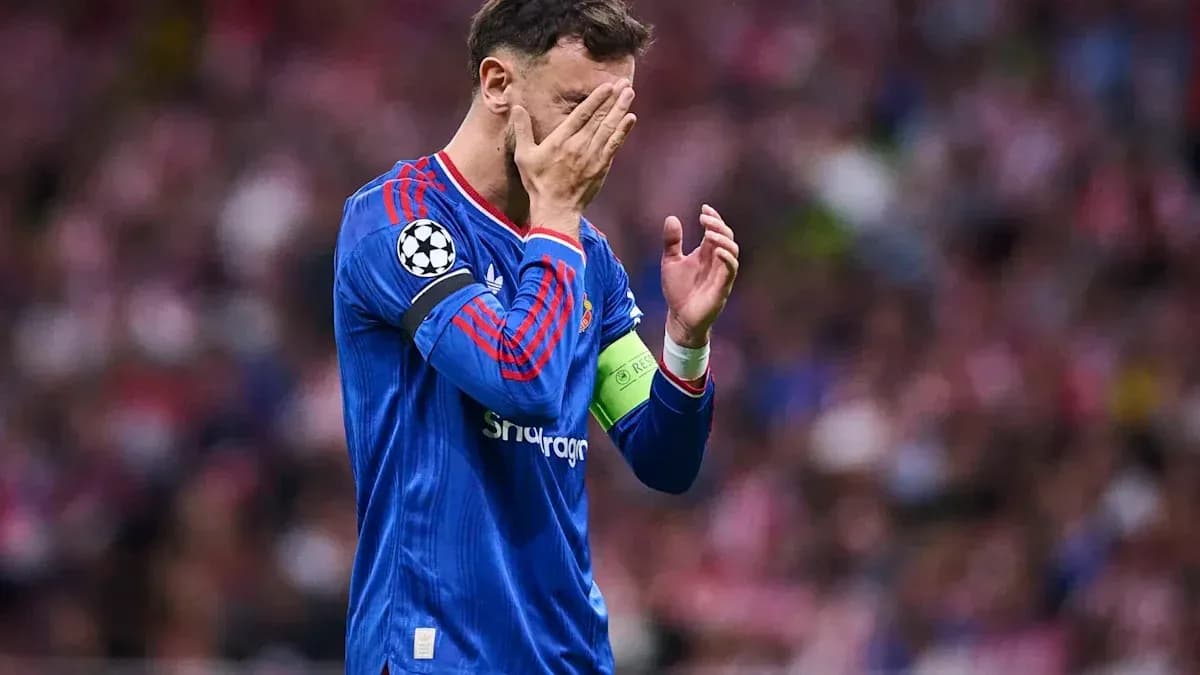
The noise around Old Trafford has rarely been louder. Protests against the Glazers rumble on, Michael Carrick has become the latest manager spat out by the post‑Ferguson machine, and Manchester United sit in the relegation zone after their worst league start in 40 years.
Now, right in the middle of that storm, comes the club’s most delicate decision yet: what to do with Bruno Fernandes.
The captain has rejected a second contract offer with his current deal running to June 2027. On paper, there is time. In reality, there is almost none.
United’s hierarchy know it. So does he.
From Carrick’s Exit to Pochettino’s Gamble
Carrick’s dismissal, after being promoted from interim to permanent head coach and failing to last a year, underlined how chaotic the post‑Ferguson era has become. He is the 12th man to sit in the dugout since Sir Alex walked away. Only seven have lasted less than a year. Carrick joins that list too.
The response has been to hand the keys to Mauricio Pochettino, the man charged with doing what none of his predecessors managed: restore order, impose identity, and drag United back into the title conversation.
He inherits a squad expensively assembled but badly stitched together. The balance is off, the recruitment scattergun. Since Cristiano Ronaldo left in November 2022, United have not found a reliable goalscorer. Holes remain in key positions despite heavy spending.
And at the centre of it all stands Bruno Fernandes – captain, creator, lightning rod.
The Contract Clock Is Ticking
Fernandes last signed a deal in August 2024, tying him to Old Trafford until June 2027. On the surface, that should offer security. It doesn’t.
United have put two fresh offers on the table. Both have been turned down. The first came in the summer when talks opened; the second has suffered the same fate, signalling a sizeable gap between what the club are willing to commit and what their captain believes he deserves.
From January 1, 2027, under FIFA rules, Fernandes would be free to negotiate a pre‑contract with clubs outside England. Lose him for nothing a few months later and United would watch one of the Premier League’s most productive midfielders walk away without a transfer fee, at the exact moment replacing his output would cost a fortune.
The club do hold one card: a unilateral option to extend his deal by a further year to June 2028. Trigger that clause before January 2027 and they shut the door on a free transfer. They also buy time.
But they risk something else.
Force the extension and United protect an asset. They may also sour a relationship with a player who has delivered more than 200 goals and assists since arriving in 2020. For a captain who has carried the side through some of its darkest stretches, being kept in place by a legal mechanism rather than a shared vision would be a dangerous look.
This is no longer just a contract. It is a test of whether United can convince their leader there is still a project worth believing in.
Still the Beating Heart
Even in a season that has veered between flat and chaotic, Fernandes’ influence is hard to ignore. Six goal involvements in nine Premier League appearances, including a hat‑trick against Ipswich, underline his enduring threat.
He remains United’s creative engine, the man who sees passes others don’t and takes responsibility when others hide. When the team teeters, he is usually the one demanding the ball, the one trying to drag them up the pitch, sometimes single‑handedly.
Last season was the clearest example. While United stuttered, he soared. He drove them to Champions League qualification, collected the FWA Footballer of the Year and PFA Players’ Player of the Year awards, and set a new Premier League single‑season record with 21 assists.
This year, the picture is more complicated. United are marooned in the relegation zone, Pochettino is still searching for a functioning structure, and Fernandes has not hit last season’s relentless heights. His decision‑making has dipped in spells, his performances have fluctuated.
Tensions with Carrick over tactics, particularly after the 4–1 Champions League humiliation against Como, added another layer of unease. When the player long described as the heartbeat starts to look out of rhythm, questions grow louder.
And yet, when United needed a spark, he was there again: a goal and an assist to turn a Champions League tie against Roma, then a contribution in the draw with Aston Villa. Even in a season of regression, he continues to shape big moments.
Money, Years and the INEOS Calculation
Strip away the emotion and the Fernandes saga boils down to two words: money and time.
By next year, he will be 33. INEOS, now steering football operations, are wary of long, expensive deals for players on the wrong side of 30. Fernandes wants terms that reflect his status and past production. United want protection against decline.
The dilemma is obvious. Technically, he is good enough to remain decisive into his mid‑30s. His game is built more on vision, timing and creativity than raw pace. But no amount of professionalism can completely fend off age. At some point, numbers usually dip.
Liverpool’s handling of Mohamed Salah looms in the background. After a sensational 2024/25 campaign – 29 league goals, 18 assists – Salah signed a lucrative two‑year extension in April 2025. The following drop in output prompted debate over whether Liverpool had overcommitted to an ageing star on huge wages.
United are desperate not to repeat that mistake. Commit big money to Fernandes now and they could be tied to a declining player on a heavy salary. Refuse, and they risk losing their captain and most consistent creator at a time when they can least afford it.
It is a tightrope: protect the balance sheet or protect the dressing room’s most influential figure. Misjudge it, and they could end up paying far more to replace what he brings than they would have spent keeping him.
Three Roads, Three Risks
The board essentially face three options. None is clean.
- Give him the deal he wants United could meet Fernandes’ demands, hand him a more generous long‑term contract and place him at the centre of Pochettino’s rebuild.
- Trigger the one‑year option The unilateral extension to June 2028 offers a safety net. Activate it and United avoid the nightmare scenario of losing him for nothing in 2027.
- Cash in next summer The most brutal option is to sell. With his reputation, output and experience, Fernandes would attract interest from top European sides and from Saudi Arabia.
But then comes the hardest question: who replaces him? Finding a midfielder who can match his numbers, leadership and understanding of the Premier League, all at once, would be an enormous challenge. And the market rarely offers bargains for that profile of player.
A Divided Fanbase, a Singular Problem
Supporters are split.
One camp insists United must do whatever it takes to keep their captain. To them, Fernandes is the one constant in a side that veers from promising to dismal, the player who has consistently shouldered responsibility when others shrank.
The other camp sees him as part of the problem. They point to his tendency to complain on the pitch, argue he thrives only in certain tactical structures, and suggest that his appetite for risk sometimes tilts towards individualism over collective control.
Both views carry truth. His frustration can galvanise but can also grate. His ambition to decide games can inspire but sometimes unbalance the team.
Yet the market reality bites hard. How many realistic targets can match his blend of creativity, numbers and Premier League know‑how? Identifying a younger midfielder with similar attributes is one thing; trusting that player to replicate Fernandes’ output in a dysfunctional environment is another entirely.
Lose him now, and United are not just replacing a No. 10. They are replacing their captain, their main creative outlet, and the player who has most often dragged them through crisis.
Pochettino, INEOS and the Next Move
The most pragmatic path might be the least dramatic: keep Fernandes, at least in the short term, and give Pochettino a full season to judge whether he can remain central to the new project.
That could mean using the club’s extension clause or finding a compromise deal that rewards his past while protecting the future. Either way, it would buy time – not to dodge a decision, but to make a better one.
It would also allow United to plan properly. Instead of scrambling for an immediate replacement under pressure, they could enter the market with clarity, identify a genuine long‑term successor and move when the right player becomes available rather than when the calendar forces their hand.
Because the real question is no longer simply “keep or sell?”
It is this: if Bruno Fernandes does eventually walk out of Old Trafford, will Manchester United have a coherent plan to replace everything he has given them – or will they once again be left chasing shadows of what they used to be?





