
Michael Carrick has never been short of opinions on how to do his job. At Manchester United, advice comes from all directions – ex-pros, fan channels, former team-mates, even fellow passengers on flights back from Europe.
Right now, almost all of it revolves around one man.
Bruno Fernandes.
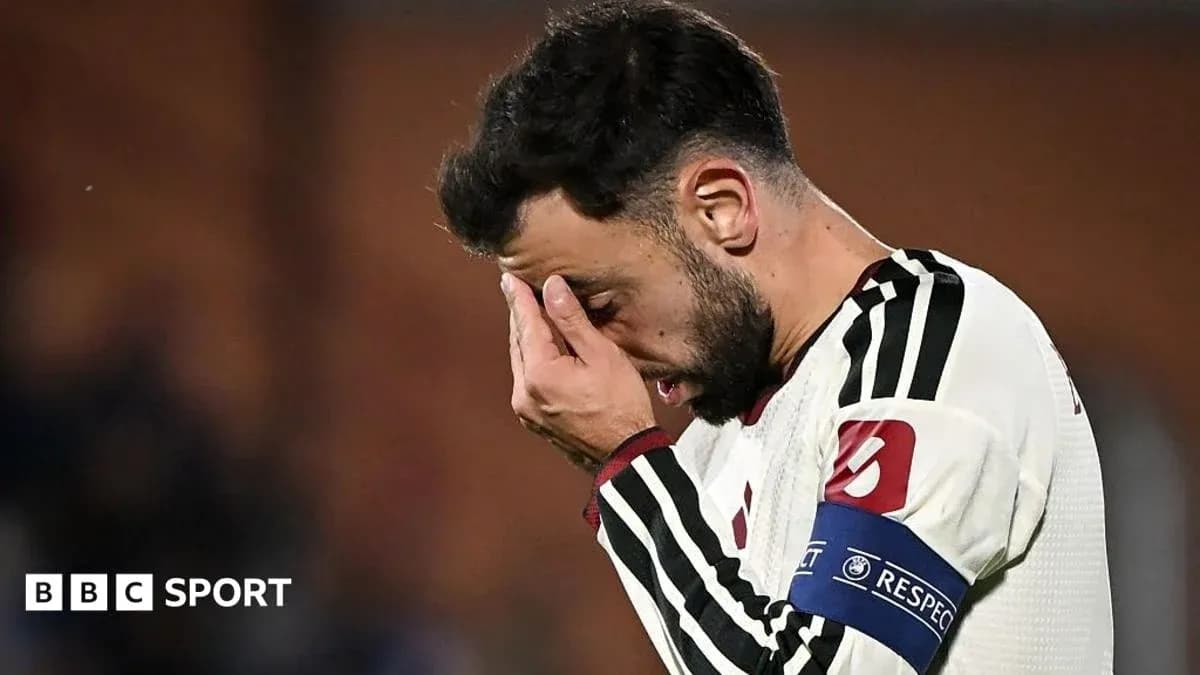
A captain at the eye of the storm
Few players split the United fanbase like their captain. Some see the heartbeat, others see the headache. After his explosive post-match comments in the wake of the 4-1 Champions League defeat by Como, the debate has turned into a full-blown argument.
Should he start against Bournemouth on Sunday? Should he even still be captain?
Duncan Ferguson doesn’t hesitate.
"It is a big problem for Michael," the former Everton and Rangers striker said on The Overlap podcast. "Put people in the team you trust. Your captain has thrown you under the bus. If you don't think he is playing for you, get him out. I wouldn't pick him even though he is their best player."
That last line lingers. Their best player. Left out on principle?
The view from the fanbase has its own edge. Joe Smith, the respected host of Manchester United fan channel Stretford Paddock, is just as blunt.
"I don't think Fernandes should play on the weekend," he said. "I don't think (Lisandro) Martínez should've played against Leeds, because otherwise they're running the ship here."
The mood among supporters flying back from Como to Manchester was no softer. Anger at the club, frustration with the players, concern over the direction of the team. Fernandes sits right in the middle of all of it.
Yet only one opinion truly matters.
Carrick’s.
Rooney’s warning
The United head coach will face the media at 13:30 BST, and the first question is obvious: will Bruno Fernandes be dropped?
Carrick’s old team-mate Wayne Rooney has already framed the issue in stark terms. Speaking on the United Stand podcast, he traced the current unrest back to Lisandro Martinez’s public attack on the club hierarchy after the 2-0 defeat by Atletico Madrid – an outburst that earned the defender a fine.
"When Martinez came out, I said this is an absolute nightmare because it will rip the dressing room apart," Rooney said. "That was the start. We've seen it now with Bruno and you're going to see it with more players because they don't want to take responsibility.
"I was in that situation [as manager at Plymouth and Birmingham City] and if I was in Carrick's position now, I'd come out fighting. There's no more Mr Nice Guy."
That last sentence could almost be a challenge. Carrick, the understated midfielder who once made United’s midfield tick, is now being told to bare his teeth.
The outburst that crossed a line
The club’s decision not to discipline Fernandes after his comments stunned many observers. This, remember, after Martinez had already been punished for criticising the hierarchy. Fernandes not only avoided a fine, he kept the armband.
Inside the game, the reaction to his interview on TNT Sports was scathing.
"It was an assassination," one source who has worked with Fernandes told BBC Sport. "It was unprofessional. Michael's team are killing him."
The issue is not that Fernandes spoke. It’s how far he went. He questioned the tactical approach to the Como game, then pushed responsibility back onto the bench, saying it was for the coaching staff on the sidelines to see the problem and fix it – not the players.
This was not a heat-of-the-moment rant in the tunnel. Fernandes, one of the most tactically astute players in Carrick’s squad and desperate to succeed, chose his words. They were not thrown out in anger like Martinez’s. They were deliberate.
And there were a lot of them. He carried out 10 post-match interviews after the Como collapse, a punishing media gauntlet that some at Old Trafford feel should earn him at least a sliver of sympathy. Those who heard the words live also suggest they sounded less incendiary in the moment than they read on the page.
But they still cut.
The Ferguson shadow – and a different era
Any time a United manager looks under siege, one name looms: Sir Alex Ferguson. Under him, challenges to authority rarely ended well for the player. The manager won. The player left.
It is tempting to imagine how Ferguson would have reacted to a captain publicly questioning his tactics after a 4-1 defeat. History offers a clue: he valued control, and he enforced it ruthlessly.
Yet the game has moved. Stories told by Gordon Strachan on 'The Good, The Bad and the Football podcast' about Ferguson’s time at Aberdeen underline the point: some of the old methods simply would not fly now. The climate is different, the power dynamics more complex, the scrutiny relentless.
Carrick cannot manage like Ferguson. He has to manage in 2024.
A manager running out of runway
The club’s hierarchy know they cannot keep sacking managers. Ruben Amorim went last season. Erik ten Hag the year before. Constant churn has not delivered stability or trophies.
They want to break the cycle.
But there is a brutal reality that no long-term vision can soften. United have gone seven games without a win. If they fail to beat Bournemouth, Carrick will match the grim run of Louis van Gaal’s 2015-16 side – the worst sequence since a Ferguson team went eight without victory (eight draws and a defeat) in 1988-89.
At some point, the numbers start to drown out the rhetoric.
Carrick needs a result. Desperately.
Can he really drop his best player?
And this is where the dilemma tightens. With Benjamin Sesko, Kobbie Mainoo and Marcus Rashford all ruled out through injury, can Carrick realistically afford to leave Fernandes out, even if his instincts tell him he should?
The football case against the captain is not overwhelming, but it exists. His partnership with Youri Tielemans has not sparked as hoped. His output has dipped. The only goal contributions from last season’s PFA Player of the Year so far are a hat-trick and an assist in the 5-2 win over Ipswich in August, and a strike against Azerbaijan champions Sabah FK on 10 September.
For a player of his stature, that’s a thin return.
Yet this is not just about numbers. It is about power, authority and trust inside a dressing room that already feels fragile. Drop Fernandes and Carrick sends a message that no one is bigger than the manager. Keep him in and he backs his best player to respond, while risking the perception that the captain can speak without consequence.
Whichever way he turns, he exposes himself.
Duncan Ferguson’s verdict hangs over the decision: "Put people in the team you trust." The subtext is obvious. If Carrick no longer fully trusts his captain, the answer is simple. But this is not a simple club, not a simple moment, and not a simple week.
On Sunday, when the teams walk out at Old Trafford, the crowd will know the answer as soon as they see the teamsheet.
So will the players.
Carrick has to make the call.
He needs to get it right.





