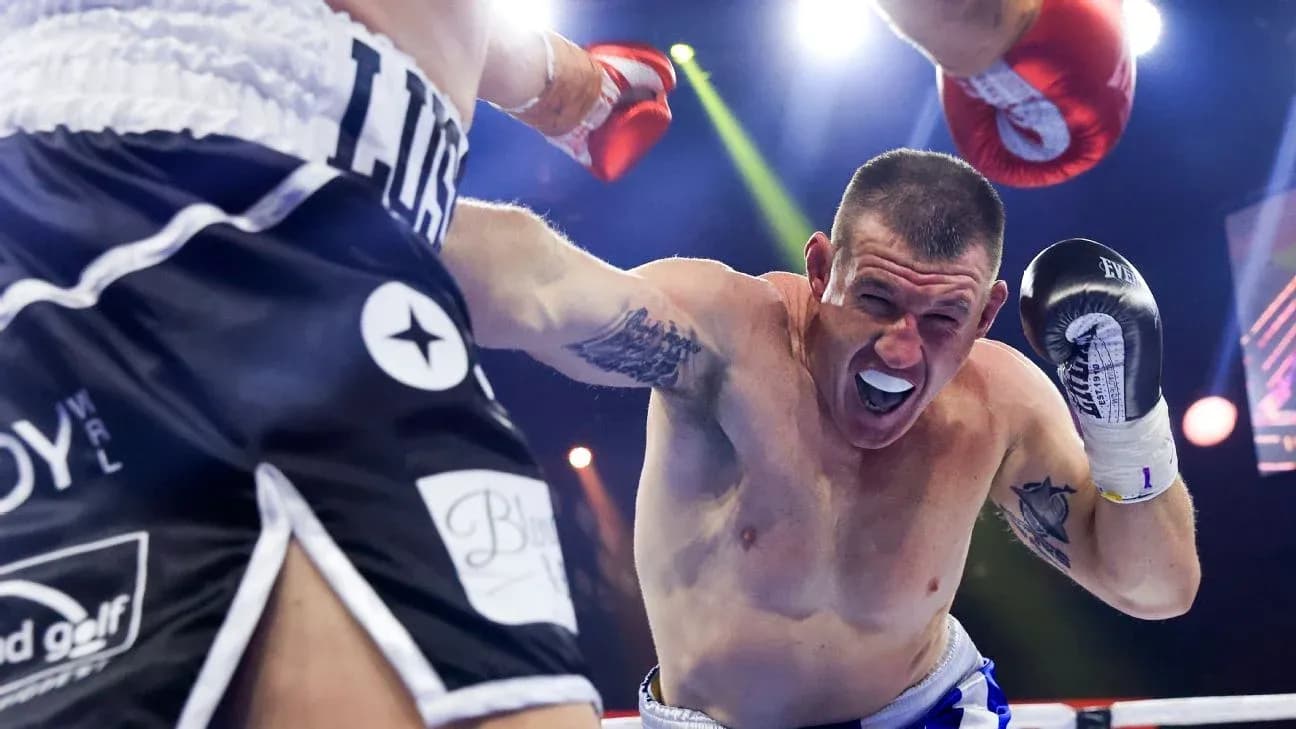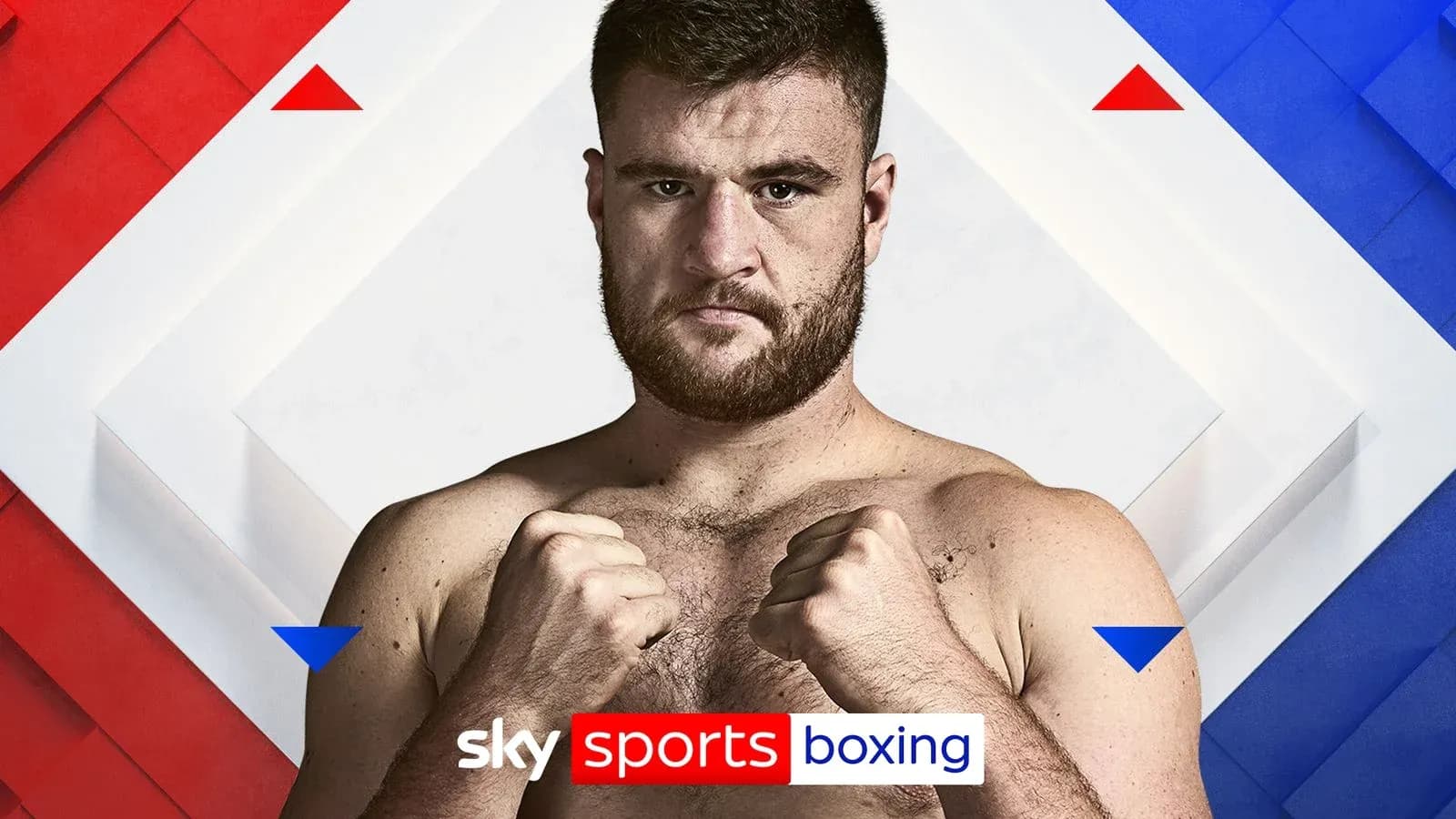
Bryant Jennings is back under the lights, one more time, and he knows exactly what it means.
On Saturday night at the Fox Theatre in Detroit, the two-time heavyweight title challenger meets fellow American Brandon Moore in a ten-round main event on Salita Promotions' "Big Time Boxing" series, broadcast on Wynn Records Network. For Jennings, 41 years old and long removed from his days as a late-blooming curiosity, this isn’t a tune-up. It’s a verdict.
He calls it a “win-or-go-home situation.” At this stage, that’s not promotional bluster. That’s reality.
The Last of Philly’s Old Guard
Jennings comes from a city that insists boxing is in its bricks, even as its gyms thin out and its legends age. He’s one of the last active names in a line that runs through Joe Frazier, Bernard Hopkins, Matthew Saad Muhammad, Dwight Muhammad Qawi, Jersey Joe Walcott, Danny Garcia, Julian “J-Rock” Williams, and now Jaron “Boots” Ennis.
Ask him about the famed “Philly shell” and he shrugs at the idea that a stance can define a city. The guard made famous by Floyd Mayweather Jr.—lead hand low across the body, rear hand tucked on the chin behind the lead shoulder—might be the visual, but Jennings insists the soul of Philly boxing lies somewhere else.
“I wouldn’t say that a certain style defines Philly boxing anymore; maybe a demeanor or attitude or some other attribute you can’t exactly put your finger on,” he said.
That attitude is simple enough to recognize, if not to diagram. Technically sharp enough to outbox you. Mean enough to beat you however the night demands. Willing to run through unorthodox, blue-collar training sessions if that’s what it takes.
In Philadelphia, even the myths work overtime. The city’s most famous fighter is fictional—Rocky Balboa—but the image of a man hammering frozen beef in a meat locker wasn’t pure Hollywood. Joe Frazier did that. The movies just borrowed the grit.
There’s another thread that ties generations together. Between rounds, many Philly fighters don’t sit. They stand. Old-timers did it. Jaron “Boots” Ennis does it now. It’s a message to the man in the other corner: I don’t need the rest.
Jennings grew up in that culture. He’s trying to stretch it one more night.
From the Federal Reserve to Klitschko
Before he ever laced up gloves in a sanctioned bout, Jennings was clocking in at 7:30 a.m. for maintenance shifts at the Federal Reserve Bank of Philadelphia. He didn’t start boxing until 2009. Six years later, he was across the ring from Wladimir Klitschko, challenging for the heavyweight championship of the world.
Klitschko was 39 then, already in the twilight of his reign. Jennings, younger and far less seasoned, still looks back on that night without regret.
“I don’t think anything went wrong that night with Klitschko. I think it was a good opportunity for me, I had only started boxing in 2009, and in 2015, to be in a position to face Klitschko was a great opportunity. If I hadn’t taken that opportunity, who knows if I would have got a chance to face him with the time remaining in his career.”
He lost on the cards, but he didn’t lose the moment. The performance kept him in the title conversation, and he went straight back into the fire later that year, challenging Luis Ortiz for the WBA belt. Again he came up short. The margins at the top of the heavyweight division are brutal, and Jennings found himself on the wrong side of them twice.
Then came Joe Joyce in 2019. Jennings dropped a disputed decision, the kind of loss that gnaws at a fighter. This time, he didn’t rush back. He walked away.
Five years passed.
Five Years Out, One More Night In
Time outside the ropes can hollow a fighter out or harden him. Jennings insists it did the latter. He told KO On SI that the hiatus forced him to learn about himself, to strip away the noise and figure out why he ever fought in the first place.
He returned in 2024, refreshed, but not naïve. At 41, the calendar doesn’t give second chances. That’s why Saturday carries the weight it does.
“It’s not necessarily the end goal, but I am definitely looking to extend my legacy. I would definitely love to fight for a heavyweight world title, but this fight is a win-or-go-home situation,” he said.
He’s now older than Klitschko was when they met in 2015. Back then, the narrative focused on the aging champion. Now Jennings is the one answering questions about how much is left.
Bad Blood in Detroit
Across from him stands Brandon Moore, an unbeaten American contender with youth on his side and a score to settle. The tension between them isn’t manufactured. It goes back to a training camp in Dubai, where words were exchanged and respect never quite followed.
Since this fight was signed, the barbs have flown. Moore sees an aging name he can use as a springboard. Jennings sees a man who talked his way into a reckoning.
The rivalry has a personal edge, but Jennings treats it like business. He doesn’t keep in touch with former opponents and doesn’t plan to start now. If he wins, Moore will likely join a long list of men he’s left behind and never called again.
Perhaps that, more than any stance or slogan, is what remains of Philadelphia’s fighting code: you settle it in the ring, you move on, and you don’t look back.
On Saturday in Detroit, Bryant Jennings gets one last chance to prove that code still has teeth.