
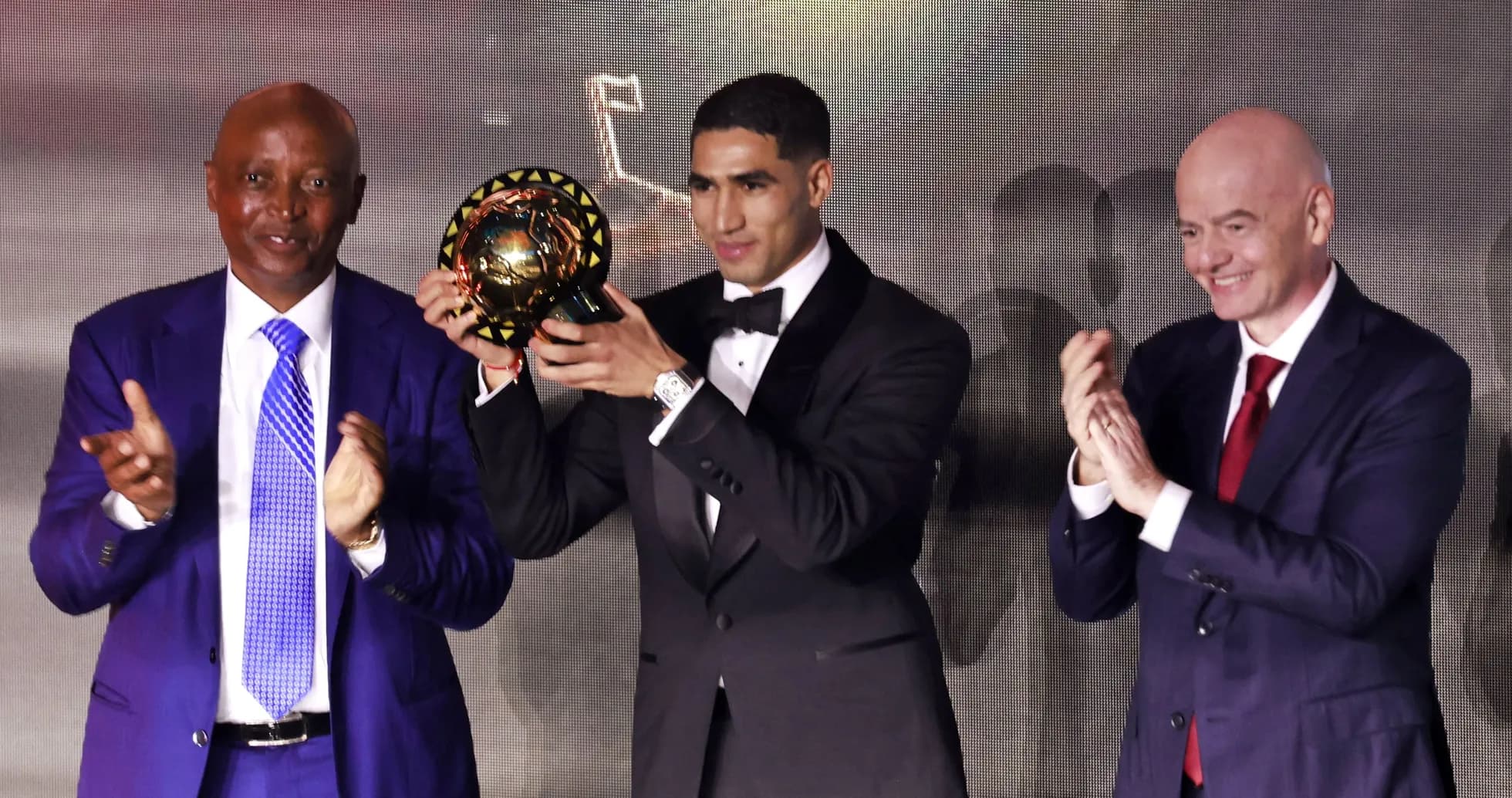
Lagos will be back at the centre of African football in 2026. CAF confirmed on Tuesday that the CAF Awards ceremony will return to Nigeria’s biggest city on Wednesday 2 December, the first time Lagos has hosted the continent’s showpiece gala since 2014.
The Professor Wole Soyinka Centre for Culture and the Arts – better known as the National Theatre – will provide the stage. Eighteen categories, from the continent’s best men’s and women’s players to coaches, goalkeepers, young stars, clubs and national teams, will all be decided under its lights.
Voting is already under way. It runs from 5 to 20 November, with national associations, clubs, coaches and team captains all involved in the process. CAF has underlined its push for “fairness and transparency”, bringing in independent oversight to monitor the ballots and protect the integrity of the results. The stakes, and the scrutiny, are high.
Moroccan surge, Salah shock
The headline from the men’s Best African Player shortlist is as clear as it is jarring: a wave of Moroccan names, and no Mohamed Salah.
Morocco’s influence runs right through the list. Paris Saint-Germain full-back Achraf Hakimi is there, joined by Real Madrid winger Brahim Diaz and Bayern Munich’s Ismael Saibari. That trio underlines the country’s depth at the very top level of European football.
Yet it is Salah’s omission that will dominate conversations. The Trabzonspor forward, long a fixture in these discussions and one of the continent’s defining players of the last decade, does not feature among the nominees. For an awards night used to his presence, it is a glaring absence.
Arab youth on the rise
The next generation carries a distinctly Arab flavour.
Four young talents fly the flag in the Best Young Player in Africa category. Morocco’s Ayoub Bouaddi, the Manchester City prospect, leads a group that also includes Egypt’s Hamza Abdelkarim of Barcelona, Morocco’s Abdellah Ouazane of Ajax and Algeria’s Ibrahim Maza from Bayer Leverkusen.
These are names still being learned by casual fans, but within scouting circles they are already familiar. Lagos could mark their first major step into the wider spotlight.
Zamalek chase continental crown
At club level, the Best Club in Africa race is stacked and fiercely regional.
South Africa’s Mamelodi Sundowns and Algeria’s USM Alger headline a ten-strong field. They are joined by CR Belouizdad, a powerful Moroccan trio in AS FAR, Olympic Safi and Berkane, Egypt’s Zamalek, ASEC Mimosas from the Democratic Republic of Congo, Sudan’s Al-Hilal and Tunisia’s Esperance.
It is a roll call of serial contenders and continental campaigners, with Zamalek once again trying to convert domestic stature into formal recognition as Africa’s standout club.
Egyptian and Moroccan duel in the dugout
The Best Coach in Africa category reads like a tactical rivalry between North African heavyweights.
Egypt national team boss Hossam Hassan and Zamalek coach Moatamed Gamal carry Egyptian hopes. On the Moroccan side stand Walid Regragui, the former national team coach, and Mohamed Ouahbi, the current man in charge of the Atlas Lions.
It is a battle shaped by contrasting projects: national-team rebuilds versus club and country continuity, all judged over a year that has tested depth, adaptability and nerve.
Goalkeepers under the spotlight
Between the posts, Egypt again has a strong hand.
Al-Ahly’s Mostafa Shobeir and Zamalek’s El-Mahdi Soliman both make the cut for Best Goalkeeper in Africa, a nod to the country’s long tradition of producing high-calibre shot-stoppers.
They face formidable competition. Morocco’s Yassine Bounou, now at Al-Hilal, brings major tournament pedigree, while his compatriot Ahmed Reda Tagnaouti of AS FAR adds further Moroccan presence. Algeria’s Oussama Benbot of USM Alger and Senegal’s Edouard Mendy, currently with Al-Ahli, complete a category rich in experience and silverware.
Trezeguet, Shehata and a crowded Arab field
The main Best Player in Africa award also carries a strong Arab contingent.
Egypt’s Mahmoud Hassan Trezeguet, the former Al-Ahly attacker now at Al-Riyadh in Saudi Arabia, is among the standout names. Alongside him is Zamalek midfielder Mohamed Shehata, whose performances have pushed him into the continental conversation.
Morocco again supplies a cluster of contenders: Mohamed Rabie Hrimat, once of AS FAR and now at Al-Shamal in Qatar, Mounir Chouiar of Berkane, Soufiane Rahimi and Soufiane El-Mouden of Olympic Safi all feature in a crowded field.
The pattern is unmistakable. Across age groups, positions and categories, Arab and especially Moroccan football sits at the heart of this year’s narrative.
Now attention turns to Lagos in December. A city that once crowned Africa’s greats will do so again, this time with a new generation surging forward and one giant name, Mohamed Salah, left watching from the outside.





