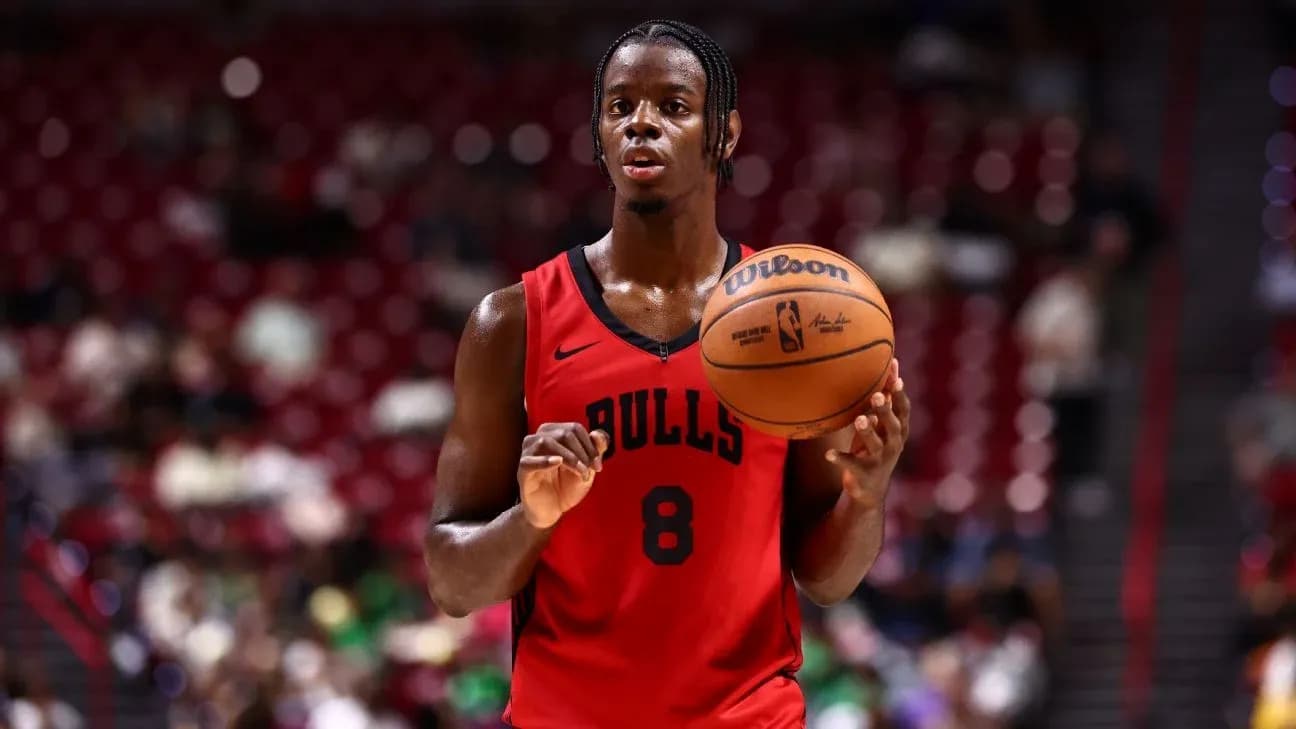
Caleb Wilson: The New Face of the Chicago Bulls
On a humid August afternoon outside the United Center, the line doesn’t just stretch. It coils. It wraps around the atrium, curls past concession stands, and pushes toward the Michael Jordan statue, where a new face of the franchise is screaming into a camera, tongue out, soaking in a roar that hasn’t sounded like this in Chicago for a long time.
This is Caleb Wilson’s first real day as a Bull.
He’s 20 years old. He hasn’t played a regular-season minute. Yet here he is at Bulls Fest, the annual two-day fan carnival, already treated like the answer to a decade’s worth of drift. The team hasn’t made the playoffs in eight of the past nine seasons. The statue behind him is a reminder of what the Bulls once were. Wilson is being asked to represent what they might be again.
The juxtaposition is impossible to miss.
A franchise grabs at a new era
The anticipation started in June, the moment Chicago used the No. 4 pick in the NBA draft on the North Carolina forward. It spiked in Las Vegas.
Wilson’s first professional game at summer league didn’t just go well. It detonated.
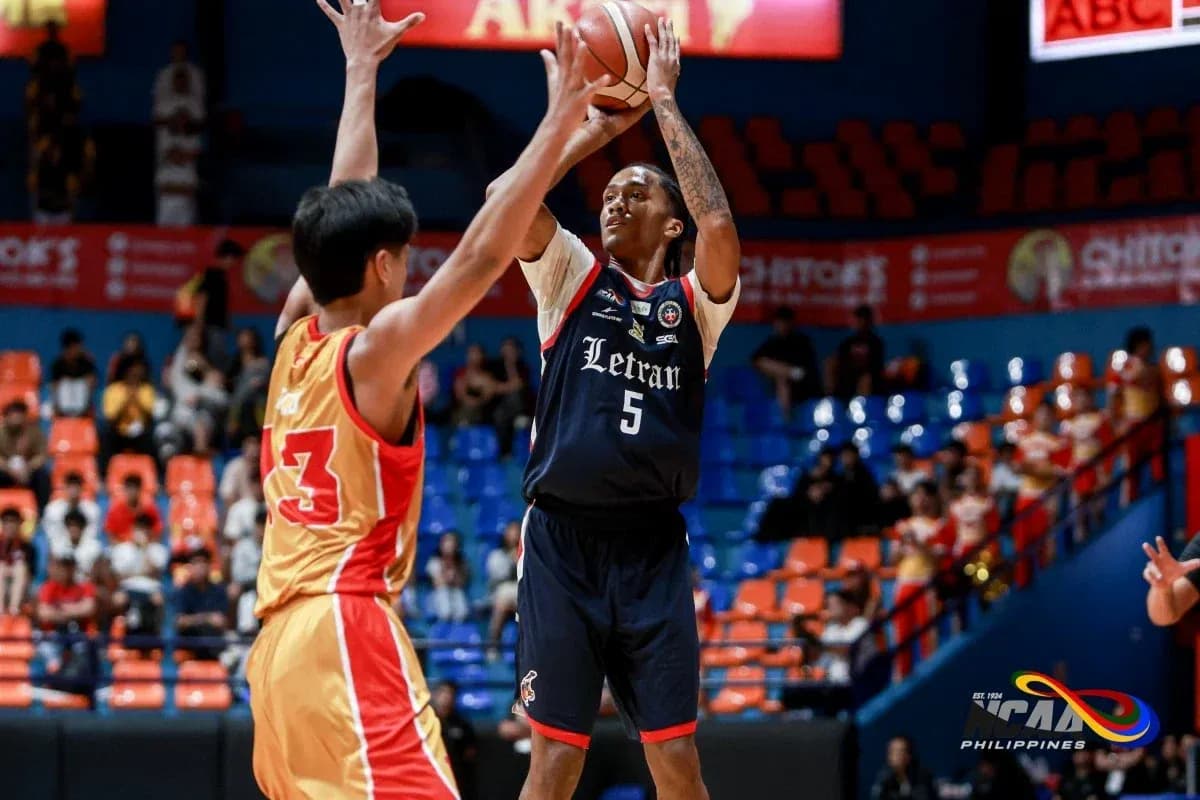
Thirty-five points. Seven made 3-pointers. The second-highest scoring rookie debut in summer league history. The shooting alone was jarring; he hit more 3s in that one game than he did in his entire freshman season in Chapel Hill.
Then came the highlight that raced around every screen in the league: Wilson elevating over 6-foot-11 Jazz center Jonas Aidoo and hammering home a dunk that felt like a mission statement. The kind of play that makes executives sit up a little straighter.
By his fourth and final game, Kevin Garnett was courtside, watching the wiry 6-foot-10, 215-pound rookie who keeps getting compared to him. Draymond Green went even further on his podcast.
“I actually think his floor is Kevin Garnett,” Green said. “And man, if that's your floor, oh my god. Do you know how great KG was? I actually think with Caleb Wilson, Kevin Garnett could be his floor. That's how special I think Caleb Wilson is.”
Teams usually roll their eyes at summer league overreactions. This felt different.
“He looks,” one Bulls source told ESPN, “like we got a dude.”
Inside the franchise, Wilson isn’t just a promising rookie. He’s a cornerstone in an almost entirely rebuilt power structure. Chicago hired Bryson Graham to run basketball operations, a talent evaluator known for building through the draft. Graham then picked Tiago Splitter as head coach, a former big man with a résumé built on player development.
They added veterans such as Norman Powell and Nic Claxton. They retained Josh Giddey and Matas Buzelis to help steady the offense. But everything about 2026-27 orbits around Wilson’s growth.
“We just want to see internal growth from our young guys and even from our veteran players,” Graham told ESPN. “We just want to see a team that's going to go out there, represent this city well, play hard and obviously continue to grow and continue to develop.”
The front office is preaching patience. There is no mandate to crash the play-in race in a loaded Eastern Conference. After years of trying to shortcut their way back to relevance, the Bulls are finally leaning into a longer build.
Wilson is not.
“I expect to have Rookie of the Year, honestly,” he said. “I'm going to work hard. I'm going to do what it takes. I feel like the team is really good for me and how I envision to play.”
Rewriting the scouting report
What Wilson did in Vegas didn’t just turn heads. It rewrote the biggest question on his scouting report.
At North Carolina, he barely shot from deep — 1.1 attempts per game — and made very few. Concerns about his jumper, combined with an injury that cut short his season and kept him out of the NCAA tournament, helped push him behind AJ Dybantsa, Darryn Peterson and Cameron Boozer in the 2026 draft.
So how does a reluctant college shooter walk into Vegas and bury seven 3s in a single night?
Wilson points to the Tar Heels’ system, which didn’t ask him to stretch the floor, and to the work he attacked as soon as his college season ended.
“I'm glad I didn't shoot 3s in college,” Wilson said after a summer practice. “Because if I did, I wouldn't be here. I don't know where I'd be. I don't think I'd be a Bull.”
A broken thumb and a fracture in his left wrist ended his year in February. A cast held his thumb straight, robbing him of full control. It didn’t stop him from working. He could still hold a ball, still go through the motion. So he did. Again and again.
He estimates he’s been putting up between 2,000 and 2,500 3-pointers a day.
The numbers from Vegas matched the grind. Across four games, Wilson averaged 23.5 points, 7.3 rebounds, 1.3 steals and 2.5 blocks, earning a spot on the all-summer league first team. When told that his 35-point debut ranked among the highest-scoring first games in the event’s history, he shrugged. Chicago lost that night. That’s what stuck with him.
The Bulls noticed something else. The work never stopped.
Five months to the day after his college season ended, Wilson cried before his professional debut. He’d been waiting that long. While other top picks shut it down after two or three summer league games, Wilson pushed to keep playing. He texted Graham to lobby for a back-to-back appearance in Chicago’s third game.
Since the draft, he’s practically lived at the practice facility. Morning workouts. Then back again at 8 or 9 p.m. with fellow first-rounder Dailyn Swain, the No. 15 pick, for sessions that often stretch toward midnight.
“Everybody highlights his athleticism, which is generational,” Swain said. “But he can do a lot of things. He's really good facing up at the elbow, jab. He has a really good midrange shot. He's been knocking down 3s, so he's widening his arsenal.”
A serious coach, a serious project
Graham’s first major move after taking over basketball operations was hiring Splitter. The fit was deliberate.
Last season, Splitter stepped in as interim coach in Portland and helped the Trail Blazers sneak into the Western Conference playoffs as the No. 7 seed. Chicago didn’t bring him in to replicate a fluke run. They brought him in to build something.
Graham highlighted Splitter’s development track record: helping Deni Avdija reach All-Star status in Portland; working with Jarrett Allen as part of Brooklyn’s player development staff in 2019; helping shape a young Alperen Sengun in Houston in 2023.
“The first thing you do is connect,” Splitter said. “That's the foundation of everything you do, especially at this level. If you don't have that, it's really hard to demand and make them respect you. The foundation is [to] connect with the players in different ways.”
He started early with Wilson.
Their first bridge wasn’t basketball. It was music. Splitter found himself surprised by the rookie’s range of tastes. Wilson picked up the guitar this summer and dabbled in everything from hip-hop to classical to country.
“Very interesting young guy,” Splitter said. “You see how his brain functions and the variety of things he can have a conversation about.”
On the court, Splitter took the reins of Chicago’s first two summer league games to set the tone. He wanted to be the one establishing standards, language, and expectations with the young core. For a coach still shaping his own identity, it doubled as a live rehearsal for what awaits in October.
Wilson’s early impressions match the reputation.
“He's really detailed,” Wilson said. “He knows what he wants you to do and he's pretty serious. Most coaches, you have coaches that are joking around and stuff like that. Tiago's pretty serious and he knows what he wants.
“I’d rather have someone who's serious and straightforward with me, so I know what I can do better.”
In Vegas, Splitter handed Wilson the keys. The rookie functioned as the primary ball handler and de facto point guard — a role Garnett never carried in his Hall of Fame career. Once the real season starts, those responsibilities will ease with Giddey, Powell and Buzelis sharing the creation load, but the message was clear: the Bulls want Wilson comfortable with the ball and with responsibility.
“It builds a healthy environment,” Graham said. “It gives the younger guys confidence, too, because they know that, when it is going bad, they have some guys that have done it, some guys that have won and had success and they can learn. It's just really important for the overall development of our younger players and the health of our team.”
Splitter has shown he can win in different ways. In France, he led Paris Basketball to the EuroLeague playoffs with an up-tempo, attacking style. In Portland, defense became the identity. Chicago is his first clean slate, his first chance to shape a young roster from the ground up.
“You have to adapt your system to the players you have,” Splitter said. “Yes, I have a vision. I have a certain way I want to play, but you also have to explore what they do best. That's what we're going to do here.”
That’s why he’s here: to connect, to teach, to guide a roster whose ceiling depends heavily on how quickly Wilson grows into the role the franchise has carved out for him.
The work before the wait
The Bulls’ annual player-run minicamp in Miami wrapped last week, a now-familiar ritual before training camp begins. New faces, new hierarchy, same underlying question: is this the group that finally drags Chicago out of the wilderness?
Wilson hears the noise. He sees the lines of fans. He knows the comparisons.
He keeps coming back to one thing.
“I do expect to win,” he said. “Whatever it takes to win is what I'm going to do.”
For a franchise that has spent nearly a decade searching for a star to believe in, that’s not just a quote. It’s the standard he’ll be judged against from the moment he steps onto the United Center floor.