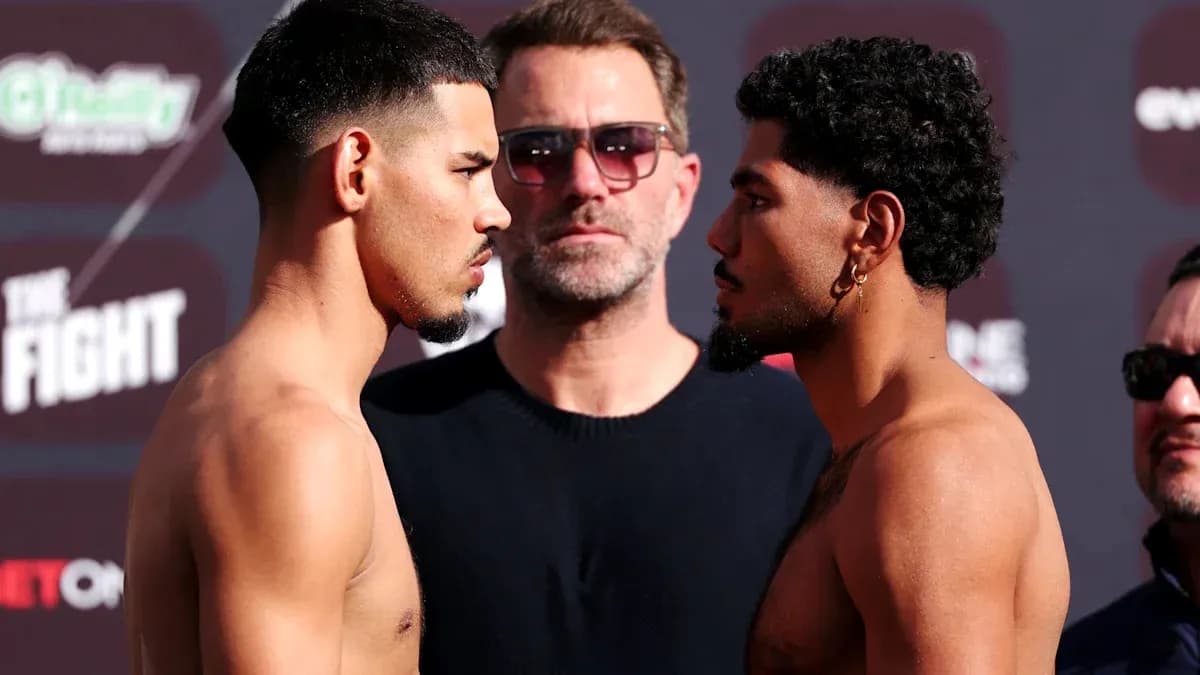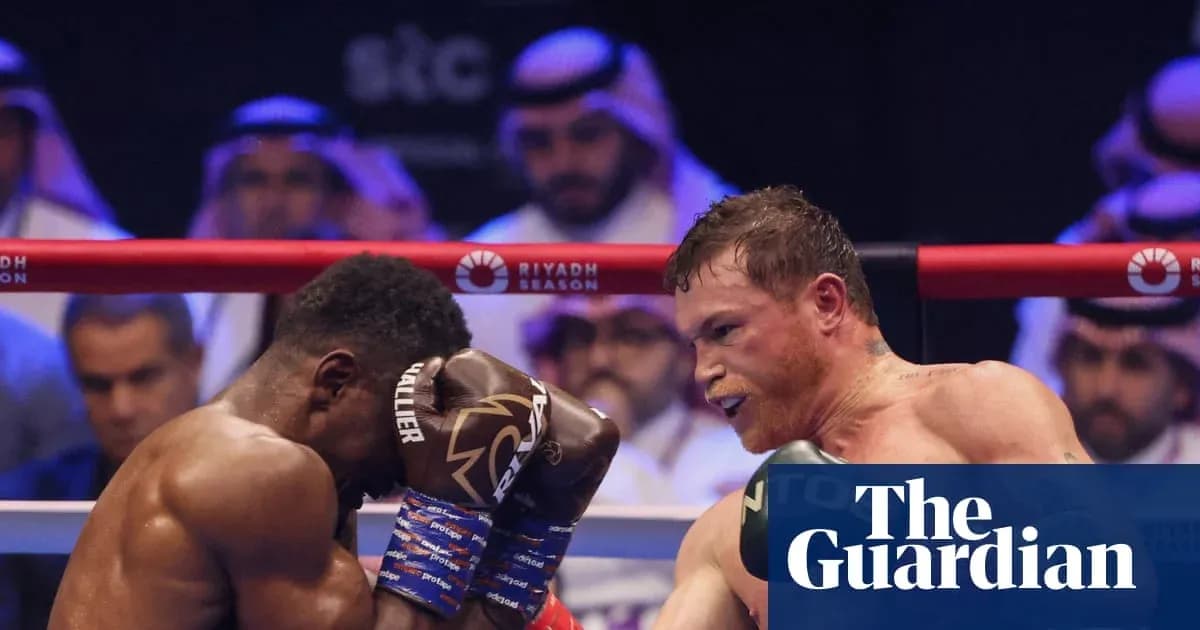
Saúl “Canelo” Álvarez walked back into the fire and left with his belt.
In a city on edge, under a sky that has seen missiles in recent weeks, the 36-year-old Mexican reclaimed the WBC super-middleweight title with a unanimous decision over Christian Mbilli at Kingdom Arena in Riyadh on Saturday night. The scorecards – 115-112, 116-111 and 117-110 – told one story. The performance told another.
This was about restoration.
A title reclaimed, a standard reasserted
Álvarez had not fought in more than a year. His last major memory under the lights was a painful one: a comprehensive points defeat to Terence Crawford in September 2025, only the third loss of his professional career and the one that stripped him of his undisputed super-middleweight crown. The aura of invincibility cracked that night.
Against Mbilli, he set about repairing it.
The Frenchman arrived unbeaten as a professional in 29 fights, with one draw, newly elevated to full WBC champion after Crawford left the division. Aggressive, busy, relentless – Mbilli promised to drag the older man into deep water. For long stretches he tried exactly that, stalking forward, throwing in volume, attempting to drown Álvarez under pressure.
Álvarez refused to be swept away. He did what great champions do when the years start to stack up: he leaned on timing, on craft, on the tiny half-beats he still controls better than almost anyone.
The Mexican’s counter-punching, that familiar calling card, slowly took over the fight. He dug to the body with the kind of precision that makes opponents hesitate before stepping in again. And once hesitation appeared, Mbilli’s pressure no longer looked suffocating. It looked risky.
The moment that crystallised the shift came in the seventh. Mbilli poured forward again, trying to impose his will, and walked into a sharp uppercut that snapped his head back and staggered him. It was not a knockout blow, but it was a statement: Álvarez still carries menace, still sees openings others miss.
From there, the champion in all but name boxed like one. Mbilli kept coming, but Álvarez landed the cleaner, more telling punches, enough to convince all three judges – and, by a similar margin, the press row tally that also had it 117-110.
By the final bell, the record books had their update: Álvarez now stands at 64 wins, three defeats and two draws. Mbilli, 31, walks away with the first loss of his professional career.
Fighting under a shadow
The bout unfolded in a city still absorbing the shock of recent attacks. Three weeks earlier, a missile strike on King Khalid International Airport in Riyadh killed at least 12 people and injured more than 300. Another projectile hit a passenger terminal the following day, prompting several international airlines to suspend flights and raising urgent questions about the safety of major events in the kingdom.
In the days leading up to the fight, the Saudi-led coalition said it had intercepted more missiles and drones launched by Iran-aligned Houthi forces. Security tightened. Other events did not go ahead. The high-profile Six Kings Slam tennis exhibition was among those cancelled or postponed as the risk to civilian life and infrastructure grew harder to ignore.
Boxing, though, stayed on the schedule.
Turki al-Sheikh, the powerful chairman of Saudi Arabia’s General Entertainment Authority and a central figure in the sport’s recent shift towards Riyadh, made it clear why. Earlier in the month he revealed that Álvarez had personally vowed to proceed regardless of the security climate, telling him he would still fight in October “no matter what happens” and describing the Mexican as a man who “fears nothing”.
The decision fed straight into the kingdom’s broader sporting project. Saudi Arabia has poured vast sums into professional boxing, luring many of its biggest names and staging some of its grandest nights. Those efforts have brought prestige and attention, but also heavy criticism over human rights concerns and accusations of sportswashing. Saturday’s show, staged against a backdrop of intercepted missiles and heightened tension, only sharpened that debate.
Álvarez himself nodded to the unusual circumstances without spelling them out. In his post-fight remarks, he switched to Spanish to address those who were not there.
“I also want to thank my family, who are watching me from afar today for the first time,” he said. “My siblings, my parents, my daughters, my son, and my wife – who also couldn’t make it due to certain circumstances.”
He left the “circumstances” hanging. He did not tie them explicitly to the security situation, but in a week like this, the implication did not need much explanation.
Love of the craft, not just the crown
For Álvarez, this was not only about another belt to add to a career already crammed with them. It sounded, in his own words, like something more elemental.
“It’s something unbelievable. It feels like my first title,” he said in English in the ring. “Now, after 21 years as a professional, 16 years ago I won my first title. Now I won that title again. I’m so proud of my team.
“I love boxing. That’s why I’m here, because I still love boxing and I enjoy it a lot.”
That love had been questioned after the Crawford defeat, when critics wondered if the miles on the clock, the long years of training camps and the strain of carrying an entire nation’s expectations had finally dulled his edge. Champions often fade not when their skills vanish, but when the desire to endure the grind slips away.
On this night, in this arena, Álvarez answered that doubt. He did it not with a spectacular finish, but with 12 rounds of concentration, toughness and old-fashioned ring generalship against a younger, hungry, unbeaten opponent.
Mbilli, who had previously held the interim WBC belt and battled to a split draw with Lester Martínez on the undercard of Álvarez-Crawford, found out what so many before him have discovered: pushing Álvarez back is one thing, beating him to the punch is another. Pressure without precision rarely beats class.
The Frenchman’s effort deserved respect. He never stopped coming, never stopped trying to change the narrative. But as the rounds ticked by and Álvarez’s counters kept landing, the gulf in experience and accuracy told.
Riyadh, risk and the road ahead
For Saudi Arabia, the night will be framed as another triumph in its push to become boxing’s new capital – a major star, a major belt, a high-stakes fight delivered on schedule despite geopolitical turbulence. For the sport, it underlines where power now sits, and at what price.
For Álvarez, the questions shift again. The belt is back around his waist. The record has another win. The doubts, at least for now, have been pushed aside.
He came to a city under threat, promised he would fight, and did exactly that. He reclaimed the title he once unified, reminded everyone of the standard he still sets at 168 pounds, and walked out of Riyadh not as a fading legend clinging on, but as a champion with options.
At 36, after 21 years in the paid ranks, how many more nights like this can he summon – and who dares to be the next man to find out?