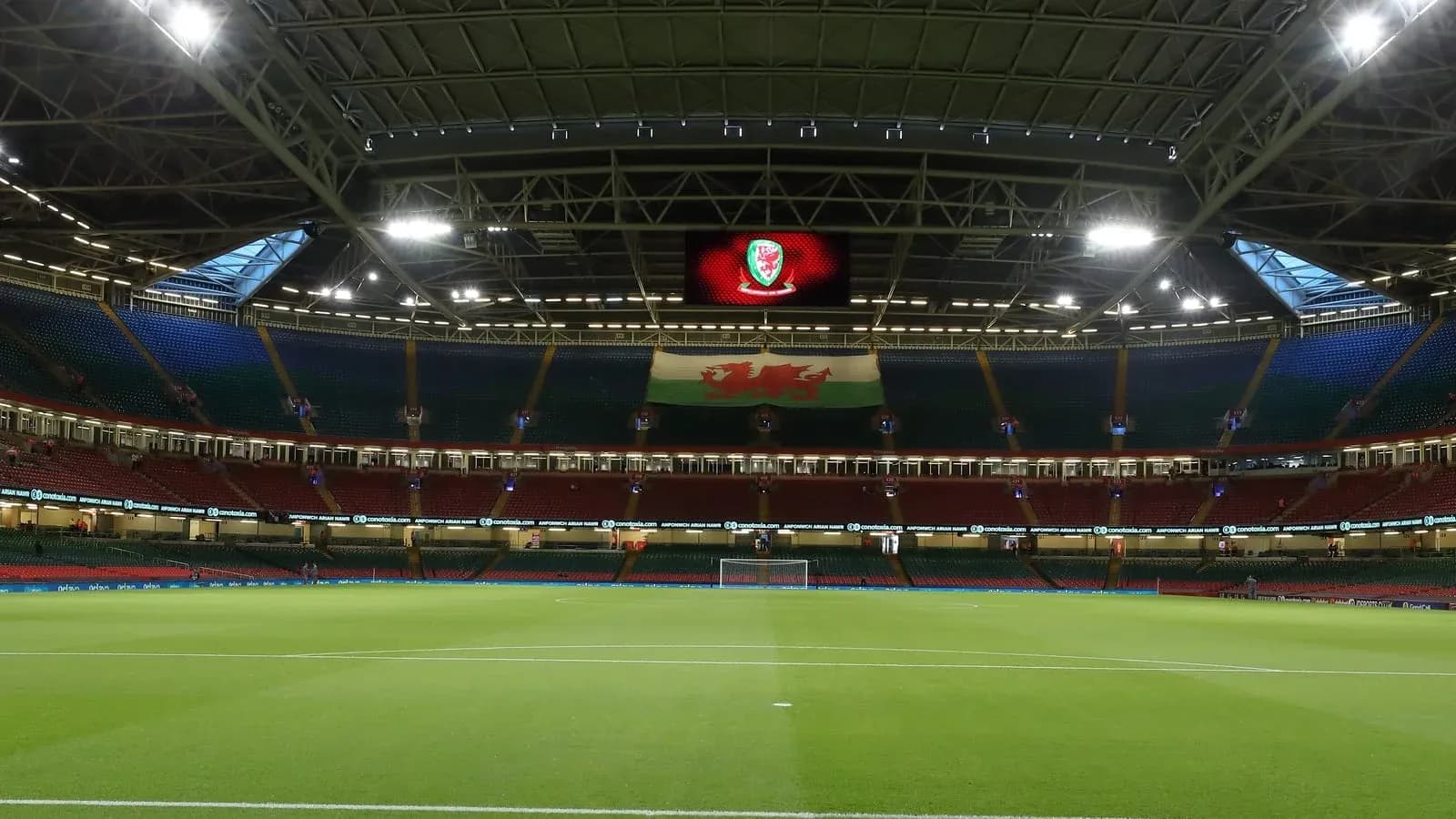
Ireland’s push to bring the 2029 UEFA Women’s Champions League final to Dublin has fallen at the last hurdle, with Cardiff’s Principality Stadium chosen ahead of the Aviva Stadium.
UEFA’s executive committee met on Tuesday to decide the host venue for the showpiece, with Dublin on a four-strong shortlist alongside Cardiff, Parc Olympique Lyonnais in France and Basel’s St Jakob-Park. The Aviva, polished by recent major events and buoyed by its role at Euro 2028, had been pitched as a natural stage for the women’s game at its highest club level.
Not this time. Wales stole in.
Dublin has a strong European pedigree. The city staged the men’s Europa League finals in 2011 and again in 2024, and is set to host seven matches at Euro 2028. The Football Association of Ireland believed that track record, coupled with surging participation in the women’s game, would be enough to land another marquee night.
Instead, the decision went across the Irish Sea, a blow for the FAI but a landmark victory for Welsh football – and for Limerick native Noel Mooney, now chief executive of the Football Association of Wales.
FAI CEO David Courell responded with a mix of grace and resolve.
“Congratulations to the Football Association of Wales on their successful bid for Cardiff to host the 2029 UEFA Women’s Champions League final and thank you to UEFA for its positive feedback on the association's bid,” he said, underlining that Ireland’s ambitions in the women’s game stretch well beyond one hosting decision.
“The FAI's ambition to host this final was part of its ongoing commitment to supporting the development of women and girls' football and that will continue with participation levels at an all-time high, as well as more female coaches, match officials, administrators and volunteers helping to drive the game forward.”
For Mooney, the successful bid is framed as a springboard, not a trophy.
“This is about much more than one night in 2029,” he said. “Our ambition is for the UEFA Women's Champions League final to become a catalyst for the continued transformation of women’s and girls’ football in Wales.
“Welsh football has made incredible progress. We have more than 20,000 women and girls playing the game, a growing domestic structure through the Adran Leagues and a Cymru team that has now competed on the major tournament stage. Bringing this final to Wales gives us another opportunity to accelerate that progress.”
Cardiff’s win comes in a wider package of UEFA decisions on major finals. Munich’s Allianz Arena will host the Men’s Champions League final in 2028, with Barcelona’s Nou Camp awarded the 2029 edition. On the women’s side, the 2028 UEFA Women’s Champions League final goes to Parc Olympique Lyonnais in Lyon, underlining the French club’s long-standing status as a powerhouse in the women’s game.
While the headlines gravitated towards showpiece venues, the same UEFA Executive Committee meeting also signed off on sweeping changes to the UEFA Nations League format – changes that will directly affect the Republic of Ireland.
Nations League shake-up
From the 2028/29 cycle, the Nations League will slim down from four tiers to three, each league containing 18 teams. The new structure will feature three groups of six teams, with each side playing six matches against five different opponents: home or away against teams from different seeding pots, and home and away against the team drawn from their own pot.
That reshaping brings a different kind of jeopardy and opportunity for the Republic of Ireland.
Under the revised promotion and relegation system, finishing bottom of a League B group will no longer mean automatic relegation. If Ireland end this year’s campaign at the foot of their section, they will enter a play-off to stay in League B rather than drop straight into League C.
Ireland open their Nations League campaign against Kosovo on Thursday, 24 September. Israel and Austria complete the group, and the new rules will sharpen the edges of every fixture.
Promotion and Relegation Mechanics
- The four group winners in League B go up to League A.
- The two lowest-ranked fourth-placed teams from League A drop to League B.
Play-offs then decide the remaining movement:
- League A/B play-offs: the two lowest-ranked third-placed teams from League A and the two highest-ranked fourth-placed teams from League A face the four runners-up from League B. The four winners take their place in League A, the four defeated sides play in League B.
- League B/C play-offs: the four fourth-placed teams from League B meet the four runners-up from League C. The winners go into League B, the losers into League C.
With League D scrapped, all current League D teams are promoted into League C to complete the new three-league ladder.
From 2028/29, that leaves UEFA with a streamlined Nations League: three leagues, 18 teams in each, and a schedule designed to deliver more high-stakes games between similarly ranked nations.
For Ireland, the immediate picture is clear. The glamour of a Women’s Champions League final at the Aviva must wait. The focus instead narrows to Kosovo, Israel and Austria, to points, to rankings, and to staying on the right side of a new Nations League divide.
The next UEFA Executive Committee meeting, in Belfast on 7 December – the day after the Euro 2028 qualifying draw in the same city – will shape more of that future. The question now is whether Ireland will arrive there with momentum, or with survival already on the line.