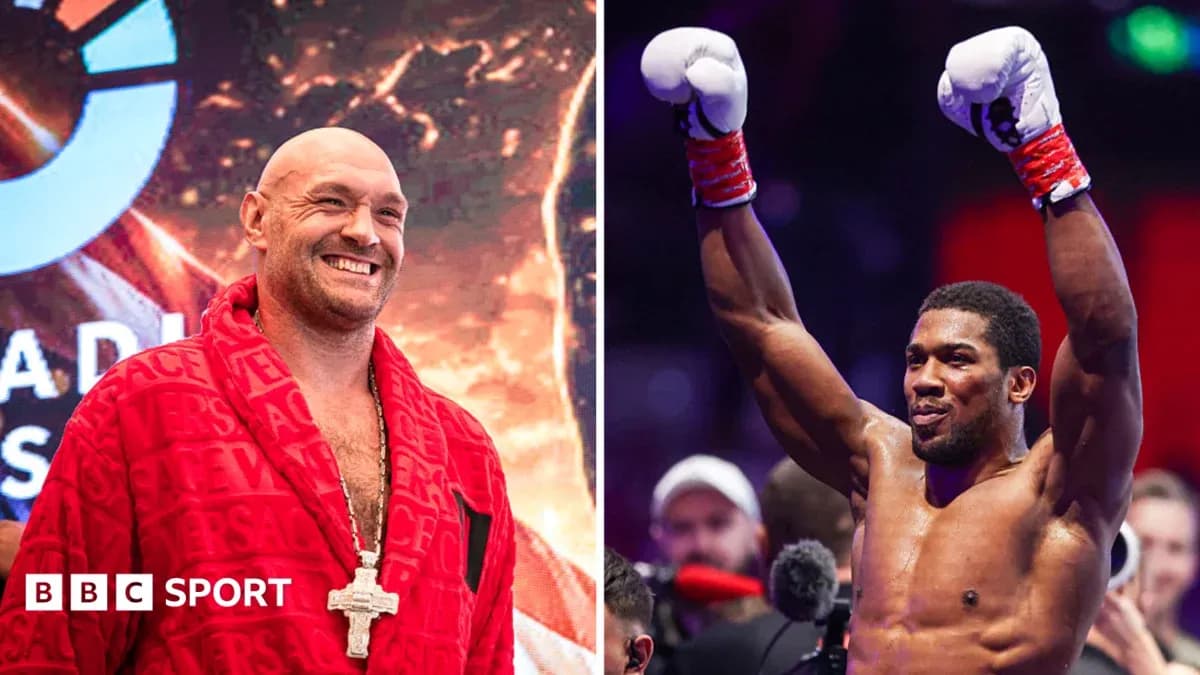
The heavyweight fight a generation has been waiting for is finally finding a home. Tyson Fury and Anthony Joshua are expected to collide at Cardiff’s Principality Stadium on Friday, 11 December, with only the final strokes of the deal still being thrashed out between Netflix, Saudi organisers Sela and the two fighters’ teams.
Cardiff has surged into pole position. An official announcement is anticipated this week. For a bout of this size, that’s not just a venue choice; it’s a statement.
From Manhattan lights to a Welsh winter
Not long ago, this story looked destined to play out under the lights of Madison Square Garden. New York was so close to landing the fight that plans were already in motion for a Manhattan news conference. The heavyweight summit of British boxing, staged on American soil, broadcast globally from the self-styled “Mecca” of the sport – that was the vision.
Then the contracts bit back.
Joshua and promoter Eddie Hearn refused to surrender their contractual right to stage the fight in the UK. Joshua’s agreement with Sela locked the bout to British soil. Fury’s did not. That single line in Joshua’s deal changed the entire landscape.
Organisers and Netflix pushed hard for the United States. Hearn admitted that almost every other major player involved wanted New York, and Matchroom even explored how much it would cost to buy their way out of the UK clause. For a while, the impasse threatened to derail the whole event.
The tension spilled into public view. Fury accused Joshua of stalling and briefly dangled the idea of turning instead to a third fight with Oleksandr Usyk. The biggest all‑British heavyweight clash in modern times looked, once again, like it might disappear into the fog of boxing politics.
Then Fury backed down. With the UK confirmed as the stage, the question became: where?
Wembley’s prestige, Cardiff’s practicality
On paper, Wembley Stadium should have been the obvious answer. The national stadium. The arch. The site of so many of Joshua’s defining nights. For years, it was assumed that if Fury and Joshua ever did share a ring, Wembley would be the natural home.
Reality proved messier.
The fight had originally been discussed for November. As negotiations dragged and the date slipped into December, the British weather loomed as a genuine threat. An open‑air stadium show in mid‑winter, with tens of thousands of fans and a global broadcast operation at the mercy of freezing temperatures, wind and rain, was a risk the organisers were unwilling to take.
Move indoors to London’s O2? That would solve the weather problem but slash capacity and gate revenue. A fight of this magnitude demands scale – the roar, the spectacle, the sense that the whole sport has gathered in one place.
Cardiff offered a way to have it all.
The Principality Stadium’s retractable roof turns a winter’s night into a controlled cauldron. The official seated capacity is just under 74,000, but boxing layouts can push that higher, giving promoters the kind of numbers they crave without a single raindrop landing on the canvas.
Joshua has already shown what that building can become on a big night. In 2017 he defended his WBA and IBF titles there against Carlos Takam in front of nearly 80,000 fans, then returned five months later to add the WBO belt against Joseph Parker. The venue knows how to breathe with a heavyweight crowd, how to hold the noise and feed it back.
By process of elimination and cold logic, Cardiff moved from outsider to frontrunner.
Netflix, curfews and the 01:00 ring walk
The final, stubborn hurdle has not been geography or weather, but television.
Netflix wants the fight in prime time for the United States. That means a projected UK ring walk of around 01:00 GMT – 20:00 on the US east coast – a slot made for maximum American eyeballs, but a logistical nightmare for London.
Wembley operates under a strict 23:00 event curfew. The Mayor of London, Sadiq Khan, signalled his backing, and Wembley officials were willing to talk. Yet pushing a live event of this size two hours beyond the usual cut-off required sign-off from Brent Council and local safety advisory groups. The administrative maze was real, and time was not on their side.
Cardiff, again, made life easier.
The Welsh Rugby Union, which owns and runs the Principality Stadium, made clear it would welcome the fight and that a late finish would not be a dealbreaker. There are still challenges – early-hours transport, policing, crowd management in the city centre – but the city has walked this road before.
In 2007, Joe Calzaghe’s super-middleweight unification win over Mikkel Kessler did not start until 02:00 local time to suit American broadcaster Showtime. Cardiff knows how to stage a night that runs into the small hours and still feels under control.
A British epic, on British soil
What began as a global tug-of-war is closing in on a very British conclusion: Fury and Joshua, under a closed roof in Cardiff, in the dead of winter, walking to the ring at one in the morning while America settles in for prime time.
If the final signatures land as expected, the Principality Stadium will host what many will call the biggest event in British boxing of the 21st century. The only question then will be whether the fight itself can live up to the long, winding road that finally brought it home.