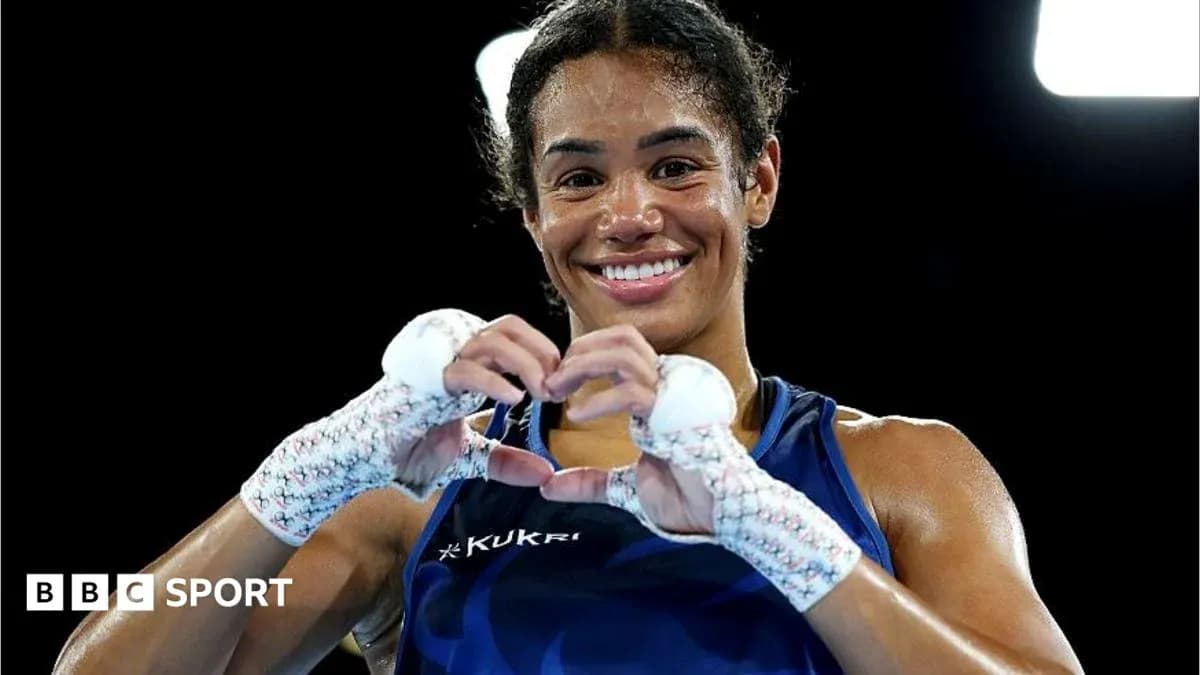
Caroline Dubois did not just defend her belts in Birmingham. She imposed herself, stretched her reign, and kept the fuse burning on one of the biggest fights women’s boxing can stage.
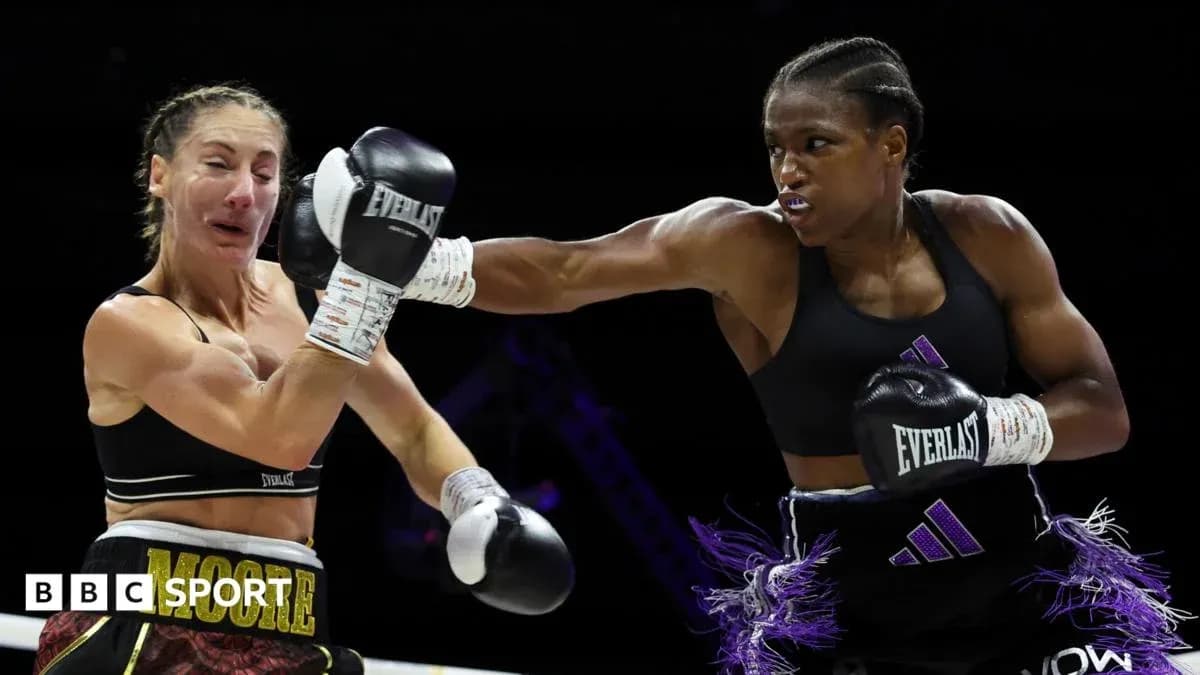
Under the lights at BP Pulse Arena, the WBC and WBO lightweight champion coasted past Amelia Moore on the cards – 99-90, 99-90, 98-91 – in a fight she controlled from the opening bell to the last.
It never felt in doubt. It rarely felt close.
Dubois in cruise control
Dubois walked in as the heavy favourite and fought like it. She stalked, she pressed, she dictated where and when the action took place. Moore, in just her fifth professional bout, brought heart and stubborn resistance, but little to genuinely unsettle a champion who has now boxed 70 more pro rounds than her.
The gap in experience showed early. Dubois, four inches shorter, slipped danger, stepped inside and leaned on power and physicality rather than blistering hand speed. It gave the contest a slow, almost methodical inevitability. Moore tried to answer, but too often she was reacting, not dictating.
The breakthrough moment came in the fifth. Dubois uncorked a booming left hand that sent Moore sprawling to the canvas. The crowd roared, sensing the finish. Moore, to her credit, sprang back up almost immediately, shook her head and refused to fold.
From there, the fight turned into something more one-sided, more cruel. Dubois circled and shepherded her opponent around the ring, moving her like a cat toying with a mouse. Moore stayed dogged, kept punching, but the pattern never really changed. The champion marched on, round after round, piling up points.
By the final bell, the only suspense left was how wide the cards would be.
A champion with a new edge
If the performance was measured, the personality on show afterwards was anything but. Dubois, now 15-0 as a professional with 14 wins on her ledger, has leaned into a louder, brash MVP-curated persona – and she used it to full effect the moment the final scores were read.
Ringside, Alycia Baumgardner watched closely on what she called a “scouting mission.” The unified super-featherweight champion did not like what she saw – or at least, she did not pretend to.
She accused Dubois of “tightening up” and looking “tired.” Dubois fired back, lacing her response with expletives and a clear message: this is her division, and she is the best in it. The verbal sparring has been bubbling for a year, through separate media conferences and social media sniping. In Birmingham, it felt more real, more imminent.
That edge mirrors changes in Dubois’ professional life. She has split from Shane McGuigan, the trainer who guided her to two lightweight world titles, and uprooted to Los Angeles to work with renowned US coach Manny Robles. It is a bold move for a reigning champion, a sign she believes there is still another level to reach.
The roadmap is straightforward. Baumgardner, 32, plans to step up to lightweight. If she beats IBF champion Elif Nur Turhan in Texas on 8 November, the path clears for a 2027 showdown that could headline another MVP showcase and anchor a major night for women’s boxing.
Dubois did her part in Birmingham. Now she waits to see if Baumgardner can do hers.
Moore’s courage, Harper’s statement
Moore left with a loss but not with shame. The two-time American national champion showed grit in abundance, climbing off the deck in the fifth and refusing to fold under constant pressure. She lacked the sharpness and class to truly trouble Dubois, yet she absorbed punishment, kept her shape and saw the final bell in only her fifth pro outing. Against this opponent, on this stage, that in itself said something.
Earlier on the undercard, Terri Harper delivered the kind of performance that reopens doors.
The former world champion, who dropped a decision to Dubois in April and had previously flirted with retirement after losing to Sandy Ryan in 2024, stepped up to welterweight for what felt like a career crossroads against Miranda Reyes. She treated it like one.
Harper bounced to the ring with bright yellow gloves, her corner clad in matching colours, and carried that energy straight into the first round. She seized centre ring, dug in hard body shots and set a tempo Reyes struggled to match.
Then she turned the screw.
At the start of the second, Harper went through the gears and forced an early finish. A sustained assault downstairs softened Reyes up before a short, sharp left hook sent the Houston fighter to the canvas. When the follow-up barrage landed and Reyes hit the deck again, the referee stepped in, waving it off just 47 seconds into the round.
It was ruthless, and it was timely.
Harper called it “one of the best performances of my career” and delivered the line that summed up her mood: “You can’t get rid of me this easily!” With seven knockouts now among 17 wins in 22 fights, she has reinserted herself into the conversation at the top end of the sport.
Dubois, meanwhile, walks away from Birmingham with her titles intact, her unbeaten record preserved and her rivalry with Baumgardner crackling louder than ever.
The belts are in the bag. The move to Los Angeles is made. The words have been exchanged.
Now the question is simple: can women’s boxing deliver the fight its two biggest talkers are daring it to make?