
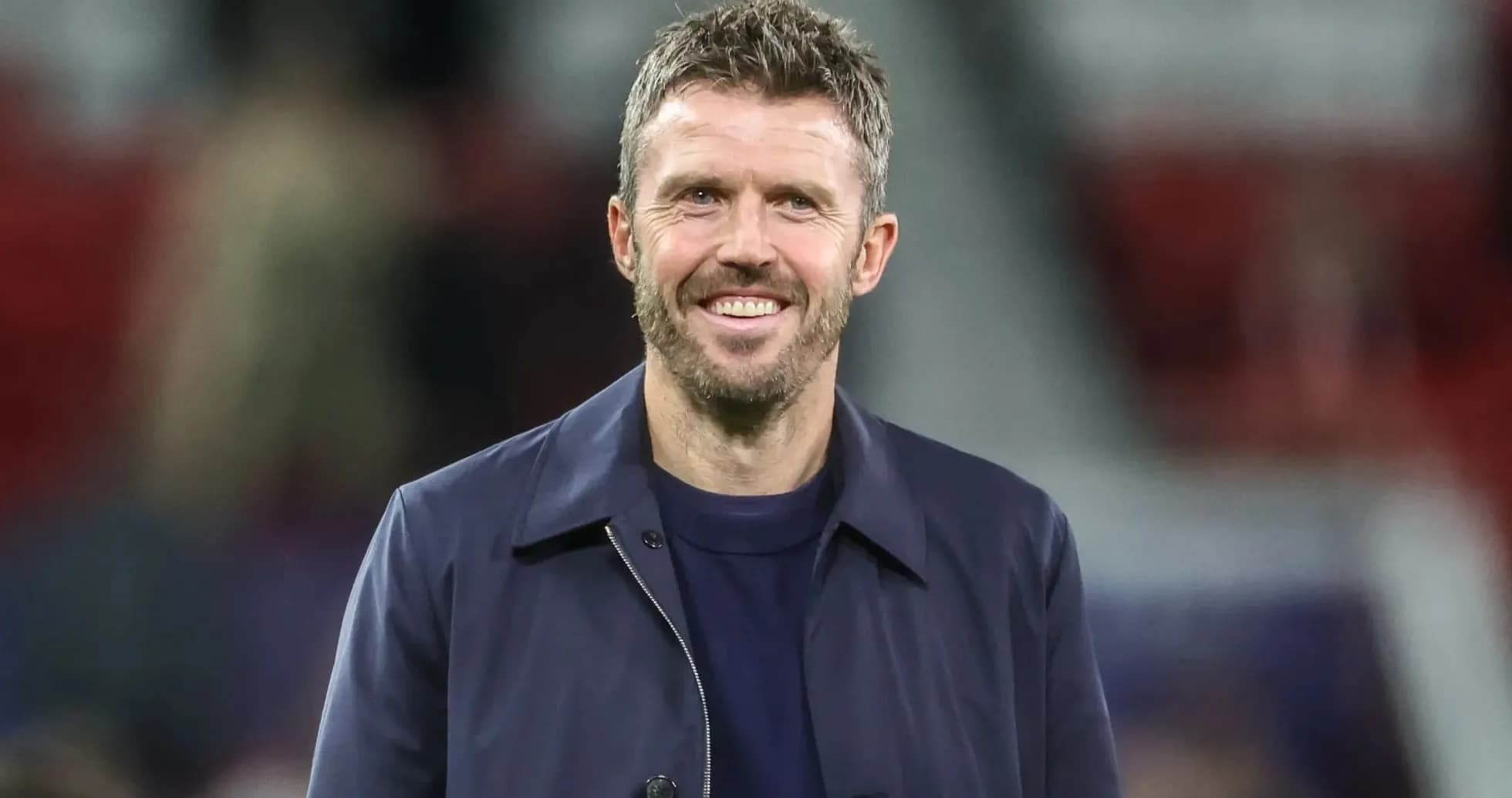
Manchester United have swerved away from the eject button at the last moment. Michael Carrick, seemingly one game from the sack, will stay in charge – for now.
After eight league matches without a win and a slide to 16th in the Premier League, the decision from the Old Trafford hierarchy is a dramatic U-turn. Saturday’s trip to Chelsea, already a daunting assignment, now feels like a referendum on the entire direction of the club.
Carrick lives to fight another day. The question is whether anyone above him knows what the fight looks like.
Boardroom stalemate buys Carrick time
This is not a story of renewed faith in a manager. It is a story of a club that could not agree what to do next.
Sir Jim Ratcliffe and his football department sounded out a series of potential successors – Antonio Conte, Eddie Howe, Julian Nagelsmann, Fabian Hurzeler, Unai Emery – and still ended up back where they started: Carrick on the touchline and a divided board in the directors’ box.
Compensation costs blocked some avenues. Brighton’s Hurzeler has been all but ruled out, with United baulking at the fee required to prise the German away. Emery, admired by some at Old Trafford, is tied to Aston Villa until 2029 and carries an equally heavy price tag, both in terms of payout and power.
There is also a clash of models. Emery is entrenched as “manager” at Villa Park, while United’s new structure under Ratcliffe is built around a “head coach” working within a wider football department. That detail matters to the people making the calls.
So Carrick stays. Not because he has convinced everyone he is the long‑term answer, but because the club could not settle on a better one.
Howe, Nagelsmann and a split vision
Behind the scenes, the debate has hardened around two names: Eddie Howe and Julian Nagelsmann.
Howe, out of work since leaving Newcastle in the summer, has powerful allies at United. Ratcliffe prefers him, believing the country’s biggest club should be led by the best English coach available. Director of football Jason Wilcox is also said to see Premier League experience as a “must” if United are to be dragged out of their current spiral.
Howe has already done his homework. He has been watching United games and making notes while Carrick’s position has hung by a thread. For a period, he was viewed as the front‑runner.
But there is a cost. Newcastle inserted protection into his exit, meaning United would owe several million in compensation if they moved for him now – on top of the sizeable sum already paid to prise technical director Dan Ashworth away from St James’ Park.
On the other side of the argument stands Nagelsmann. Head of recruitment Christopher Vivell is pushing the German, leaning on their shared history at RB Leipzig. Nagelsmann lacks Premier League experience but has already coached Bayern Munich and the German national team, a profile that appeals to some in the room.
And yet, as one well‑placed source put it bluntly: “The best ones won’t come.”
For now, nobody has.
Dressing room stunned as fans back Carrick, turn on players
The fracture lines are not confined to the boardroom. They run straight through the dressing room and into the stands.
The 3-0 home defeat to Bournemouth – United’s third 3-0 loss to the same opponent at Old Trafford in three years, each under a different manager – felt like a generational low. The reaction inside the stadium was even more telling.
At full-time, United supporters sang Carrick’s name and applauded him as he walked what looked like a farewell lap. Once he disappeared down the tunnel, the mood turned. Loud, targeted boos rained down on the players, particularly from the Stretford End.
A dressing-room source admitted the squad were “lost for words” – not just by the performance, but by the ferocity of the criticism. The fans made their verdict clear: the manager was not the only problem.
The anger then moved upstairs. Chants aimed at Ratcliffe and the ownership ripped through the final minutes of the Bournemouth defeat. “Sell United and f**k off home,” came the roar, followed by sinister songs about the Glazers and Ratcliffe, and the barbed “Stick your new stadium up your a***”.
Carrick, battered on the pitch, left with the fans still largely behind him. The players and the hierarchy did not enjoy the same protection.
Fernandes, Martínez and a manager under fire from within
Carrick’s problems are not only external. Some of his most important players have already broken ranks in public.
Bruno Fernandes, who finished 27th in the 2026 Ballon d’Or voting after a season of nine goals and a record 22 assists in 37 appearances, has struggled to hit those heights this year. His frustration has spilled over.
After a 4-1 defeat to Como, Fernandes openly questioned the team’s tactical approach, highlighting the decision not to press man-to-man and criticising the space United allowed their opponents to play. “That’s on the manager and staff to see, not me,” he said when asked if Carrick had got it wrong, before insisting United needed to be “more brave under pressure”.
Carrick responded in the only way a manager can when the authority line is threatened: he dropped his captain. Those close to the situation believe he felt he had no choice. With Lisandro Martínez having already directed anger upwards at the club’s decision-makers after a Champions League game – an outburst he later apologised for – Carrick risked being squeezed from above and below.
The sense is clear. The squad is restless. The hierarchy is under fire. And the man in the dugout is walking a tightrope.
Pundits pile in as United slide towards danger
Outside the club, the verdict has been just as unforgiving.
Gary Neville has turned his fire on the players, insisting the squad must shoulder far more responsibility for a run that has produced just one win from eight league games and left United 16th.
Jamie Carragher, meanwhile, has focused on the dugout. He has argued that Howe should be the man to replace Carrick if United pull the trigger, preferring the former Newcastle boss to Nagelsmann on the grounds of Premier League experience and his record of improving players.
Carragher has been blunt about Carrick’s prospects. He never believed his former rival midfielder was the man to return United to the very top and says this season has “fell off a cliff” after last year’s promising work. Right now, in his view, the job is no longer about chasing titles – it is about dragging United back into the top half of the table and away from the relegation picture.
With Chelsea away and Aston Villa to come before the international break, Carragher warned there is “a very, very good chance” United could enter that pause in the bottom three.
That is the scale of the slide.
Fixtures turn ugly as Stamford Bridge looms
The timing of this crisis could hardly be worse. The calendar offers no respite.
First up is Chelsea at Stamford Bridge in Saturday’s early kick-off. High-flying, aggressive, and unforgiving, they represent precisely the kind of opponent United do not want to face with confidence shot and the manager clinging on.
Then comes Roma in the Champions League, followed by Aston Villa – fresh from ending Manchester City’s perfect start to the season – at Old Trafford. After that, a trip to Liverpool, one of the most hostile fixtures on the United schedule.
Whether it is Carrick or a successor, this is the run that will shape United’s season and possibly their medium-term future. There are no soft landings here.
Carrick back at Carrington, but limbo cannot last
On the training ground, life goes on. Carrick has reported back to Carrington, taking charge of sessions as normal, preparing for Chelsea, trying to shut out the noise that now surrounds every team selection and tactical tweak.
He knows the reality. He is a lucky man to still be in the job. The message from the stands on Sunday was clear: the fans will back him, but they demand far more from those on the pitch and those in the boardroom.
Inside the club, the message is harsher. This limbo cannot continue. “Back him or sack him” has become less a slogan and more a plea for clarity.
United’s decision-makers are staring at the prospect of appointing a fourth manager in under three years. Some around the club fear the identity of the next man may matter less than the structure he walks into – a point underlined by those who compare the club to the Titanic, changing captains while the iceberg damage remains.
For now, Carrick remains at the helm, his authority questioned, his future uncertain, his next game monumental.
Stamford Bridge will not just test his team. It will test whether Manchester United still know what they want to be.





