
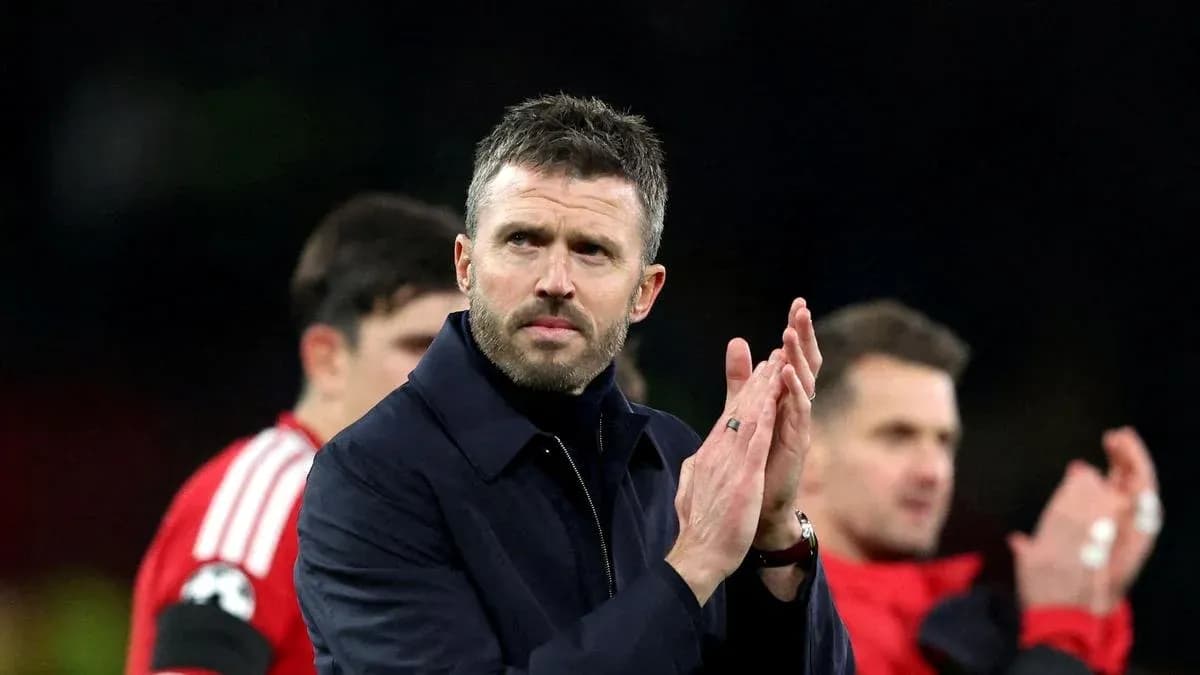
Michael Carrick walks out at Old Trafford this weekend knowing the numbers, the noise and the narrative are all stacked against him. Aston Villa arrive on Sunday, and it could be the last time he leads Manchester United.
For now, he is still in the dugout because of one wild, defiant night against Roma.
On Tuesday, United trudged off at half-time to a chorus of disbelief. Two-nil down. Outplayed. Out of ideas. It felt like the end. A run of nine matches without a win – their worst since 1988/89 – had drained belief from the stands and, seemingly, from the players.
Then Old Trafford erupted.
United clawed their way back, Matheus Cunha striking twice late on in a breathless 3-2 turnaround that did more than just book Champions League points. It bought Carrick time. Not much, but enough to reach Sunday with his fate still technically undecided.
The table tells a harsher story. If results go against them before kick-off, Manchester United could start the Villa game at the very bottom of the Premier League. That is the brutal backdrop to a fixture that would, in any other era, be a routine home assignment for a club of this size.
This one feels like a referendum.
The international break looms, and with it a natural pause. A chance for the club’s hierarchy to step back, breathe and make a cold decision on the long-term direction of the team. Carrick’s revival act against Roma might yet be framed as the start of a renaissance. It could just as easily be remembered as a final flourish.
Across the technical area on Sunday stands a man whose name has already been linked with the Old Trafford hot seat. Unai Emery has rebuilt Aston Villa with a clear plan and a sharp edge, earning admiring glances from boardrooms across Europe. At one stage he was floated as a serious candidate for United, but reports now suggest he is close to signing a new deal in Birmingham.
If that contract lands, one possible escape route from United’s uncertainty closes. The contrast remains stark: a club still searching for stability hosting one that has quietly built it.
City Chasing Arsenal – and Their Own Shadow
While United wrestle with immediate survival and long-term identity, Manchester City face a very different kind of pressure.
Pep Guardiola’s side travel to Nottingham Forest trying to avoid something almost unthinkable in recent years: a third straight league defeat. For a team that has set the standard for consistency, the idea of a mini-crisis feels jarring, yet that is exactly what City are trying to swerve as they chase down Mikel Arteta’s Arsenal.
On paper, the assignment looks manageable. Keep pace with the leaders, reset, move on. But the picture is far more complicated.
Even if City match Arsenal stride for stride, there is a cloud hanging over the Etihad. The club is still waiting to discover its punishment after being found guilty of more than 100 breaches of Premier League financial rules. A heavy points deduction is one of the potential outcomes. Every league game, every point, carries a strange duality: vital in the title race, yet possibly rendered meaningless by a verdict still to come.
Arsenal, at this stage, look like the only serious rival in that race. Both clubs have what the fixture list suggests are “straightforward” tasks this weekend. Reality, as ever, is less tidy.
City’s trip to the City Ground is a prime example. Nottingham Forest may be marooned in the lower reaches of the actual table, but the underlying numbers tell a different tale. Opta’s “expected points” model – built on expected goals for and against – has Oliver Glasner’s side sitting third. That’s sixteen places higher than their real position.
So the champions head into a tight, restless ground to face a team whose performances have outstripped their results. United, meanwhile, brace for a home game that feels like a verdict.
Two Manchester clubs, two very different battles. One weekend that could reshape the top and the bottom – and perhaps decide who still has a future at Old Trafford when the Premier League resumes.





