Cathy Engelbert Retires as WNBA Commissioner After Transformative Tenure
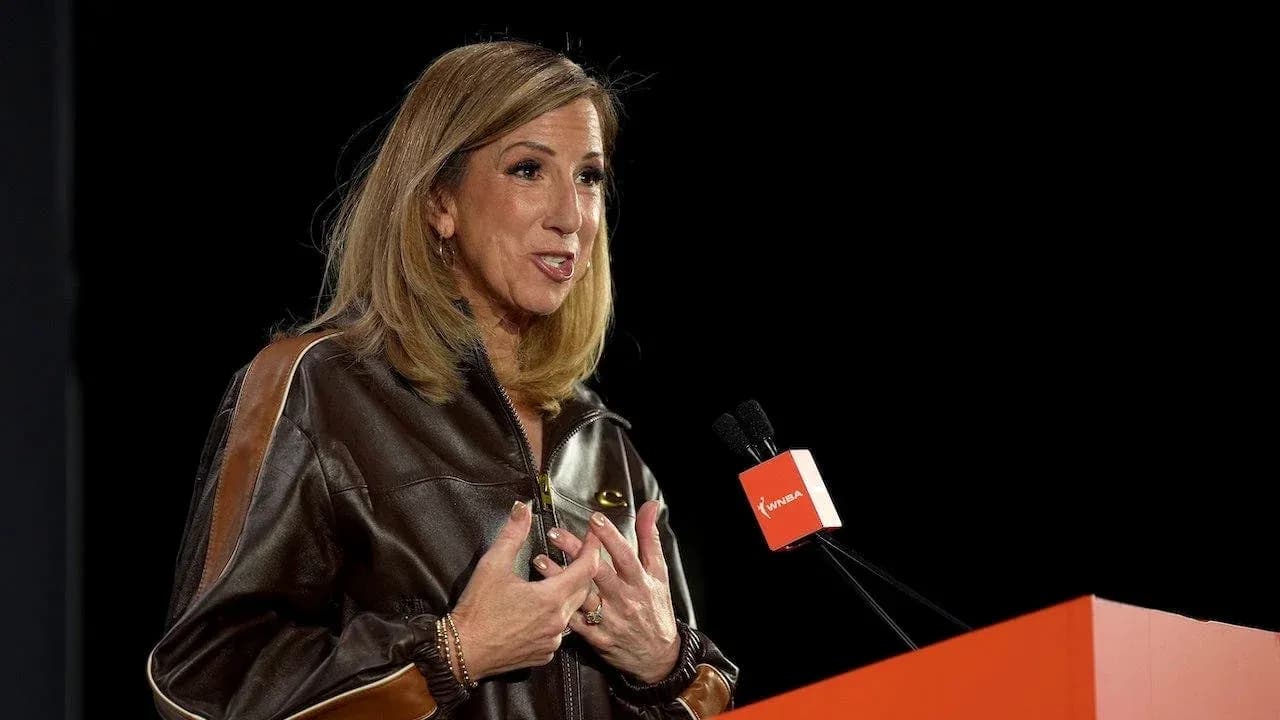
Cathy Engelbert, the first commissioner in WNBA history and the architect of its modern era, will retire at the end of the calendar year, closing a seven-year run that reshaped the league’s scale, visibility and ambition.
The announcement came from NBA commissioner Adam Silver, who backed Engelbert for the role in 2019 and on Thursday framed her tenure as transformational.
“Cathy has presided over the WNBA through the most significant period of growth in the league’s 30-year history,” Silver said in the league’s statement. “We are grateful for Cathy’s leadership and unwavering commitment to the advancement of women’s basketball.”
Engelbert, 61, confirmed the decision in her own statement, describing it as the end of a four-decade career in business and sports leadership.
“After more than seven years at the WNBA and more than 40 total years in business, I have made the decision to retire as WNBA Commissioner,” she said.
A Historic First, A Different Mandate
When Engelbert accepted the job in 2019, the league didn’t just give her a title. It gave her a mandate. She arrived not as “president,” the old label, but as the WNBA’s first-ever commissioner, a signal that the league wanted to be treated—and to operate—like a major professional property.
“In 2019, I had the privilege of being appointed the league’s first commissioner and to lead a league with enormous potential yet untapped awareness and significant undervaluation,” Engelbert said. “Over the years, it has been amazing to watch WNBA players thrive and lead the massive cultural surge around women’s sports.”
That “surge” has defined her tenure. Under Engelbert, the WNBA pushed aggressively into expansion, media rights and new competition formats, all while riding a rising wave of interest in women’s sports.
Expansion, Ratings and Revenue Spike
The numbers tell part of the story. During Engelbert’s time in charge, the WNBA grew from 12 to 18 teams, a dramatic jump for a league that had long been cautious about expansion.
The league’s statement credited her with overseeing “increases in viewership and historic highs” across almost every major business metric: digital engagement, game attendance, League Pass subscribers, merchandise sales, corporate partnership revenues and franchise valuations.
The calendar changed too. Engelbert introduced the in-season Commissioner’s Cup tournament in 2021, giving the regular season a new competitive layer and a fresh trophy to chase. She then pushed the schedule outward: the regular season expanded to 44 games in 2025, with a record 50-game slate already announced for 2027.
The message was clear. The WNBA would no longer behave like a niche summer league. It would act like a growing, national sports property with the calendar and footprint to match.
Growth Amid Controversy
Her retirement lands at a volatile moment for the league.
This season has been dominated by off-court debates as much as on-court storylines. Comments by Indiana Fever’s Sophie Cunningham about trans athletes in women’s sports, and the intense scrutiny and treatment of rookie star Caitlin Clark, have fueled constant conversation and criticism around the WNBA’s culture and direction.
Engelbert has not been spared. Even as the league’s metrics climbed, she faced sharp criticism for how the WNBA has marketed its biggest names, with Clark’s supporters particularly vocal about what they see as a missed opportunity to center the rookie in the league’s promotional strategy.
The league, though, points to the broader picture: more eyes on games, more money in the system, more value attached to each franchise. For owners and investors, those are the markers that define an era.
Leaving With “Immense Gratitude”
Engelbert’s own parting words carried the tone of someone convinced the project is still in its early chapters.
“I retire knowing we have built something bigger, stronger and more enduring than we could have imagined,” she said. “I am grateful to the WNBA and NBA team owners and staff, players, investors, fans and the powerhouse league office staff, who believed in what this league could become. I retire with immense gratitude and tremendous optimism for the future of the WNBA, with the best yet to come.”
The league now faces a pivotal decision. It must identify a successor who can inherit a bigger, louder, more scrutinized WNBA than the one Engelbert took over—one with more teams, more games, more money, and far higher expectations.
For now, one question hangs over a league on the rise: who will be trusted to take the controls of what Engelbert has helped build?