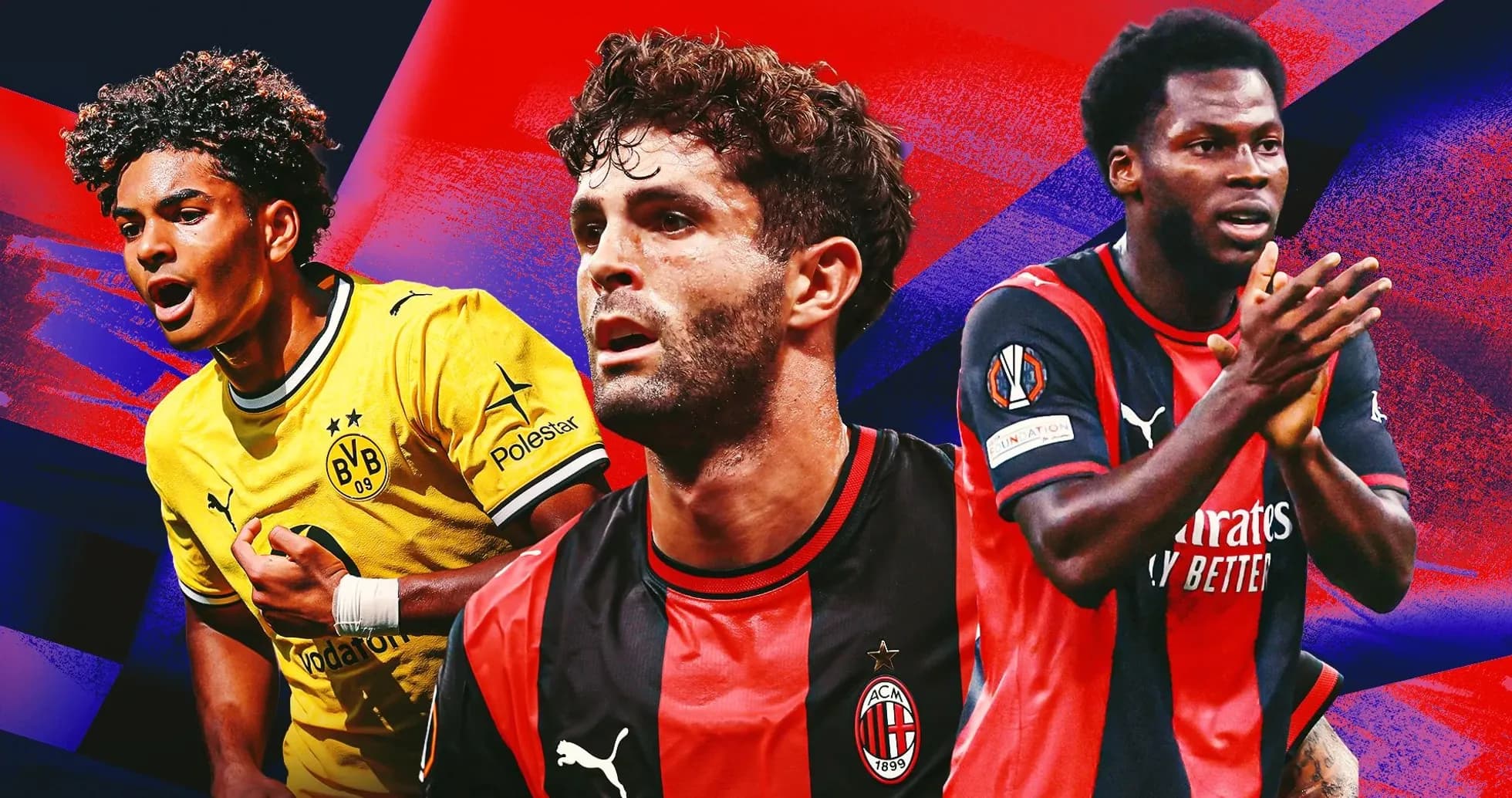
The new USMNT cycle has its headline act, and he’s barely old enough to drive.
Cavan Sullivan, 16 years old and already carrying the weight of a nation’s curiosity, steps into his first senior U.S. camp with the kind of momentum that usually belongs to players five, six years older. The hype has followed him for a while. This season, the output finally caught up.
Mauricio Pochettino is not in the business of rewarding TikTok clips or YouTube compilations. He’s picking players who help him win football matches. Right now, Sullivan fits that category.
“He deserves all of the praise that he is getting,” Pochettino said. “I think it's because he's performing well. He's giving assists, scoring goals, and he's 16.”
The coach lingered on that number. Sixteen. A kid, as he called him, but a kid already trusted enough to be dropped into a senior national team camp.
The message from the manager is clear: enjoy the noise, but don’t be consumed by it. “The important thing is to help, to be with him, and to provide a solid pattern and support, because he still needs to show, improve, evolve, and be more mature.” The door is open. The safety net is not guaranteed.
This camp, then, is less about instant impact and more about exposure. Sullivan may light it up. He may look raw. Either outcome is acceptable. What matters is the repetition: the more times he feels this level, the more normal it becomes. If the long-term vision is a fully formed star by 2030, you don’t wait until he’s 20 to find out if he can handle the stage. You start now and let him stumble, learn, and grow under the lights he’s already drawn.
The spotlight will follow him into this camp. It usually does.
Pulisic’s absence and a lingering shadow
The most familiar American star is not here, and the logic is hard to argue with. Christian Pulisic has just returned from injury and only recently made his first appearance of the season. Dragging him across the Atlantic for four matches in two weeks would have been reckless, both for his body and for his club situation.
It still leaves a void.
Pulisic’s absence means the debates born out of a disappointing World Cup remain unresolved, frozen in place. There is a section of the fanbase that wants to see more fire from their captain, more visible defiance. This window won’t give him that platform.
He is a player with a point to prove and no immediate stage on which to prove it. That process will have to wait. For him, it’s a frustrating pause. For Pochettino, it’s part of a broader reset.
“I think now is a completely different approach than was in the past,” the coach said. “The World Cup is in four years. We need to work with different objective and goals, and for different reasons, that roster is the roster that is the best roster that we can design for this camp.”
The message: this isn’t about sentiment. It’s about a four-year project.
Musah’s return from the wilderness
If Sullivan represents the future, Yunus Musah is the reminder that careers rarely run in straight lines.
After more than 18 months out of the national team picture, Musah is back. He had drifted at Milan and found no real rhythm during a loan spell at Atalanta. The promise never vanished, but the performances did. Now, back at Milan and contributing again, he has forced his way into Pochettino’s plans.
Musah is only 23, but in this particular group he feels almost like a veteran presence. He has lived the early hype, the plateau, the questions. He has also shown the resilience to climb back.
“Yunus is still young,” Pochettino said. “He wasn't involved in the last World Cup, but now, after seeing from the beginning the season that he is performing in the way that we expect… that is why we call again. It's really open, like for rest of the players.”
This camp offers him a second chance to define his role. He will need more than one strong week to fully convince the new regime, but this is a starting point. A reset, not a reward.
World Cup veterans on the outside looking in
Of the 28 players called up, 13 were part of this summer’s World Cup squad. Many of the core names remain: Tyler Adams, Chris Richards, Antonee Robinson, Sergiño Dest, Matt Freese. Others are missing for obvious reasons. Pulisic, Weston McKennie and Folarin Balogun are all managing injuries. Tim Ream, at 38, is drifting into the territory where every omission feels like a potential farewell, even if neither he nor Pochettino has drawn that line publicly.
For those who were not nailed-on starters in Qatar, the reality is harsher. Matt Turner, Max Arfsten, Mark McKenzie, Joe Scally, Cristian Roldan, Brenden Aaronson, Tim Weah, Alejandro Zendejas – all with World Cup experience, all left at home.
This is what expanding a player pool looks like. The fight for places doesn’t start with the fringe of the squad; it starts with the middle. Players 15 through 26 suddenly find themselves under the most pressure.
Pochettino insists nothing is final. “The door is open for everyone,” he said. “Now it's a new start. It's a new cycle. It's not what happened one year ago, one year and a half ago, what happened in the World Cup. To be honest, it's a fresh start. It's a roster that we consider is the best for that period.”
Fresh start or not, the signal is unmistakable: reputation alone no longer protects anyone.
Albert, Dortmund, and a calculated gamble
If Sullivan is the teenage headliner, Albert is the quiet gamble.
At 17, the Dortmund prospect arrives as the least experienced player in the camp. If he plays 93 minutes across these matches, he will have logged more senior minutes for his country than for his club. That is an extraordinary statistic and a clear show of faith from Pochettino.
Unlike Sullivan, Neil Pierre or Adri Mehmeti, Albert cannot point to a long run of senior performances to justify his place. His case is different. He trains every day at one of Europe’s most demanding talent factories. Dortmund do not hand out proximity to the first team lightly, especially to teenagers.
Pochettino has read that signal and responded in kind. If Dortmund believe he is worth grooming, the national team wants a closer look.
Albert arrives as the rawest player in the squad, but possibly the one with the highest ceiling. This camp is designed as an education: a week to learn the standards, feel the speed, understand the demands. If he absorbs it quickly, both club and country stand to benefit.
The USMNT, once built around a handful of established names, is now a moving target – a blend of returning figures like Musah, sidelined stars like Pulisic, and fearless teenagers like Sullivan and Albert. The cycle has already started. The real question is which of these young faces will still be central when the lights go up on 2030.