Celtic and Rangers have been hit with one of the most severe collective punishments Scottish football has seen in years: their next home Scottish Cup ties will be played behind closed doors.
No noise. No colour. No crowd.
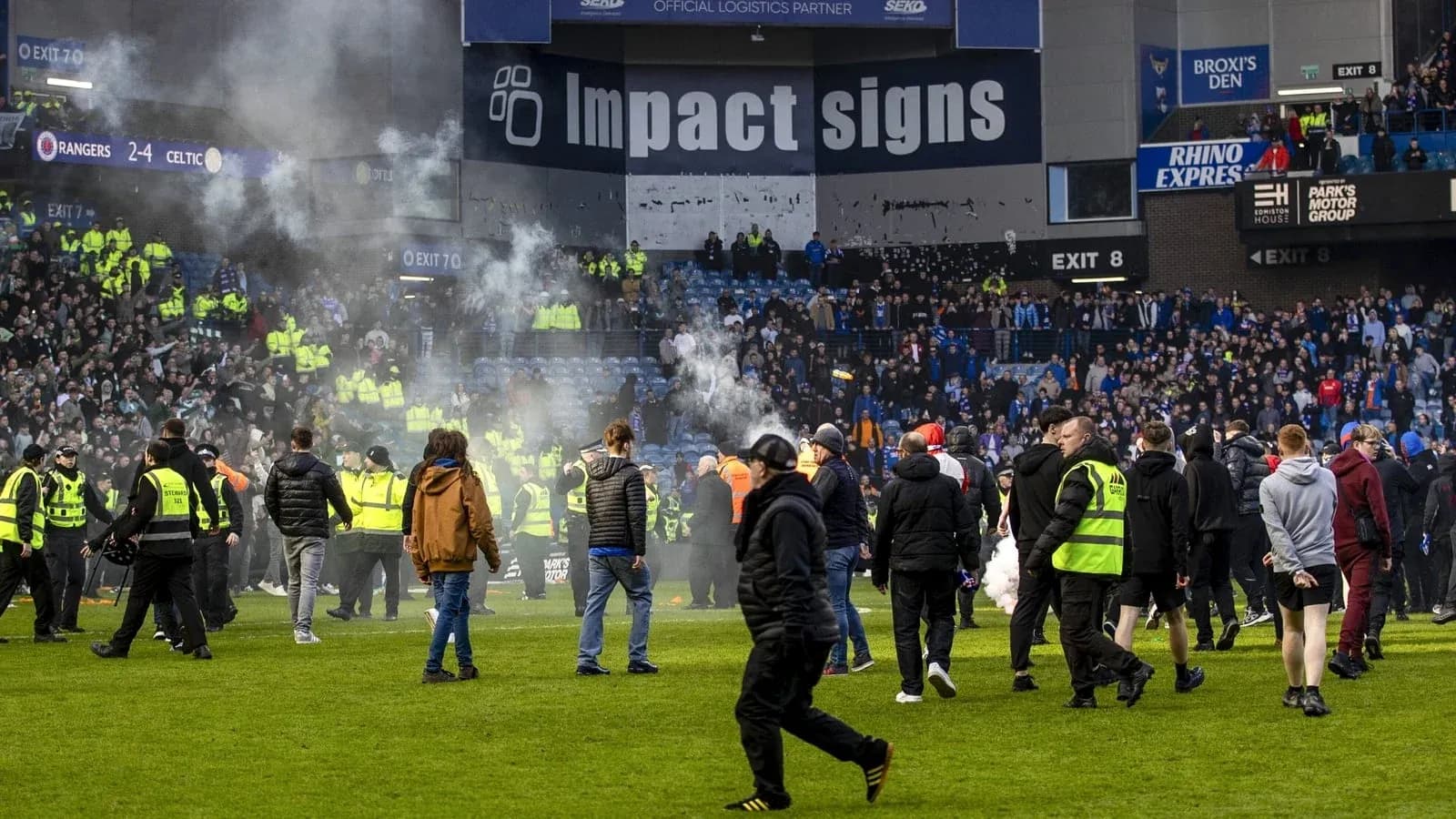
The Scottish Football Association delivered the verdict after a disciplinary hearing into the chaotic scenes that followed Celtic’s quarter-final win at Ibrox in March, a night when the rivalry spilled off the terraces and on to the pitch.
Fallout from a toxic night at Ibrox
The flashpoint came at full-time, after Celtic edged a penalty shoot-out. Visiting supporters spilled on to the pitch in celebration. From the other end, Rangers fans surged forward, some charging on to the playing surface to confront them. Police moved in. Dozens of arrests followed.
An independent review later painted an even darker picture of what might have unfolded, concluding that “crushing” and “life-threatening violence” were narrowly avoided. It was a stark warning: this was not just another Old Firm flashpoint, but an evening that skirted the edge of disaster.
The SFA’s judicial panel has now drawn a hard line. Both clubs must stage their next home Scottish Cup match without supporters and pay their opponents £100,000 in compensation for lost shared gate receipts. Any repeat of serious crowd trouble at Scottish Cup ties in the next two seasons will trigger another closed-door sanction.
Both Celtic and Rangers admitted charges relating to unacceptable conduct from their supporters. The argument now is about scale, context and responsibility.
Celtic bristle at “disproportionate” sanction
Celtic’s response was swift and pointed. The club said it was “shocked” by the level of punishment, insisting the panel had failed to properly weigh the circumstances.
“We are shocked by this disproportionate punishment for a relatively small incursion by Celtic supporters at a moment of emotion and celebration,” their statement read.
The club stressed it does not excuse fans entering the pitch and claimed it has consistently acted when that line is crossed. But it argued that the panel should have drawn a sharper distinction between celebratory incursions and confrontational ones, and between the roles of home and away clubs in stadium safety.
“Another important distinction is that, on this occasion, Celtic were not the home club, responsible for stadium safety arrangements,” the statement continued.
Celtic will now wait for the panel’s written reasons before deciding whether to escalate the matter. Legal avenues and appeals will inevitably be discussed in the coming days.
Rangers, for their part, also stand punished but had already been under scrutiny as the home club on the night. The Ibrox side now face the prospect of a key cup tie stripped of its atmosphere, with the financial and sporting cost laid bare.
A rivalry under the microscope
Behind closed doors, the Scottish Cup will look and feel very different when these sanctions bite. For two clubs who trade so heavily on noise, intimidation and spectacle, the absence of supporters will be a jarring sight and a public reminder of where the line now lies.
The SFA has chosen to use the bluntest of instruments to make its point. The message is unmistakable: if this fixture, and this rivalry, cannot police itself inside the stadium, the authorities will do it by removing the crowd altogether.
The next Old Firm cup tie will not just be about who goes through. It will be about whether Scottish football’s most combustible fixture can step back from the brink, or whether empty stands become a more familiar part of its future.