The Champions League has always belonged to the giants. This week, it felt like they all turned up at once.
Mbappé joins royalty, Bayern hit 900
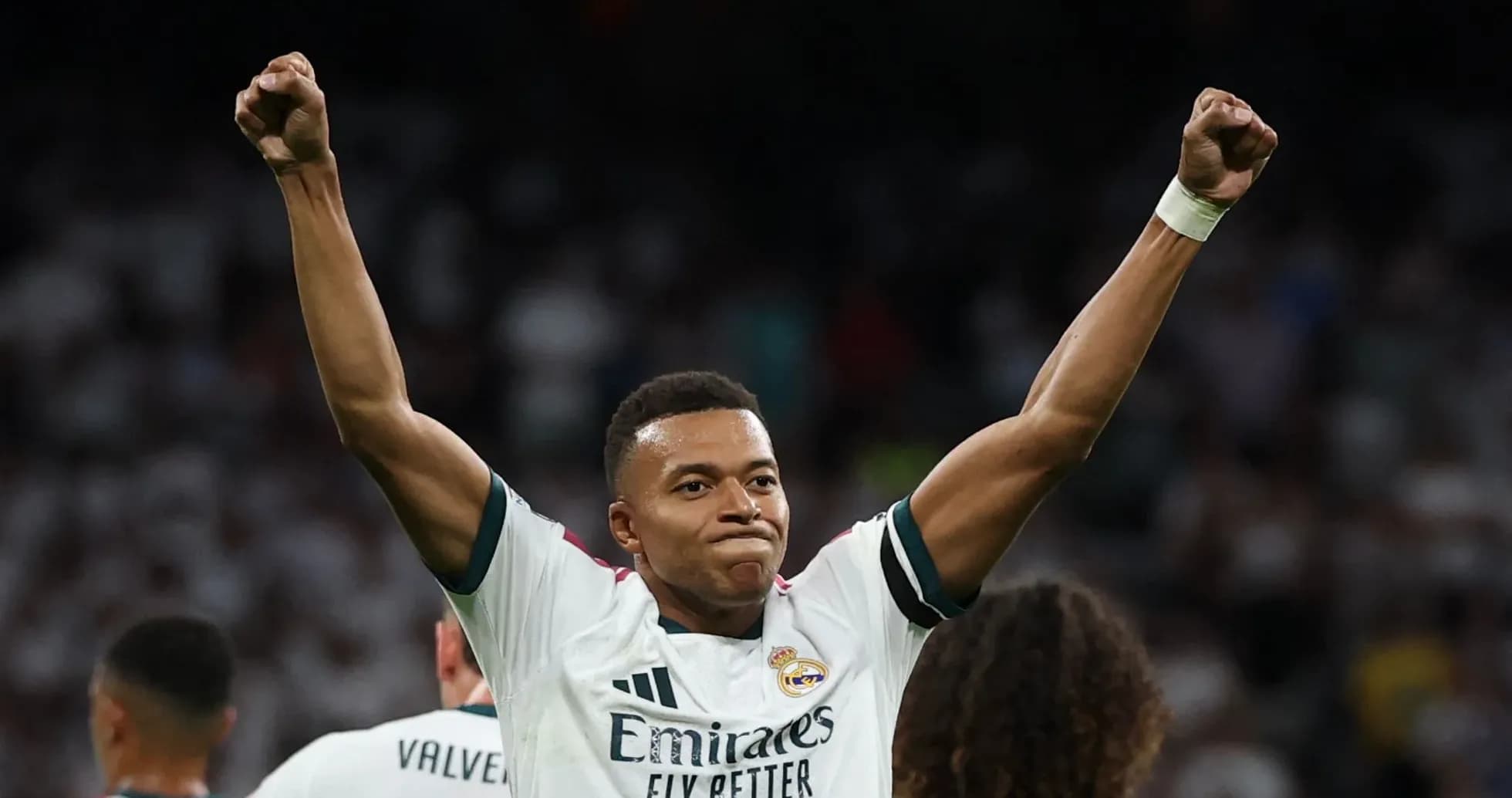
Kylian Mbappé keeps walking into rooms reserved for legends and finding his name already on the door. With his latest strike, the Paris Saint-Germain forward moved level with Raúl on 71 Champions League goals, fifth on the all-time list. Only Cristiano Ronaldo (140), Lionel Messi (129), Robert Lewandowski (109) and Karim Benzema (90) now stand ahead of him.
While Mbappé chased history, Bayern Munich rewrote a different chapter. Their latest haul made them just the second club to crash through the 900-goal barrier in the competition. Only Real Madrid, miles out in front on 1,139, have scored more. Barcelona sit third with 767, Manchester United fourth with 549. Bayern are not just winning games; they are carving their name into the architecture of the tournament.
Vinícius the hunter, Courtois hits 100
At the Bernabéu, the numbers told a story of work as much as flair. Vinícius Júnior, usually the man twisting full-backs inside out, turned into a one-man press against Inter Milan. He made nine ball recoveries, his best figure in a Champions League match. No Real Madrid attacker had produced more at home in the competition since Gonzalo Higuaín collected 12 against Juventus back in December 2008.
Behind him, Thibaut Courtois quietly joined another elite club. The Belgian became the 56th player to reach 100 Champions League appearances, a milestone that reflects not only excellence but endurance at the very top.
Kane and Olise: Bayern’s ruthless double act
In Bavaria, the numbers around Harry Kane and Michael Olise look like something from a video game.
Olise has had a hand in 34 goals in all competitions in 2026 – 17 scored, 17 created. Across Europe’s top five leagues, only Kane can top that. The England captain has contributed to 39 goals, with 34 of them his own and 5 laid on for others.
Kane’s relationship with the Champions League is turning into an obsession. He has scored in eight consecutive matches in the competition, netting 10 times in that run. One more game with a goal and he will match Robert Lewandowski’s Bayern record of scoring in nine straight Champions League outings, a mark the Pole managed twice between 2019 and 2021. Looming beyond that is Ronaldo’s all-time record: 11 consecutive matches with a goal between 2017 and 2018.
Across the last three seasons, nobody has touched Kane’s output in this tournament. Since 2024-2025, he has stacked up 31 goal contributions – 26 goals, 5 assists. That puts him three clear of his nearest rivals, Ousmane Dembélé and Raphinha, both on 28.
Olise’s own European nights have been spectacular. The Frenchman produced the fourth three-goal-contribution performance of his Champions League career, matching Raphinha for the most such games since the Brazilian’s debut in the competition in September 2024. Bayern’s attack is not just prolific; it is layered with match-winners.
Barcelona’s new wave: Yamal, Raphinha and a flying start
Barcelona have opened the season like a team rediscovering an old habit: overwhelming opponents. They have scored 22 goals in their first five matches, the fourth-best start in the club’s history and their most explosive beginning since the 1950-1951 season.
At the heart of it stands a teenager already rewriting the club’s record book. Lamine Yamal has overtaken Lionel Messi to become the youngest player in Barcelona’s history to reach 100 goal contributions. He did it at 19 years and 58 days. Messi was 22 when he hit that landmark. Yamal now sits on 101 contributions for the club – 54 goals, 47 assists.
His Champions League numbers underline how fast he is moving. He has 12 goals in the competition, one short of Mbappé’s record of 13 as the highest-scoring teenager in Champions League history. He has already passed Mbappé’s mark for total contributions as a teenager in the tournament, reaching 23 to the Frenchman’s 20.
Alongside him, Raphinha has started the season like a man in a hurry. The Brazilian has become the first Barcelona player in the 21st century to score in the team’s first five matches of a single season. For a club that has lived through cycles of doubt and reinvention, this feels like the beginning of something sharper, more ruthless.
Fernandes, Cunha and a new Brazilian chapter at United
Manchester United’s recent European history has been turbulent, but one constant has been Bruno Fernandes. Since his debut for the club in 2020, the Portuguese midfielder has scored 23 goals and provided 21 assists in European competitions. No other midfielder can match that combined tally over the same period. He remains United’s compass on nights when the stakes rise.
There is a new Brazilian accent in United’s Champions League story too. Matheus Cunha became the fourth Brazilian to score for the club in the competition, following Anderson, Alex Telles and Casemiro. His goal also became the 241st scored by a different Brazilian player in Champions League history, leaving Brazil second only to France, who have 242 different scorers in the tournament.
On the flanks, the future announced itself. Patrick Dorgu, at just 18, became the youngest player to provide an assist on his Champions League debut for Manchester United since Wayne Rooney did the same in September 2004. It is not yet a new era at Old Trafford, but the pieces are starting to look younger, quicker, more daring.
Arsenal reinvent themselves
Arsenal came into this season with questions about whether last year’s reliance on set pieces masked deeper attacking issues. The early evidence suggests a transformation.
They have scored 10 goals in their first five matches, none from a set piece. Every one from open play. Against Napoli, they unleashed 26 shots and posted an expected goals figure of 4.05 – both their highest marks in a Champions League game since the 2010-2011 season. This is an Arsenal side trusting its patterns, not its dead-ball routines.
At the back, David Raya is quietly building a record of his own. He has kept a clean sheet in 54% of his Champions League starts – 20 in 37 – the best ratio in the competition’s history among goalkeepers with at least 25 starts.
Martin Ødegaard, long admired for his control, has added a sharper edge. He has scored in four of his five matches across all competitions this season, after managing just one goal in 36 appearances last term. Arsenal’s captain is no longer just the conductor; he is finishing moves as well as starting them.
PSG’s unbeaten march and Dembélé’s rise
Paris Saint-Germain, often judged by their failures in spring, are quietly assembling an autumn streak. Their latest result extended their unbeaten run in the Champions League to 11 games. Two more without defeat and they will match the longest sequence in the club’s history, set between October 2012 and November 2013.
Ousmane Dembélé is at the centre of this new resilience. His goal took him to 30 in the competition, moving him past David Trezeguet and into fifth place on France’s all-time Champions League scoring list. Only Benzema (90), Mbappé (71), Thierry Henry (50) and Antoine Griezmann (44) sit above him. For a player once defined by potential and frustration, the numbers now speak of delivery.
Torres climbs Spain’s ladder, Como make noise, Paz steps up
On another front, Ferran Torres produced a hat-trick that did more than win a game. He became the ninth Spanish player to score a Champions League hat-trick, and the first Spaniard to hit three or more in a match for a non-Spanish club since Lucas Pérez did it for Arsenal against Basel in December 2016.
That treble lifted Torres to 21 Champions League goals. He now stands fifth on Spain’s all-time scorers list in the Champions League and European Cup, having moved past Luis Enrique (19), Fernando Torres (20) and Cesc Fàbregas (20). At the top of that list, still distant but no longer alone, remains Raúl with 71.
In Italy, Como announced themselves in style. On their debut in the European Cup/Champions League, they became only the second Serie A side to score four or more goals in their first game in the competition, after Sampdoria’s 5-0 win over Rosenborg in September 1991. They are also the 12th of 16 Italian teams to find the net in the Champions League. For a club stepping onto this stage for the first time, it was a statement, not a cameo.
Further south, Nico Paz added his name to an illustrious Argentine lineage. At 22 years and two days, he became the youngest Argentine to provide two or more assists in a single Champions League match since Messi did it for Barcelona against Basel in October 2008, aged 21 years and 120 days. When your benchmarks are Messi’s early years, you are moving in rare air.
A night for the record books
Across the continent, the competition’s fabric shifted. Sabah, on their very first Champions League appearance, wrote a different kind of history by starting with 11 players from 11 different nationalities – a snapshot of how global this tournament has become.
Real Madrid still lead the scoring charts. Bayern still chase them. New stars like Yamal and Paz chase the shadows of Messi and Raúl. Kane hunts Ronaldo’s streak. Dembélé climbs a French ladder once owned by Benzema and Henry.
The records are falling in every corner of the Champions League. The question now is simple: whose name will define this era when the numbers finally stop?