Duel Arena 1 promised a circus. It delivered something stranger, darker and, at times, undeniably compelling.
Backed by an online sportsbook and dripping with nostalgia for the BodogFight era of anything-goes spectacle, the debut show hit the Kia Center in Orlando with MMA, boxing and kickboxing all crammed into a single ring and streamed for free on YouTube after an initial pay-per-view plan evaporated. Around the fights swirled a cloud of deliberate provocation, cheap controversy and a promotion that seemed determined to test how far “anti-woke” marketing can be pushed before it collapses under its own weight.
In the middle of it all, Mike Perry’s homecoming turned into a nightmare.
Perry’s Shoulder Goes – and Jenkins Pounces
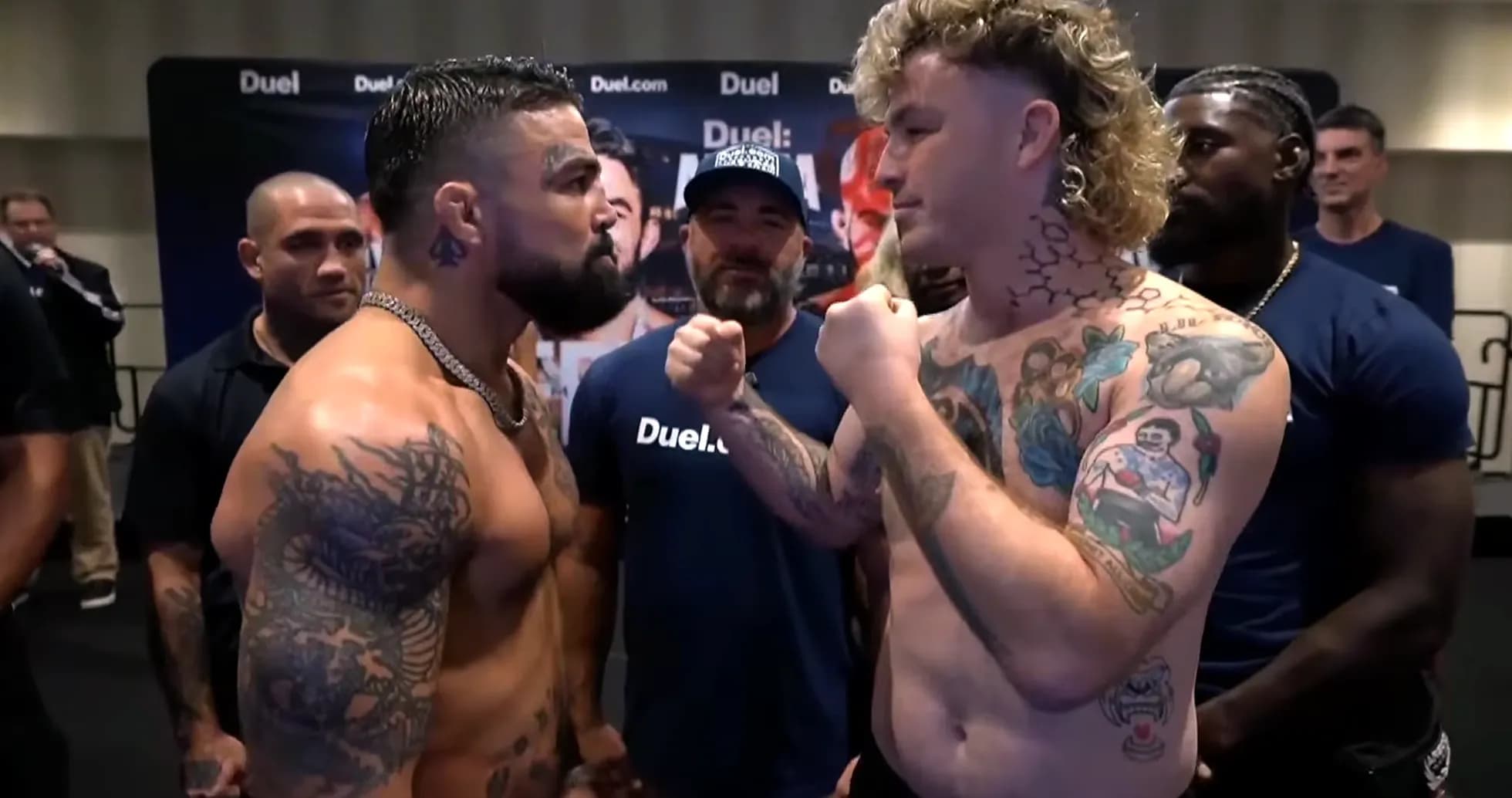
The main event was supposed to be Perry against Dillon Danis, a grudge match tailor-made for viral clips. Danis pulled out a day before the event. Brandon Jenkins stepped in on short notice and, according to Perry, had “signed his own death certificate.”
Instead, he signed Perry’s worst night in years.
Jenkins went after him from the opening bell, refusing to play the role of grateful late replacement. He pressed forward, took the center, and made Perry work in front of his own fans. Then came the moment that changed everything: Perry appeared to dislocate his left shoulder.
The injury didn’t just halt his offense. It invited punishment.
Jenkins stayed on him, turned up the heat and tore through the former UFC welterweight and current BKFC “King of Violence,” forcing a stoppage and silencing the building. While the broadcast team rushed to frame the result as an injury no-contest in spirit, the tape told a harsher story. Jenkins had already put his stamp on the fight before Perry’s shoulder gave way, and he finished the job with clinical cruelty.
Perry, who had talked big and embraced the chaos all week, ended up being helped off the canvas, beaten and injured by a man who took the bout on a day’s notice. For a fighter who has thrived on mayhem, this was the wrong kind.
A Promotion Built on Provocation
The fights were only half the story. Duel Arena’s debut leaned into outrage as a branding strategy.
When Danis withdrew, the promotion’s official social media accounts didn’t just pivot to hype Jenkins. They went on the attack, hurling a homophobic slur at Danis and then hiring his mother, Nikki Carpiniello, as a special ring card girl. A suggestive photo of her went out as part of the trolling campaign.
The message was clear: nothing is off-limits.
The card also trumpeted a “special guest,” a figure promoted precisely because of his openly racist, inflammatory persona. The show’s tone was less “fight night” and more “culture war variety hour,” a test balloon for whether a combat sports event can be sold on the back of being loudly, proudly offensive.
The result was a broadcast that veered from conspiracy theory chatter to sideshow acts, with the fights periodically dragged back into focus.
Manuwa Turns Back the Clock, Rowe Grinds It Out
Amid the noise, a few familiar names reminded everyone why people tune in for combat sports in the first place.
In heavyweight boxing, 46-year-old Jimi Manuwa, returning to action for the first time in seven years, survived an early scare against former UFC heavyweight Chase Sherman. Sherman dropped him in the opening round, but Manuwa responded like a veteran who has seen everything. In the second, he began to find his timing, lit Sherman up with heavy shots and forced a stoppage to cap a remarkable comeback cameo.
Earlier, Phil Rowe, another ex-UFC name, picked up a workmanlike boxing win over Javanis Ross. It wasn’t spectacular, but it was effective. Rowe outworked Ross over four rounds, swept one scorecard and took two rounds on the other two. Afterward, he used the platform to angle for a UFC return, a bold request from a man whose previous stint ended with four losses in five fights and multiple weight misses. Still, combat sports history is littered with stranger comebacks.
A Disgraced Ex-WWE Star Implodes
One of the evening’s ugliest storylines belonged to Patrick Clark Jr., better known from his WWE days as Velveteen Dream.
Clark arrived with a cloud already hanging over him: allegations of sending lewd images to minors, and separate grooming accusations from another wrestler. Clark has denied the claims as fabricated, though he previously issued a public apology for people he said he’d hurt with past behavior. WWE investigated, initially allowed him to return, then cut ties not long after.
This week, his opponent Ryan Pownall, a podcast host turned fighter, weaponized that history at the press conference. Pownall repeatedly labeled Clark a “pedophile,” triggering an emotional meltdown and a heated confrontation that spilled beyond the stage. On fight night, Clark’s performance matched the chaos of his buildup, ending in a disqualification after he turned the bout into a farce and, ultimately, a self-inflicted humiliation.
If this was meant to be the first step in a redemption arc, it went badly off script.
Shock Elbow, Toxic Backstory
The most spectacular finish of the night belonged to AJ Cunningham, and it came wrapped in its own controversy.
Cunningham, a deeply polarizing figure in the combat sports world and widely condemned for his extremist sympathies, hadn’t tasted victory in nearly three years. A former DWCS loser who still managed to reach the UFC briefly, he went 0-2 there before being cut.
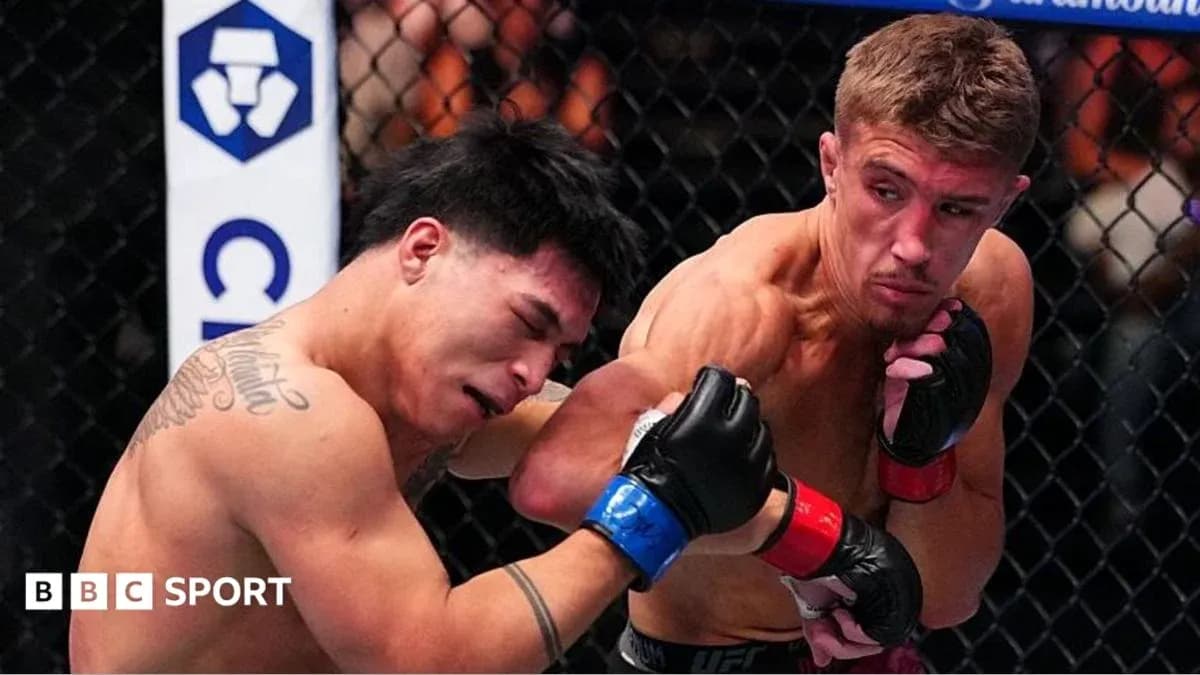
Against Joe Penafiel, he finally produced a highlight. Cunningham uncorked a spinning back elbow that detonated cleanly and ended the fight in brutal fashion. He celebrated with his corner, which included Jake Shields, and delivered the kind of post-fight comments that matched his abrasive reputation.
The knockout would have been the talk of most regional shows. Here, it served as a prelude to a magician vs. juggler novelty bout. On this card, even a spectacular elbow had to share space with circus acts.
Ass Magic, Influencers and a Ring Walk Tour
If Duel Arena 1 wanted to blur the line between combat sports and carnival, it didn’t just flirt with the idea. It sprinted toward it.
The so-called “King of Ass Magic” boxed a juggler in a segment that played more like late-night cable parody than professional combat. The broadcast team winced their way through it, and even the graphics department couldn’t get the Ass Magic performer’s name right on screen.
Earlier in the evening, a 4-foot-6 influencer faced the 5-foot-6 owner of Duel.com in the opener. The bout itself barely registered, other than the fact that the owner dropped a decision in his own promotion’s first fight.
Between those oddities, the production crew filled time by wandering into the ring with a backstage interviewer to explain what a boxing ring looks like, as if the audience had never seen one. The big reveal? It has the Duel Arena logo on the canvas.
For all the absurdity, the production quality drew some early praise. The show looked sharp. The cameras were crisp. The presentation, at least visually, belonged on a big stage.
A Debut That Won’t Be Forgotten
By the end of the night, Duel Arena 1 had delivered a bizarre cocktail: legitimate knockouts, veteran comebacks, injury heartbreak, reputational car crashes and a steady stream of calculated offensiveness.
Brandon Jenkins walked away with the biggest win of his career, a short-notice demolition of Mike Perry that will follow both men for a long time. Manuwa proved there was still thunder left in his hands. Rowe kept his faint UFC hopes alive. Cunningham reminded everyone that the sport’s most spectacular moments can come from its most divisive figures.
Around them, the promotion tried to sell itself on shock value – slurs from official accounts, trolling a headliner by objectifying his mother, booking disgraced names and platforming racist personalities as features, not bugs.
Duel Arena wanted attention. It got it.
The real question now is whether it can turn that into a future, or if this debut will stand as a one-night experiment in how far combat sports can push the line before the audience decides it’s had enough.