Charlotte Hornets' Bold Reset: A New Era Begins
The Charlotte Hornets didn’t just pivot this summer. They tore up the blueprint and started again.
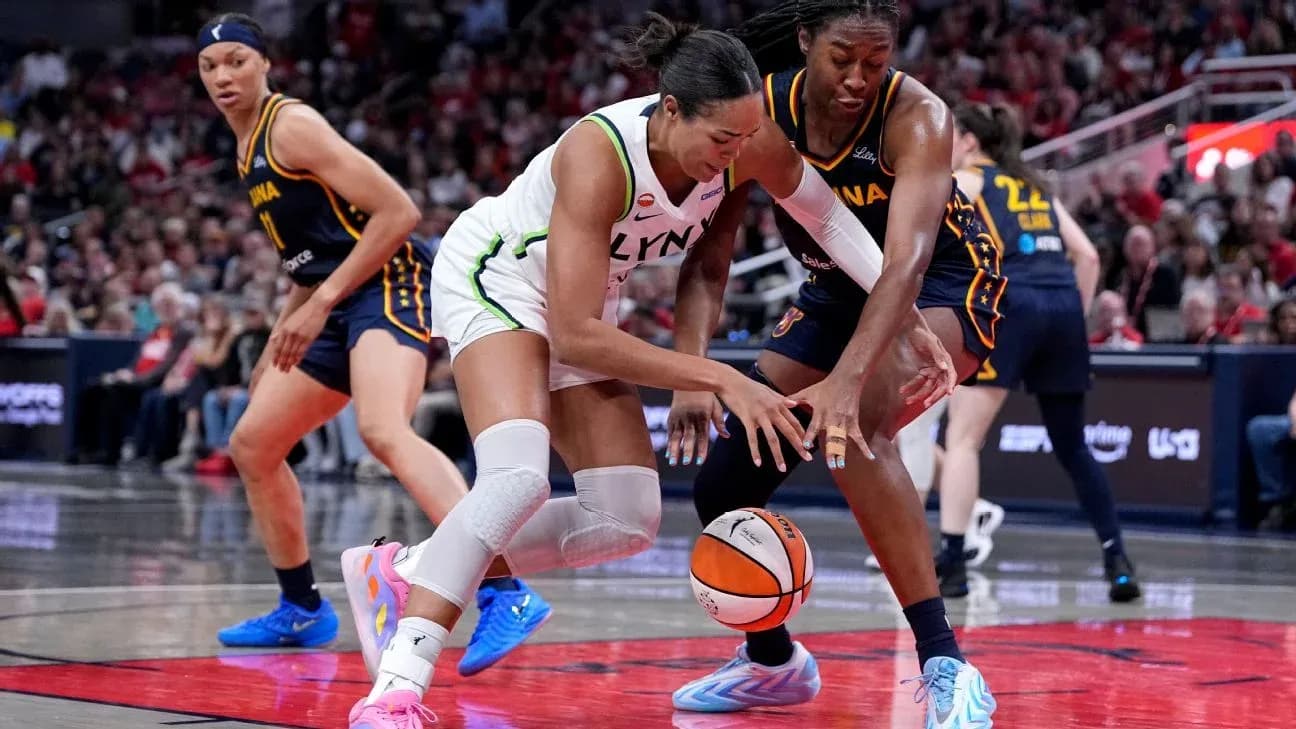
LaMelo Ball, the face of the franchise and the engine of last season’s surge, is gone — shipped to the Minnesota Timberwolves in a blockbuster that screamed long-term ambition over short-term comfort. In return, Charlotte landed Naz Reid, an unprotected 2033 first-round pick, three second-rounders and three first-round pick swaps. The kind of “war chest” deal front offices make when they’re thinking in decades, not box scores.
Miles Bridges? Also out the door, moved in a separate deal as the Hornets stripped away the last vestiges of their old identity. In came a different kind of support system: veterans Grayson Allen, Dennis Schroder, Royce O'Neale and Dorian Finney-Smith, players who know their roles, space the floor and defend, and are expected to shepherd a new core through the turbulence of a reset.
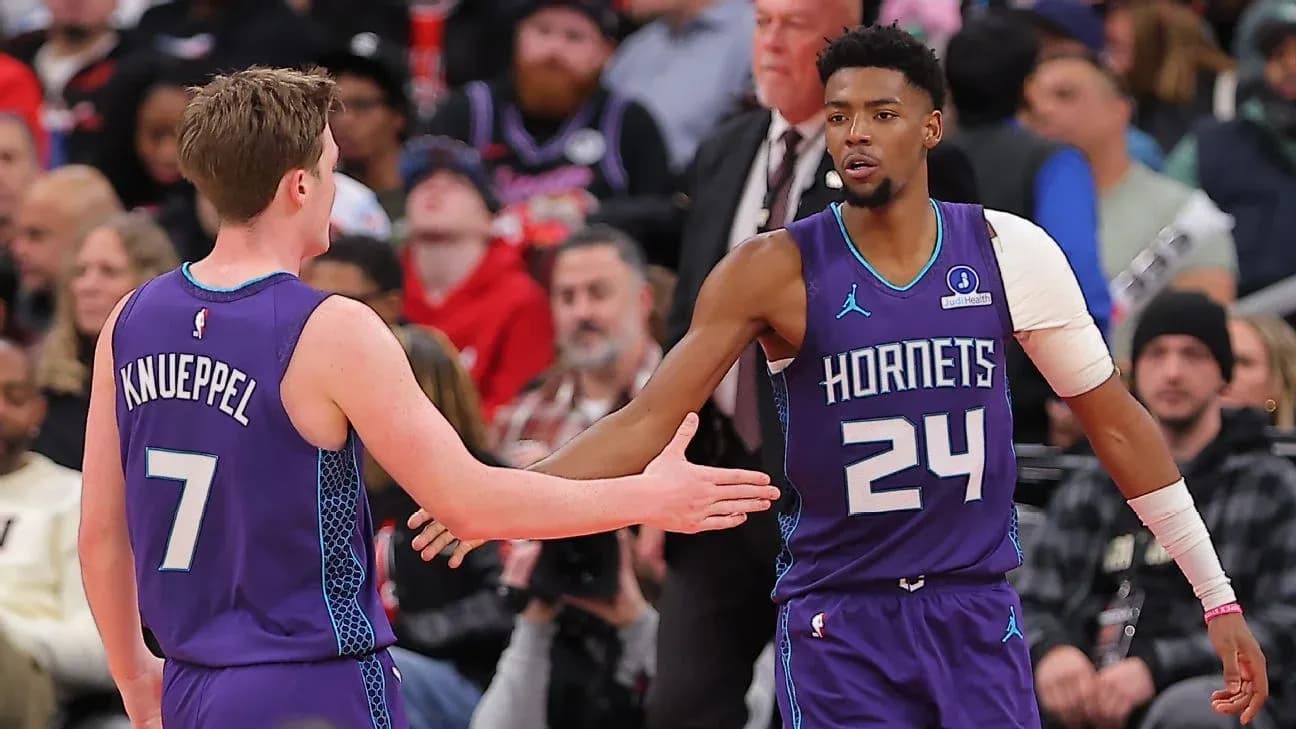
This is Brandon Miller and Kon Knueppel’s team now. The organization isn’t whispering it. It’s on a billboard.
A bold reset after a breakthrough
The timing of the shift is what jars. Charlotte just played its best basketball in a decade. After the All-Star break, the Hornets ranked second in offensive efficiency and net rating, riding the thrill of Ball, Miller and Knueppel to 44 wins and a top-five offense. Most teams in that position double down, bet on internal growth and continuity.
Charlotte looked at the same evidence and came to a colder conclusion: that LaMelo Ball, for all the flair and numbers, wasn’t the lead guard of a title team.
His résumé backs up the skepticism. Six years in, no playoff appearances. A borderline All-Star on a max rookie extension, with lingering questions about shot selection, defense and durability. The Hornets chose not to pay for the hope that those issues would magically resolve. They chose to sell high, to avoid the kind of treadmill that has haunted the Atlanta Hawks around Trae Young — good enough to hover around the middle, not good enough to matter in May.
By moving Ball and Bridges for draft capital and flexibility, Charlotte has become a financial outlier. As it stands, it’s the only team in the league without a single player committed at $25 million or more next season. That’s not an accident. It’s a philosophy.
President Jeff Peterson spelled it out: the goal isn’t a one-off play-in cameo or a brief playoff appearance. It’s something bigger, and far more distant. That stance is ambitious bordering on ruthless for a franchise that hasn’t seen the postseason since 2016 and just walked away from its most exciting season in years.
The risk is obvious: the Hornets could tumble straight back into the lottery wilderness. The reward, if Miller, Knueppel and the draft haul hit, is a ceiling that Ball never convinced them he could reach.
One step back, or a free fall?
From a pure offseason ledger, Charlotte’s work drew high marks. The front office reoriented the roster around youth and shooting, stacking picks and betting on upside. Zach Kram’s A- grade reflects that balance: a step back in the present to open multiple doors in the future.
Ball and Bridges, 24 and 28, were in their primes. The Hornets chose to chase a younger timeline, anchored by Miller and Knueppel, both high lottery picks with All-Star potential. Around them, they kept Coby White on a three-year, $74 million deal and traded for Finney-Smith and additional draft assets. They layered in Allen’s shooting, Schroder’s ball-handling and O’Neale’s toughness.
On paper, the team won’t be as good. Ball’s playmaking and 32.0 usage rate sat at the center of everything Charlotte did offensively. He averaged 20.1 points and 7.1 assists, warping defenses and dictating tempo. You don’t replace that with a single player. You survive it by committee.
The Hornets are betting that depth and spacing can soften the blow. They are also betting that Miller and Knueppel are ready to jump from co-stars to headliners.
Who scores now?
That’s the central question of the 2026-27 season in Charlotte: where does the offense come from without Ball?
Head coach Charles Lee will spread the responsibility. Miller and Knueppel are the clear focal points, but they won’t carry the load alone. White slides into the starting point guard role, fresh off two strong seasons in Chicago in which he flirted with 20 points, five assists and three made 3s per game. Now he gets the ball, the minutes and the green light.
Schroder adds another layer of initiation, able to run second units and steady possessions when the game tightens. Allen arrives from Phoenix as a high-volume marksman. The Hornets, already one of the league’s most trigger-happy teams from deep, look set to lean even harder into the three-point era. Miller, Knueppel, White and Allen each averaged more than six attempts from beyond the arc last season; Lee’s offense will live with the variance that comes with that kind of profile.
The cost of all this change is cohesion. Last year’s starting lineup was the best in the league by some metrics. Now it’s been dismantled. Dean Oliver’s projection, pegging Charlotte around 20th in Basketball Power Index with a No. 21 post-free agency Power Ranking, reflects the skepticism. A year ago, if someone told you your core was Knueppel, Miller, White, Moussa Diabate and Allen, you wouldn’t have circled playoff dates on the calendar.
The Hornets are daring those perceptions to catch up.
A crowded, intriguing frontcourt
If the backcourt asks “who scores?”, the frontcourt poses a different puzzle: who plays, and with whom?
Charlotte’s center rotation is loaded with distinct profiles and overlapping claims to minutes. Hannes Steinbach, this year’s lottery pick, brings size and rebounding. Diabate, a key piece of last season’s elite starting unit, injects energy and mobility. Ryan Kalkbrenner looked poised for a strong rookie year before injuries cut him down, but his sheer size and rim presence still loom large in the plans.
Then there’s Naz Reid, the headliner in the Ball trade, a former Sixth Man of the Year now positioned for his first full run as a starter.
Lee, in theory, has 48 reliable minutes at center every night. The challenge is more complex: can he find lineups where two of these bigs share the floor without strangling the spacing that underpins the entire offensive identity? Can he juggle Steinbach’s development, Diabate’s impact, Kalkbrenner’s promise and Reid’s new status without losing rhythm or roles?
Handled right, that group gives Charlotte a malleable front line capable of shifting from bruising to mobile to stretch-based on matchup. Handled poorly, it becomes a logjam.
Fantasy upside in a rebuilding frame
Strip away the wins and losses for a moment, and the Hornets suddenly look like a fantasy playground.
White, stepping into Ball’s old role, has the statistical base to explode. With the ball in his hands and a system built around high-volume shooting, he’s positioned to nudge past those Chicago numbers in points, assists and 3s.
Reid, finally freed from the bench in Minnesota, has a similar opportunity. His Sixth Man of the Year pedigree now meets starter’s minutes on a team that needs his scoring, screening and pick-and-pop threat. Both players profile as classic sleepers: undervalued on name recognition, primed for career seasons by circumstance.
LaMelo Ball will almost certainly get his first taste of playoff basketball next to Anthony Edwards in Minnesota. Charlotte, meanwhile, steps into the unknown with Miller, Knueppel and a mountain of draft capital.
The divorce is done. The only question now is whose bet looks smarter in 2027 — and how different the answer might feel again by 2030.