The questions at Cobham came thick and fast, and almost all of them went to the same place. Chelsea’s midfield. Or, more accurately, what’s left of it.
Enzo Fernandez walked out on deadline day. No replacement walked in. For a club that has spent two years trying to rebuild its spine, it felt like a jolt. The numbers in the middle of the pitch suddenly look thin, and everyone knows it.
Xabi Alonso did not flinch.
Facing the media, Chelsea’s new head coach moved quickly to steady the conversation, leaning into the players already at his disposal rather than lamenting the one who has gone.
“They have different qualities, personalities,” he said, running through the options one by one. Valentin Barco, still raw but lively. Jordan Henderson, the veteran voice. Reece James and Malo Gusto, more commonly associated with the flanks, but now firmly in Alonso’s wider midfield picture.
Barco, Alonso stressed, brings energy – the kind that can tilt the tempo of a game when legs start to tire. Henderson, by contrast, offers composure and game intelligence, a player who “knows what is going on in the game” and, crucially, is edging closer to meaningful minutes. James and Gusto add versatility, capable of stepping into different roles when the tactical board demands it.
None of that fully silences the obvious concern: a Champions League-chasing club letting a World Cup winner leave the engine room without a like-for-like replacement. The debate will run for weeks.
But the mood shifted when Alonso steered the conversation towards the future.
The line that lit up Chelsea supporters was not about Henderson’s readiness or Barco’s promise. It was when Alonso dropped two names that, until this summer, lived almost exclusively in academy circles.
“Watson and Mahdi from the academy can play. We have options, quality and competitiveness.”
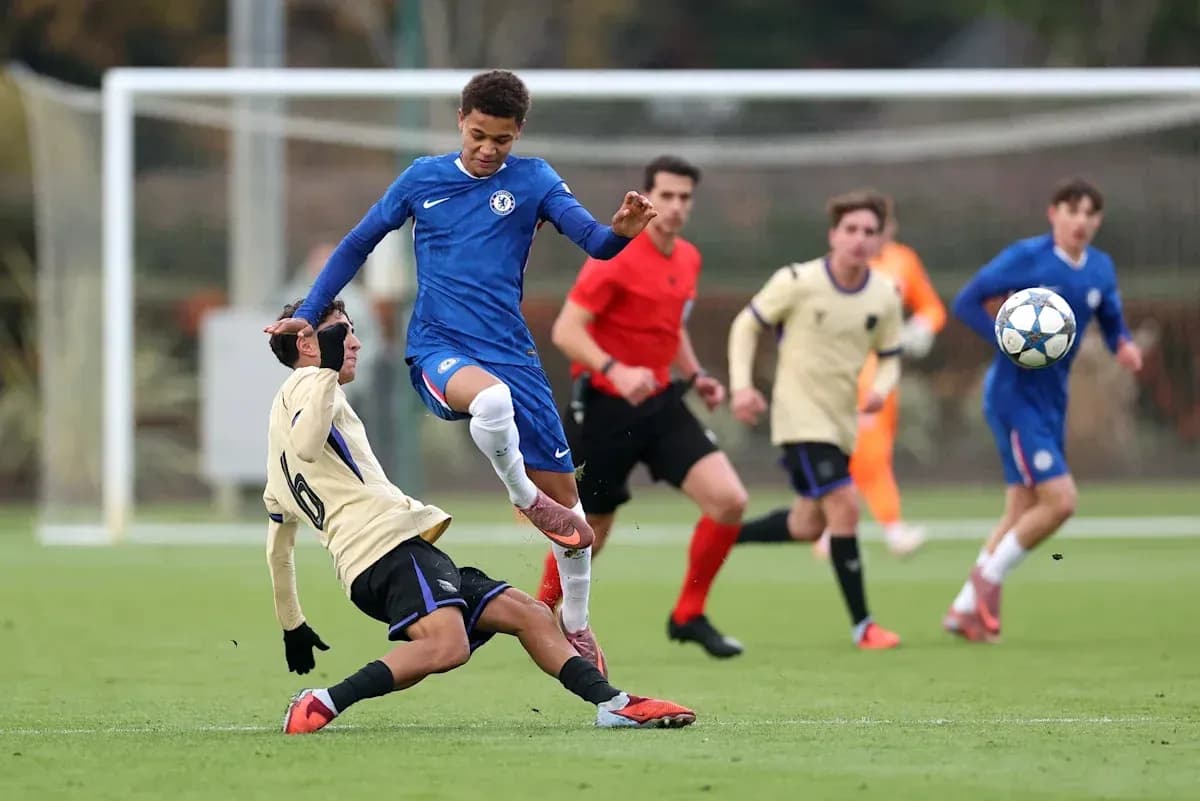
Reggie Watson and Mahdi Nicoll-Jazuli. Sixteen years old. Fresh from a pre-season that turned internal heads and nudged them into the senior conversation. Watson, pictured in Jakarta battling for the ball against Christopher Nkunku during Chelsea’s friendly with AC Milan, has already tasted the tempo of senior football under the glare of big-club expectation.
These are not players being fast-tracked to start every week. Alonso knows that. Chelsea know that. At this stage of their development, any first-team exposure will be carefully measured, not thrown at them in desperation.
But the message was clear: if injuries hit, if the schedule bites, if the squad stretches to its limits, the door is not just open to the academy – it is being held wide.
For a club that built an era on Cobham graduates, that matters. Supporters have been waiting to see which youngsters Alonso would trust, which names would be lifted from youth-team reports into senior press conferences. On this evidence, Watson and Nicoll-Jazuli have forced their way into that conversation earlier than most.
Chelsea still look light in midfield on paper. They still have to navigate a long season without the security blanket of Enzo Fernandez. But Alonso has nailed his colours to the mast: this will be a campaign where established leaders and fearless teenagers share the burden.
If the gamble pays off, Cobham could define Chelsea’s midfield all over again.