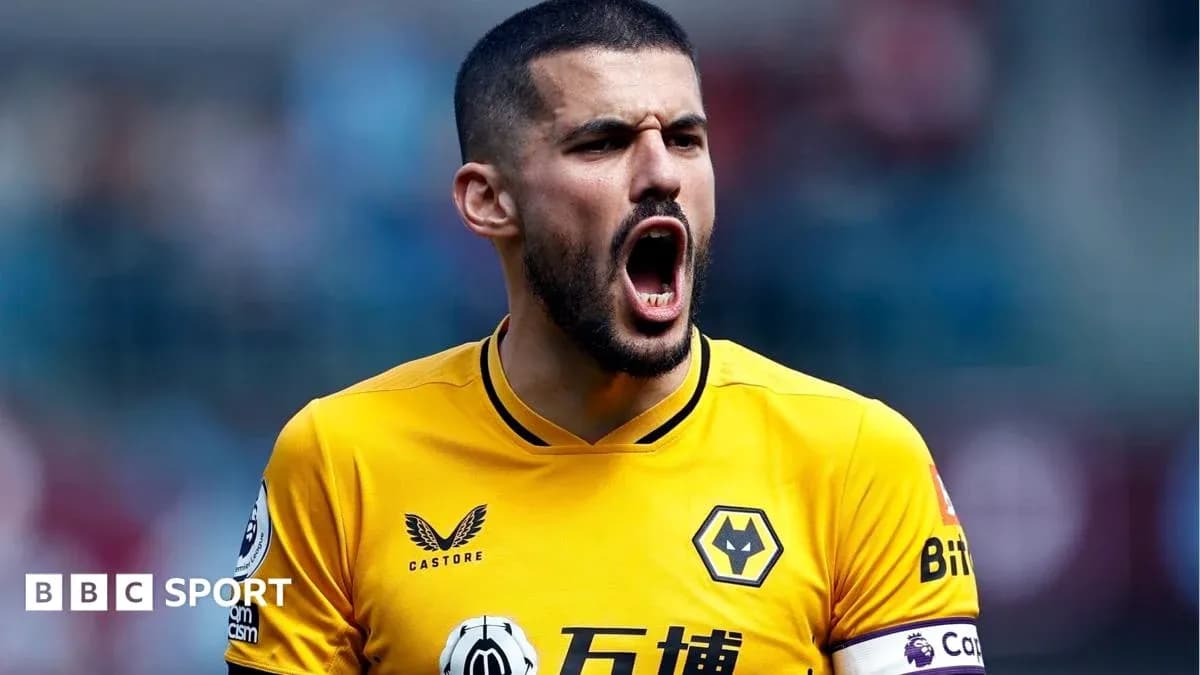
Conor Coady has never been the loudest name on a teamsheet. But for Wolves, for a long time, he was the voice of the club. At 33, that voice now leaves the pitch for the touchline, with the former Wolverhampton Wanderers captain announcing his retirement from playing.
He steps away after a 503-game club career, 10 England caps and a journey that took him from academy hopeful at Liverpool to standard-bearer of a reborn Wolves side.
From Liverpool Prospect to Wanderers Leader
Coady came through Liverpool’s academy as a promising midfielder, tipped early on for a career in the top flight. His first real taste of senior football arrived with a loan move to Sheffield United in 2013, a grounding spell that convinced Huddersfield Town to sign him permanently at the end of that season.
The turning point, though, came in gold and black.
Signed by Kenny Jackett in 2015, Coady arrived at Molineux as a hard-working midfielder. Under Nuno Espirito Santo, he became something else entirely. Nuno dropped him into the middle of a back three, and Coady grew into the role with startling speed. From there, he didn’t just defend. He organised, cajoled, demanded. He became the on-pitch metronome of a Wolves side on the rise.
By 2018, he was at the heart of promotion back to the Premier League. Not just a starter, but a symbol of the project.
Europa Nights and Premier League Consistency
As Wolves adjusted to life back in the top tier, Coady’s influence only deepened. Wearing the armband, he captained a team that finished seventh in the Premier League in back-to-back seasons and pushed deep into Europe, reaching the quarter-finals of the Europa League.
Those campaigns restored Wolves to the continental stage. Coady, constantly barking instructions, sweeping up danger, and pinging diagonals from the back, was central to it all.
Across his time at Molineux, he made 317 appearances and scored seven of his 22 career goals for club and country. The numbers only tell part of the story; the image that lingers is of a defender marshalling his line, chest out, voice hoarse, never hiding.
England Recognition and a Sudden Exit
His consistency eventually earned him England recognition, and he collected 10 caps for his country. For a player who had reshaped his game and his position, it felt like overdue validation.
Then came the shift.
In 2022, Wolves allowed Coady to leave on loan for Everton. After a season at Goodison Park, Everton chose not to activate a reported £4.5m option to make the deal permanent. Leicester City stepped in, signing him in July 2023 for a reported £8.5m as they rebuilt for a return to the Premier League.
The move did not spark a long second act at the top level. Instead, Coady’s career began to scatter in unexpected directions.
A Restless Final Chapter
A short, ill-fated spell at Wrexham followed. It ended prematurely, another abrupt turn for a player who had once been the model of stability at Wolves. His final move took him to The Valley, joining Nathan Jones’ Charlton Athletic on loan last season.
By September, he was without a club. The boots stayed on for a while, but the next step always felt close. Now it has arrived.
Coady retires with 503 club appearances behind him, his journey taking in Liverpool, Sheffield United, Huddersfield Town, Wolves, Everton, Leicester City, Wrexham and Charlton. Across that road, he carved out a reputation as a leader first and a defender second.
The Next Role: From Captain to Coach?
The transition already seems mapped out. Coady has been strongly linked with a move into coaching, with reports connecting him to the assistant head coach role at League One side Barnsley.
For a player who built his career on communication, structure and standards, the step into the technical area feels almost inevitable. He was the organiser on the pitch; the question now is how quickly he becomes the organiser on the touchline.
Wolves will remember him as the captain who led them back into the Premier League and into Europe. English football may soon come to know him in a very different light: not as the voice in the back three, but as the one in the dugout.